 In searching among the many photos of Robin Williams, I’m surprised by my emotion. I’m in awe of this creature of countless expressions and I believe that God mourns his apparent suicide. The Potter of William’s life took such care to shape a vessel for esteemed use. Surely, Williams brought laughter, posed questions and made us think. But what did he think of himself? Could he no longer laugh or find joy because his identity was so precariously unsure?
Williams was somebody. And while we can no longer help him recognize his true identity, we can help ourselves and our children.
Our identity is not actor or senator or founder and CEO of Microsoft. Our identity is not Victoria’s Secret model or teacher of the year or Supreme Court justice. All of these are types of vocations or things we chose to do that affect the world around us. Our identity is not heterosexual or homosexual. These are behaviors and ways to grow–or not grow–the family tree. Our identity is what God says we are. To the baptized Christian, He says, “You are my adopted child in Jesus Christ. You are my heir.” Nothing–no, not one thing save our own rejection of this identity–can change who we are in God’s eyes.
Our value comes not from anything we do, but from what Jesus Christ did for us. The Savior of our lives has covered us with His Robe of Righteousness. Now, when God looks at us–even when we’re suffering sin and depression–He sees the treasures for whom Jesus gave all He had. Did anyone tell this to Williams? Are we sharing this truth with family members, neighbors and friends? Or are we reluctant to speak this truth because we, too, are deceived about who we really are?
In her post “Murderous Mendacity of Depression,” Elizabeth Scalia wrote,
Depression is a hissing false witness. It lies and tells someone there is no hope; it lies and declares, “you’re a fraud”; it lies when it warns you to hide your feelings, because people won’t love you if they know how terrified and alone and desperate you feel; it lies and sneers that you’re weak — that you can just snap out of it, anytime, if you really want to; it croons the lie that love is not real, and hope is for suckers; it whispers the most insidious of lies: that your pain will never ebb, cannot be transcended, and has no value at all.
After a while, the pain begins to feel like all you are and all there is: a worthless, pointless void. And when your life becomes just pain-without-end, suffering-without-meaning, tomorrow seems like less a promise than a prison.
When depression wins, it is such a damned tragedy, no matter whether it has carried off a big rich somebody, or an ordinary nobody, because it is the victory of an incessant liar.*
Jesus knows the liar.
He was a murderer from the beginning, and has nothing to do with the truth, because there is no truth in him. When he lies, he speaks out of his own character, for is a liar and the father of lies” (John 8:44 ESV).
We all hear the hiss of satan. The evil one tempts: “Did God really say . . . ?” The question stirs doubt. In doubt, we put ourselves in God’s place and assume control. After we do what we want and suffer the consequences, the tempter becomes our accuser: “Did God really say He can forgive you?”
Both questions are intended to separate us from the one who knows us better than we know ourselves. The one who calls us by name. The one who promises a future of hope.
It is right to mourn the loss of people who, in darkness or desperation, take their own lives. Then we must ask: In light of my true identity, how shall I live?
Christ Jesus is the one who died–more than that, who was raised–who is at the right hand of God, who indeed is interceding for us. Who shall separate us from the love of Christ? Shall tribulation, or distress, or persecution, or famine, or nakedness, or danger, or sword? No, in all these things we are more than conquerors through him who loved us. For I am sure that neither death nor life, nor angels nor rulers, nor things present nor things to come, nor powers, nor height nor depth, nor anything else in all creation, will be able to separate us from the love of God in Christ Jesus our Lord” (Romans 8:35-38 ESV).
* I am appreciative to Sheila Liaugminas
who quoted Scalia in her Mercatornet article of 8-13-14







 Ezerwoman's Blog
Has the Sexualization of Children Led to the Sexualization of Marriage?
Posted in Biblical manhood & womanhood, Commentaries of others, Culture Shifts, Faith & Practice, Identity, Life issues, Parenting & Education, Relationships, Sexy or holy?, Vocation, tagged abortion, church, procreation, sexuality, social science on June 17, 2014| 1 Comment »
The following post was written by Rebecca Mayes
and posted on He Remembers the Barren~
One of the aspects of barrenness that is so awkward is the fact that the “success” of your marital relations (more modernly called your “sex life”) with your spouse is often scrutinized by those around you, either privately in their own minds, or quite publicly to your face. The joining of two fleshes into one in the bonds of holy matrimony used to be treated with such modesty and respect. No one would dare ask you whether you’re “doing it” right or if you’ve tried such-and-such a method. But the sexual revolution changed all that, and in numerous Christian publications we read that the act is a beautiful, natural part of marriage and there’s nothing to be embarrassed about. We should celebrate our gift of sexuality and teach the children in our Church all they need to know to be prepared for utilizing this gift. But is this what the Bible says? When we blush at the questions about what’s wrong with our reproductive organs, is that for a good reason, or are we just prudes?
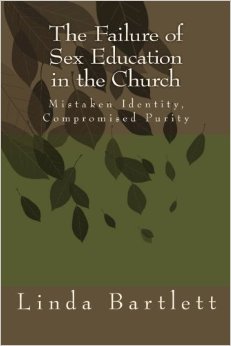
Bartlett begins by giving the necessary history of how the Church, during the mid-20th century, put too much trust in “experts” instead of the inspired Word of God and willingly traded in our biblical understanding of manhood, womanhood, procreation, parenting, and purity for a more “scientific” approach to teaching children about the intimacies of marriage. Falsified, inaccurate, and even perverted studies on the “sexuality” of the human male and female conducted by Alfred Kinsey were presented to universities, medical associations, and church bodies as facts which could not be ignored by enlightened academics. Christianized versions of the sexual revolution’s message were then (and still are) passed down to schools and parents to share with children.
And just what are some of these myths?
The Church was naive in its promotion of sex education in the parochial schools, Bartlett points out, but not malicious. We were deceived into believing that we are “sexual from birth,” and this brainwashing had the complete opposite effect on our Church members as what was intended. It cleared the way for the acceptance of fornication, homosexuality, birth control, and even abortion as a normal part of life for those who are simply expressing their sexuality – being who they thought they were created to be.
But that’s not how we were created, Bartlett reminds us. The solution to the mess we are in now is our Baptism. This is where we received our true identities as children of the Heavenly Father, not sexual beings created to express our sexuality, but holy beings, created to live holy (not sexual) lives. “It is important,” Bartlett says, “for the Body of Christ to see each member as fully human as opposed to sexual and, therefore, an instrument for God’s purpose and glory whether a child or adult, single or married, in this circumstance or that,” (pg. 108).
Because Bartlett presents such shocking evidence of our deception, she presents her case in the form of a patient dialogue between herself and her readers, including over 100 questions and then answering almost every objection one could think of to the notion that there is anything wrong with the way the Church has been educating her children. Her love and concern for her Church family flow through each section as she gently reminds us all that, “Even well-intentioned sex education in the Church leans the wrong way if built on the wrong foundation,” (pg. 129).
If you have children, if you teach children, if you are related to children, or if you once were a child, this book is for you.
Read Full Post »