 Sex education is built on a foundation that diametrically opposes God’s design for parents to instruct their children in purity.
Sex education is not biblical; rather, it grows from the ideologies and humanist faith of sexologists like Alfred Kinsey and Wardell Pomeroy, birth control and eugenics advocate Margaret Sanger, social reformer and SIECUS (Sexuality Information and Education Council of the U.S.) co-founder Mary Calderone, and advocate of child sexual rehearsal play, Dr. John Money.
Sex and sexuality education, sometimes called family life education, is described by Miriam Grossman, M.D., as “a social movement, a vehicle for changing the world. It happens one child at a time, and it goes on right under your nose.”
Sex education has led our boys and girls closer to the edge of the cliff. Parents and grandparents are not to lead children as close to the edge without falling off, but to keep them far away from the cliff. In a sexually-saturated society, what can a parent or grandparent do? First, we need to prepare ourselves:
1. Develop your parental “mission statement.” What do you want your son or daughter to know about their identity in God’s eyes? What do you want your child to know about sex or things of a sexual nature? Why will you strive to teach and mentor your child while also guarding the innocence of childhood?
2. Spend time with your child so that you can discern his or her questions. When your five-year-old asks, “Where did I come from?” don’t be too quick to assume, “Oh! It’s time for the full-fledged sex talk!” He might just want to know what city he came from because his friend Billy came from Denver. As the parent, you can ask questions of your child that will go a long way in determining what he or she really wants to know and is ready to hear and process, i.e. “Why are you asking me this?” or “What do you think?”
3. Follow the order of purity. When the Christian mother Laeta wondered how she could prepare her daughter for a life of purity in Christ, the Church father Jerome offered this order of instruction using God’s Word: First, teach the rules of life from Proverbs, the patience and virtue of Job, the Epistles, and the prophets. Only then, and at a more mature age, is there wisdom in directing a young woman to read about marriage and the spiritual bride in Song of Songs. (Appreciation to Rev. Dr. Christopher W. Mitchell, Concordia Commentary The Song of Songs, 278.)
4. You may have never thought about it, but fatherhood, motherhood, and grandparenthood are vocations. They are vocations that show love for God by serving others. Parents serve their children by teaching them to fear and love God, mentoring biblical manhood and womanhood, and preparing them to be good neighbors and citizens. (To consider parenthood from a biblical perspective, you might read God at Work by Gene Edward Veith, Jr.)
5. Many resources that instruct in purity come from Christians who do not believe in original sin. With the psalmist, I believe: “In sin did my mother conceive me” (Psalm. 51:5). Every Christian parent must bear in mind that even if we try to keep the walls up and the gates closed, evil still dwells within children. The purpose of instruction in purity should be to guard against temptations and attacks from the outside while we do our best with the help of the Holy Spirit to fight and clean things up on the inside, too. Our goal is not to keep children pure, but to purify them with the grace of the Holy Spirit and guard them from daily attack. We are to help them: “Put on the whole armor of God, that [they] may be able to stand against the schemes of the devil . . . and spiritual forces of evil (Ephesians. 6:10-18).
6. In every culture of madness, the unchanging Word of God gives fathers and mothers what they need to resist evil and build a future of hope. Don’t let anyone tell you that you’re not “progressive.” Tell them you’re progressing out of the insanity and chaos of this world into the sanity and order of God’s Word.
7. Become uncommon parents in a highly sexualized world. Look to the example of Joshua who proclaimed, “Choose this day whom you will serve, whether the gods your fathers served in this region beyond the river, or the gods of the Amorites in whose land you dwell. But as for me and my house, we will serve the Lord” (Joshua 24:15). Do not be faint of heart by what you see and hear. Sexualized cultures have always pressed on the Christian home. Create opportunities to talk with your child and contrast myths and half-truths with what is holy and pure.
8. Do not be afraid to question professionals and experts. If you remember, the Bereans “received the word with all eagerness, examining the Scriptures daily to see if these things were so” (Acts 17:11). The Berean Christians questioned the Apostle Paul, the one called by God to instruct them! Contrast God’s Word of purity with those who have a wall of diplomas but advocate sex education. A diploma doesn’t necessarily reflect wisdom. If your discerning conscience says, “No! Not for my child,” listen to it!
9. Personalize God’s call to live a life of holiness and purity. Familiarize yourself with His Word and how it contrasts “purity” with “sensuality.” Then ask: Do I dress in a way that tempts the opposite sex? What books, magazines, and movies do I bring into my home? What do I look at on the internet? Do I go against the “flow” of a sexualized culture? Your child needs an example to follow.
10. As a parent, take comfort and instruction from your own Baptism and that of your child. In the flood, Noah and his family were preserved. In Baptism, Christ the Savior brings parent and child into the holy ark of the Christian Church where He marks us as His own, cleanses us from sin and, for our sake, appeals to God for good conscience (1 Peter 3:18-22). Remind yourself of the promise of Baptismal identity and life by reading the Order of Baptism and the words of hymns. (Suggestion: Lutheran Service Book [Concordia Publishing House, St. Louis, MO.], page 268 and pages 594-605.)
11. As a family, pray that the Lord be in your home and drive from it all the snares of the enemy. Develop friendships with other parents whose greater desire is to help children trust their identity as heirs of God in Christ rather than identity shaped by a restless and shallow culture.
12. Don’t be ashamed by what you believe and teach; rather, be convinced that the Holy Spirit sustains you and your child. Together with your child, live as people who know that Jesus is coming again (1 John 2:28-3:3).
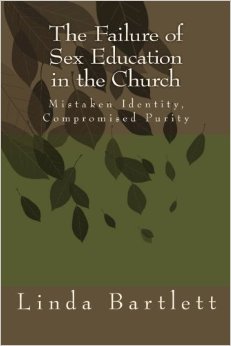
(Note: These preparation suggestions for parents were excerpted from The Failure of Sex Education in the Church: Mistaken Identity, Compromised Purity by Linda Bartlett [Amazon.com.] The book offers questions and answers to help Christian parents and pastors navigate a sexually-saturated society. It includes age-appropriate suggestions and resources for teaching purity and biblical manhood and womanhood.)
Read Full Post »
 This morning, when I woke up, nothing had changed. God is still in heaven and the Supreme Court of the United States is not.







 Ezerwoman's Blog
Navigating Life From the Family Table
Posted in Biblical manhood & womanhood, Commentaries of others, Culture Shifts, Faith & Practice, Life issues, Parenting & Education, Relationships, Vocation, tagged adolescence, Anne Fishel, family mealtime, mentoring, parent-child relationships, risky behaviors, sexualized culture, stress in children on January 16, 2015| Leave a Comment »
Twenty years of research in North America, Europe and Australia, observes Fishel, support the practice of family mealtime. “It turns out that sitting down for a nightly meal is great for the brain, the body and the spirit.”
I am a staunch advocate of family mealtime. The dinner table nurtured trust between my parents, grandparents, and me. My mother and grandmother fed my body, but it was their invitation to engage in discussions about life that stimulated my mind and nourished my soul.
“Dinnertime conversation,” writes Fishel, “boosts vocabulary even more than being read aloud to.” There is also, Fishel notes, “a consistent association between family dinner frequency and teen academic performance.” Older children reap “intellectual benefits from family dinners . . . regular mealtime is an even more powerful predictor of high achievement scores than time spent in school, doing homework, playing sports or doing art.”
The family table, notes Fishel, tends to provide healthier food, but also a healthier atmosphere. However, she cautions, “all bets are off if the TV is on during dinner.”
Regular family dinners are linked, Fishel says, “with lowering a host of high risk teenage behaviors parents fear: smoking, binge drinking, marijuana use, violence, school problems, eating disorders and sexual activity.” A study of more than 5,000 Minnesota teens concluded that “regular family dinners were associated with lower rates of depression and suicidal thoughts.”
There is more. Fishel has reason to believe that kids who have been “victims of cyberbullying” bounce back more readily if they have the benefit of family meals. I have no doubt that being in communication with my mom and dad at our family’s dinner table helped steer me away from some high-risk teen behavior.
A New Zealand study, writes Fishel, reveals that “a higher frequency of family meals was strongly associated with positive moods in adolescents.” Evidence also indicates “that teens who dine regularly with their families also have a more positive view of the future, compared to their peers who don’t eat with parents.”
Children don’t grow up working beside their parents today. They don’t farm, construct a house, bake, or quilt together. So, as Fishel observes, the family dinner table remains the most reliable way for parents and children to connect.
“Kids who eat dinner with their parents,” says Fishel, “experience less stress and have a better relationship with them. This daily mealtime connection is like a seat belt for traveling the potholed road of childhood and adolescence and all its possible risky behaviors.”
Just gathering at a common dinner table isn’t enough. It’s what happens at that table. Silence between parents or using the time to scold children won’t, as Fishel notes, “confer positive benefits. Sharing a roast chicken won’t magically transform parent-child relationships.”
My own experience at the dinner table with my parents helped me learn when to speak and when to listen. I was encouraged to ask questions, share ideas, and practice kindness. This nourishing of body, mind, and soul was an experience I wanted to repeat with my children and grandchildren. What a privilege to hear what children are thinking, learn what is going on in their life, engage them in dialogue, mentor, and encourage.
It is small moments like these, concludes Fishel, that “can gain momentum to create stronger connections away from the table.”
Quotes from Anne Fishel are excerpted from her article
“Science says: eat with your kids” – Mercatornet.com 1-14-15
Anne Fishel is the author of Home For Dinner and
Associate Clinical Professor of Psychology, Harvard Medical School
(photo image: Pinterest.com)
Read Full Post »