Feeds:
Posts
Comments

I’ve always been rather fond of Girl Scout Cookies.  My favorites?  Thin mints. But, no more.  

There’s something dark and twisted about Planned Parenthood receiving some of the profits.  It goes deeper.  If you have a few minutes, you might want to read the following article from the Washington Times.

http://www.washingtontimes.com/news/2012/jan/16/say-no-to-girl-scout-cookies/?page=all#.Txo__z6o8wk.email

Jackie Burkle gave birth to twins at home.  But, on January 11, she was charged with the killing of her daughters.

Jackie is a 2008 graduate of a high school twenty miles from my home.  She was a music major at my local community college.  As of this writing, she is incarcerated thirty miles from my home.  She is facing two counts of first degree murder and being held on a million dollars bond — half a million dollars for each child.  The Judge told her that she will face “a mandatory life sentence in prison if convicted.”

Police found Jackie’s twin daughters in the trunk of her car.  She confessed to the crime.  The DCI special agent handling the case said, “She acted to terminate the lives of both of her newborn infants.  She also stated that she intended to end their lives and was not at any time intending that these children would live.”  Police were called to check on the 22-year-old mom after someone noticed that she wasn’t pregnant anymore.

How do we make this kind of behavior unthinkable?

Believers in the Creator of life need to ask ourselves some important questions.  Why?  Because we are all part of Jackie’s human family.

  1. Did Jackie know about Iowa’s Safe Haven Law?  If a parent takes an “unwanted” baby to a hospital or health care facility and leaves the infant there with staff, no questions will be asked.  Fourteen Iowa newborns since 2001 have been dropped off at a safe place. 
  2. Did anyone tell Jackie about the Lighthouse Center of Hope (a caring pregnancy center close to her) or any one of the many life centers in Iowa?  Did anyone discuss making an adoption plan?
  3. Did Jackie have anyone who cared enough to ask her questions about her pregnancy?  How she was doing?  If she was in need of emotional, financial, or spiritual help?
  4. Did anyone invite Jackie to a support group, Bible study, or even out for lunch?
  5. Did anyone explain to Jackie that she and her babies are “fearfully and wonderfully made?”  That each is a treasure for whom Jesus gave His life?
  6. Was Jackie schooled by years of sex education, made comfortable with her “sexuality,” and taken captive by a sensualized culture?  Had Jackie been convinced by Planned Parenthood-style education that she could separate the act of sex from procreation?
  7. Did a man use words of love to lead Jackie into intimacy and then abandon her?
  8. Was Jackie influenced by billboards that read: Children are loud, smelly, and burdensome… unless you want one…?
  9. Did Jackie rationalize that if it’s o.k. to take a baby’s life days before birth then what can be so wrong with a few days after?
  10. Will anyone help Jackie confront the evil of her action and tenderly lead her to the mercy and healing forgiveness of Christ?

Maybe Jackie will be found “mentally incompetent” or traumatized.  Maybe she will be spared one kind of prison.  But, there is another.  It is the guilt of our sin.  Of doing something that goes against creation itself.

Jackie is my neighbor.  Your neighbor.  Jackie did not have to choose death for her daughters or suffer the consequences of aborting them after birth.  She had other choices.  There are many.  But, we are part of those choices.

For the sake of all the other Jackies — confused, frightened, lonely — and their babies, we need to be watchful.  Willing to lead away from danger.  Offer a better way.  A hand.  A shoulder.  A safe place.  A new beginning.

Would you please take a moment to watch? 

Alexander Tsiaras, author of From Conception to Birth: A Life Unfolds, provides evidence of the divine. 

Be still, and know that I am God.

http://www.youtube.com/watch?v=fKyljukBE70&feature=player_embedded

Centennial, the 1970s mini-series, is viewed in our house every ten years or so.  It is the movie version of James Michener’s novel and the re-telling of history as he thought it might have happened.   Many of the events are historically accurate, but the characters are fictional.  The loosely woven story has a strong message.  Knowing who we are and from where we come matters.  Each character in history plays a vital role in shaping the present and the future.  Remembering mistakes of the past help us to not repeat them

My brother and I have a special interest in the movie because three of our cousins played bit parts with actors Richard Chamberlain, Robert Conrad, and Lynn Redgrave.   There is humor in Centennial.  One easily identifies with this character or that.  There are heroes and villians.  Some powerful emotions are evoked by actions clearly defined as right or wrong.  Hopeful or deadly consequences result.

Centennial is more than just a good movie.  It’s evidence that modern people want a connection with their past.  Their heritage.  Their roots.  Then why, I wonder, do so many modern people reject their history as documented in the Bible? 

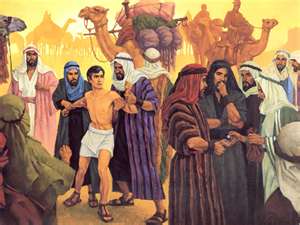
The events recorded in Scripture are documented by Jewish and non-Jewish historians.  The characters are real.  The tightly woven historical account has a strong message.  Knowing who we are and from where we come matters.  Adam told of his creation to his sons and grandsons and great-grandsons.  Living long in those days before the flood, a 500-year-old person would have a lot to tell!   Characters in the Old Testament played a vital role in shaping the present and the future.  The brothers of Joseph were so jealous they sold him into slavery, but Joseph became the most powerful man next to Pharoah in Egypt and rescued his family and a nation from famine.  Remembering mistakes of the past help us to not repeat them.  King David murdered so that he might take a fellow soldier’s wife as his own but, before confessing his sin, his bones wasted away and his strength was drained.

There is humor in the Old Testament.  One easily identifies with this character or that.  There are heroes and villians.  Some powerful emotions are evoked by actions that are clearly defined as right or wrong.  Life or death consequences result.

Some people say, “The New Testament speaks to me, but the Old is, well, just old.”  They may say, “I like the story about Jesus.  I like knowing I am loved and, if I sin, have the promise of forgiveness.  I like  knowing that Jesus was a friend of the poor.  That He healed the sick.”   But, every bit of recorded history in the Old Testament leads to and prepares for Jesus Christ.  Without the Old, there is no New.  

Most of us long for a connection to the past.  To know from where we come.  Why we are the way we are and do what we do.  To know hope in each new generation.  That is the reality of the Old and New Testaments of Holy Scripture.  It is the eye-witness account of men and women who knew the Promised Savior before and after His death and resurrection.  They told their children and grandchildren and great-grandchildren… who told us. 

The Bible is His-story:  History.  Real people in history.  Their stories connected to ours.  As real characters connected to His story, we choose to pass it on —  or not.  To connect others to their history — or not.  To tell them who they are and why they matter — or not.

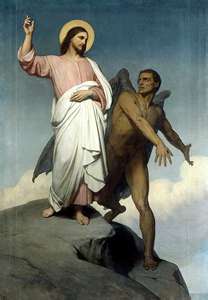
This culture seems bent to the will of a liar.   Jesus knows who he is.  Calls him what he is.  “He was a murderer from the beginning, and has nothing to do with the truth, because there is no truth in him.  When he lies, he speaks out of his own character, for he is a liar and the father of lies” (John 8:44).

The father of lies comes often to our door.  He doesn’t have to work very hard.  He hisses, we listen.  We listen because he appeals to our selfish desires. “Do this one thing and find happiness.”  Or, “Determine what will make you happy and don’t let anything get in your way.”   Believing the lie, we trip over ourselves to step into God’s place or, if we acknowledge Him at all, declare that He’s not relevant to our happiness.

The liar stood often before a woman named Traudi.  But, to her last breath, she testified that God was not only real, but the very Source of her happiness.  No matter what.  In all circumstances.  Whenever I think of Traudi, I am encouraged in my own battle with the lie.  Traudi taught me that happiness isn’t what we create.  It doesn’t come when our will is done.  Happiness is often a surprise.  What we least expect.  A peace in the midst of a storm.   Traudi appeared to have so little in life, yet so much spilled from hers to others.  If ever I’ve seen anyone’s well replenished in the midst of drought, it was Traudi’s.

Traudi was a young girl in pre-war Austria.  She grew up in a culture that believed it could find happiness if certain people were removed.  She and I once compared The Holocaust to legalized abortion.  I asked, “How could you and your family allow neighbors to be taken away to be murdered?”  Her answer was sobering.  When the lie is told often enough and we believe our happiness is at stake, “we blame those who might steal it away and do whatever we have to do.”

Traudi admitted being mesmerized by a man who used the lie to his advantage.  “I once passed by Adolph Hitler,” Traudi told me.  “When I looked him in the eye, I sensed a certain power.”  An entire culture, in times of vulnerability, can succumb to the power of the lie.  See it as some sort of salvation.  Traudi helped me see what even people who call themselves by God’s name are capable of doing.  Citizens of Traudi’s beloved Austria re-defined what they considered human and turned their backs on helpless neighbors.  Were they so different from the Israelites who failed to trust God and, instead, believed the lie that claimed their firstborn children on the altar of Baal?  Did they offer the blood sacrifice of one life so that another’s might be better.  Richer.  Happier.

The war ended, but Traudi’s trials had just begun.  Austria came under Russian control.  She and other women her age feared abuse at the hands of immoral conquerors.  One day, she met an American soldier who asked her to be his bride.  Traudi imagined a happiness beyond her dreams.  Go to America?  Leave pain and poverty?  “Ja!  Bitte!”  No matter if it meant traveling alone.  Her fiance went ahead to tell his parents about her and prepare a home.  Traudi arrived in New York frightened and without a penney.  No one covered her fare.  No one assisted her.  And, when she found her way to Iowa, she was rejected by her husband’s family.

The lie came frequently to haunt Traudi. Your happiness, it hissed, is dependent on other people.  But, her new American family didn’t like her.  Her husband offered little support or encouragement.  Their only son broke her heart with his foolish choices.  But, I never heard her complain.  To this day, I can’t find anyone else who heard her complain.  There were so many sad things all around her.  But, her well of happiness was never dry.

When cancer invaded her body, she attended to the cares and concerns of others.  Once, walking across the street, she was hit by a car and tossed to near death, but she was the one who brightened the days of her visitors.  When her only grandchild was torn between divorced parents, Traudi devoted herself to full-time mentoring as well as full days earning the family income.  The lie told Traudi to think of herself.  But, The Word reminded her that she didn’t have to.  Her Robe of mercy was secure.

Traudi helped me understand that happiness does not come when we focus on ourselves.  We do not create it, nor do we plan it.  We do not demand it from others.  It comes to us by surprise.  It is, Traudi discovered, all the gifts of the Spirit that come just when we need them.  Love.  Peace.  Patience.  Kindness.  Faithfulness.  Yes, even self-control.

It was my privilege to be mentored by this woman of faith.  She’s gone on ahead to pure happiness, but I am left with her example.  It serves me well.   The lie wants me captive.  But, it didn’t hold Traudi.  And, because of Christ, it can’t hold me.

Facing the Lie Head On

Does it seem that the culture is captive to the lie?  Chuck Colson recently quoted T.M. Moore who writes, “The lie insists that God either does not exist or is not really relevant to human happiness . . . [that] every human being must decide for himself” where and how to find happiness. 

The lie is ancient.  It’s old human stuff with repetitive consequences of disappointment, despair and death.   It’s the root of “my body,  my choice.”   Broken relationships.  Hopelessness. 

But, looking around me, I see the lie being faced head on.  Denounced.  Stripped of its power.   

It is denounced by Terry and Connie whose son, Chris, suffers a malignant brain tumor.  Certainly God has so many things to accomplish using their son in his vocations of husband, father, and pastor.  Yet, knowing how many times my friends have seen God bring contentment out of chaos in their lives, I am confidant that their happiness is not dependent on having their will be done.   They are resisting the lie by choosing to see how the Lord of life is at work even in the weakness of their son. 

It is denounced by Dagny who once thought an abortion would return happiness to her life.  She was deceived, but only for a while.  The pain of her choice helped her confront the lie.  The Word of the Lord released her from its grip.  It is that Word that brings new mercies to her every morning.    When I first met Dagny, she was timid and surprised that God could use her for anything good.  Today, I see a woman of courage and conviction.  Reality is not her youthful dream, but evidence that God involves Himself in the day to day affairs of those who love Him.   Her happiness is not what she has created, but what God is doing in spite of her for others. 

It is denounced by Marta whose young heart longs for true love.  More than anything, she desires to be a wife and mom.  To make a home.  Two men have asked for her hand in marriage.  But, at the core of each love-offering was the lie.  Both of these men promised her happiness shabbily wrapped in conditional love.  Marta believes that God is relevant to her life.  Where self-help books and human opinions fail her, God’s Word does not.  It calms her fears and sheds light in dark corners.  It reminds her that she is more than the desires of her heart.  She is eternal soul.  And, says Marta, who knows my soul better than the God who made it?

It was denounced by a young Austrian bride named Traudi who left parents, siblings, and the life she knew to follow her husband to America.  I’d like to tell Traudi’s story, but it requires a blog of its own.  Will you be patient while I gather my thoughts?  I want to explain why remembering Traudi has always helped me face the lie head on. 

Contrast it with Truth. 

Silence the liar.

What’s going on?  The whole culture has changed.  We’re in a moral and ethical mess.  What has happened… and what can I do about it?

First, it’s important for the Christian to recognize that two worldviews are in conflict.  Man’s perspective on life opposes God’s.  The Biblical worldview is Creation, The Fall, and Redemption.  All questions of life can be answered by this worldview.  But, when man doubts the Creator and places himself as the ultimate authority, he is left with only evolving opinions about how life should be lived.

Second, history proves that whenever Christians stepped into the public square, the culture was dramatically affected.  In Rome, for example, unwanted children were placed outside the city gates and left to die, but Christians started orphanages or even welcomed abandoned children into their own homes through adoption.  It was common for sick people to be neglected, but Christians started hospitals and hospice care.  Women were too often considered property, but Christ-followers saw women as equal to and compatibly different from men.  This made Christianity worth thinking about.

Third, those who resist God want others to resist Him, too.  Passionate about their perspectives, they step into the public square — especially coveted areas of academia and the media — to influence others.  Passionate people are persuasive people with words and actions.  Labeling something “scientific” makes the idea “progressive” and worthy of consideration.  Labeling something “religious” implies personal, but antiquated beliefs unworthy of any modern thinker.  If you are “scientific,” you are intelligent and welcomed to dialogue.  If you are “religious,” you are clinging to “some faith superstition” and your views are fine for you but not for general consumption.  Since the 1950s, children taught “Bible stories” in Sunday school grew up to become students at the university where “science” ridiculed “faith stories.”  Zealous disciples of Darwin, Marx, Dewey, Kinsey, Sanger, and others replaced the disciples of Jesus in the cultural conversation.

Fourth, when Christians pull out of the public square to take refuge inside the walls of the church or keep their faith private, the culture suffers — in every area from marriage and family to education and ethics.  We miss huge opportunities to push back against evil and raise up a younger generation in Truth when we do not talk about what God has done throughout history (documented in His Word beginning in Genesis); when we let the “science” of evolution intimidate our faith in the Creator God; and when we assume our faith is a “private thing” not to be lived in the workplace, classroom, or neighborhood.  It’s true that there is strong opposition to Christianity in our time but, in the midst of the opposition, there are people everywhere crying out for answers to the critical issues of life.  If we believe Christ is the Hope of the world, don’t we also believe that His Word is applicable to the world?

Can one person  make a difference?  Yes.  How?  By being as bold, confidant, and passionate for God as those who oppose Him.  The Christian citizen living in a morally and ethically-bankrupt society makes the greatest difference when he/she fears (trusts) and loves God above all things.  Trusting God’s Word, we can use it to serve our  neighbor.  We serve our neighbors by:

  • Speaking God’s Word of Law in love to those not aware that they are making wrong choices.  We should always be prepared to contrast trendy opinions with God’s Word about our beginnings, the sanctity of human life, relationships, marriage and family, sexual behavior, health care, law, and ethics.
  • Speaking God’s Word of Gospel to those sorry for their sins and ready to live as changed people in Christ.

This culture is in need of ordinary people who make a difference right where we live.  Parents and grandparents faithful to God’s Word affect families and neighborhoods.  We don’t have to be an author, speaker, or teacher to impact the culture.  We can ask questions that help people think, confront issues, and entertain challenges. 

If we don’t have the answer to a particular question, we can promise to find out.  Heaven knows resources are as close as our fingertips.  Some of my favorites are the Colson Center for Worldview, Vision Forum, Stand to Reason, and Answers In Genesis.  Some of my favorite worldview authors include Nancy Pearcy, Chuck Colson, Frank Beckwith, Greg Koukl, C.S. Lewis, J. Budziszewski, Marvin Olasky, and Gene Edward Veith.

We can make the best of every opportunity.  If you can’t speak to a crowd, speak to one.  If you can’t speak at all, write a letter-to-the-editor or a personal note.  Keep your eyes open and ears attentive.  Many people are struggling in confusing situations.  They’re not looking for someone’s opinion, but for a life-changing word of hope.  I know that Word of hope, don’t you?

Small seeds planted by faithful people of God will grow a better culture.

Megan is an all American girl.  Like other freshmen in college, she considers herself “modern.”  She communicates by iPhone and Facebook, is comfortable with her “sexuality,” strolls through Victoria’s Secret with her boyfriend, and, ready for a serious relationship, scheduled an appointment to discuss birth control with a Planned Parenthood counselor.

Megan also considers herself to be a Christian.  She attended church regularly with her parents.  She was educated in parochial schools.  Her friends are Christian.  She knows the Bible stories and sings praises to God. 

Megan believes Jesus is her Savior.  If you were to ask her if she is a creation of God, she would answer “Yes!”  She has been taught that she can talk to God as if talking to her daddy.  He is “Abba Father” and, Megan has been assured, there is nothing she can do to change this fact.  Even when Megan forgets to pray or skips worship for another activity or sins in any way, God remains her Heavenly Father.  This gives Megan comfort, especially when she’s lonely or troubled.  She adores her “awesome God” on Sundays.  But, on Mondays, she returns to the “real” world.

In the “real” world, Megan was sharing a bed with her boyfriend.  They were in love and being responsibly adult.  Planned Parenthood helped her to separate the act of sex from procreation.  One weekend while visiting her parents, Megan did the usual thing by attending church with them.  But, what happened took Megan by surprise.  This day, the pastor seemed to look right at her.  The Word he spoke did not comfort but, instead, convicted.  Megan heard him say that those who follow the flesh by being sexually immoral, impure, and sensual are in danger of missing heaven (Galatians 5:19-21).  Megan also heard him say that a new person in Christ is equipped to guard against passions and desires (vv. 23-24).

Megan was conflicted.  She did not leave church that morning in a good mood.  What did it mean to be a “new person?”  How did that fit with being a “sexual being” as she had been taught to see herself?  Couldn’t she love Jesus and know He died for her, yet be “modern” in her thinking and behavior?  In an honest moment with her parents, Megan expressed fear.  “I’ve always known God loves me, no matter what.  No matter what, right Dad?  Right, Mom?”  In a way, Megan was asking what so many Christians might be asking themselves: If disobedience or sin cannot make me less God’s child, what does it matter what I do?  Why is it so important to obey God?  Why can’t I just follow my instincts?  Do whatever feels right for me depending on the situation?  Won’t it all work out in the end?  After all, Jesus died so that my sins are forgiven!

This is most certainly true.  Jesus died for a world of sinners.  You.  Me.  Every person ever conceived.  But, dear Megan, our behavior matters.  Why?  Because our behavior changes our attitude toward God.  Evidence of this abounds.  It is seen in a culture that determines for itself what is “right” and “wrong.”  It is the Christian parent who asks the pastor not to speak about the sin of living together lest his daughter co-habitating with her fiancé stops coming to church.  It is the pro-life Christian who has four children but isn’t married to any of their daddies.  It is the Christian woman whose choice of clothing reflects her glory rather than God’s and, intentionally or not, becomes a temptress.  It is the Christian father who, fearing for his daughter’s future, insists she have an abortion.  It is the Christian mother who defends her son’s homosexual lifestyle, saying, “God made him that way.”  It is whole bodies of Christians who want Jesus to wrap Himself around the desires of their hearts. 

The heart, says the world, is good and can be trusted.  The heart, says God’s Word, is deceptive and not to be trusted.   Ah, the fickle human heart!  It is influenced by the world and our own sinful flesh to oppose the Lord God even while it thinks it is still clinging to Him.   

Is Megan doing what we Christians too often do?  She knows she is saved and has the promise of heaven.  But, does she want God to fit her world?  She acknowledges God as her Creator but, depending on her circumstance, does she re-define what He has made?   She says Jesus is her Savior, but does He have anything to say about her relationships and choices?  She finds hope in being a “new person in Christ,” but is she talking and walking like a sinner bound to sin?    

Megan’s identity matters.  She is a child of God because of what Jesus did for her.  She has divine possibilities.  A rich inheritance.   Megan’s behavior also matters.  How does a daughter honor her Father?  How does she reflect His kind of love?  Patience?  Kindness?  Purity?   Megan’s identity as a child of God will never change.  But, her choices and behavior can change her attitude toward God.  Even place her inheritance at risk.

Our identity and behavior matter.  When we separate our God-given identity from the “real” world identity we give ourselves (at any given time, in any given circumstance), we are in danger.  We are in danger when we re-define things of God such as the value of human life, being male or female, purity, and marriage.  We are in danger when we follow instincts of the flesh and stubbornly defend every personal choice.  We are in danger when we exchange His Truth for our opinion.  These are dangerous behaviors that change our attitude toward God.  It is the most dangerous thing of all to make God what we want Him to be.

But, when children of God trust His Word to be living, active, and mighty in “real” life, our perspective of the world changes.  It does not hold us captive.  It is temporary.  It is a place we journey through on our way home to our Father’s Kingdom.  It is opportunity to think, speak, dress, work, play, love, care, and choose in ways that encourage others to ask: “Who is your Father?”  “Why do you do the things you do?” “What is your hope?”

Megan is the King’s daughter with a divine inheritance in store.  This is compelling reason to live a more noble and holy life.  A life with divine possibilities.   A life that reflects God rather than self.  A life that makes a difference in a “real” world.

T2-4Life  is a mentoring ministry that exists to help young ones make choices that 
reflect the holiness of God, but also remind older ones that mistakes of the past do 
not have dominion over changed people in Christ.  You are welcome to visit T2-4Life.

A long time ago, the paths of two women crossed.  People who serve together in Lutherans For Life can easily become friends for life.  Beth and I don’t get to talk very often, but our conversations always pick up right where they left off.   I wish she lived closer.  In my imagination, I see us lingering over coffee or a latte as we discuss what’s happening in our world in light of God’s Word.  Right now, I would like to live closer to Beth so that I could be of encouragement to her.  To sit in silence beside her.   To walk with her through the shadow of death.

It is not Beth that is dying.  It is her husband, Cal.  His long, courageous battle with cancer may soon be over.  Beth has been faithful to include family and friends on this journey.  She writes of Cal’s wit and wisdom.   She writes with appreciation for shared faith.   She writes only as a daughter of God in Christ can write: with peace.  This is because Beth and Cal know that he is leaving – but only for a little while — to go ahead to their heavenly home.   The Spirit within Beth is lifting prayers to God when she cannot.

I think Beth, and those around her, are finding many teachable moments in the timing of Cal’s journey.

Christmas, even for Christians, can be a time of chaos and confusion.  We are easily distracted away from the birth of our Lord Jesus by preparations.  Gifts.  Food.  Family coming.  Programs and festivities.  I sense that Beth knows that she is distracted from both the birth of Christ and precious moments with her beloved Cal by preparations.  Decisions.  Legal matters.  Finances.  In-home hospital beds and oxygen tanks.  Hospice and palliative care.  Even so, for Beth and her family, there is a difference.  Beth writes, “We don’t fear death for Cal, nor does he fear his own death.  He has the hope and joy of seeing God face to face.  How awesome is that?” 

Christmas, even for Christians, can make us feel obligated to add Jesus.  “I have this to do.  And this.  I’m running out of time!  Oh, of course there’s Jesus, certainly the reason for the season.”  We create for ourselves such high expectations.  We want the perfect gift.  The perfectly orchestrated event.  A perfect meal.  Then, as life in this world typically goes, we are disappointed.  But, Beth is not obligated to add Jesus.  She is fully depending on Him to get her through perhaps the most difficult time of her life.  She has not created for herself high expectations.  Instead, she trusts God’s will and promise.  It is the promise of hope and eternal life that came to her and all people on the Holiest of Nights.  Beth knows that she will not be disappointed by the Creator of her life and the Author of her story.  Every word that Beth writes seems to rise up not from a well that is running dry, but from a well that is always replenished just when she needs it.

Many dream of a world without suffering.  A pain-free world.  A world where no one goes hungry.  Gets sick.  Falls into depression.   Faces difficulty.  That’s how “enlightened” and “modern” people like to think.  “Man is capable,” the believer in self claims, “of rising to a higher plain… removing suffering… defeating death and, in fact, creating life.”  This is, in its most honest form, inflated ego.  Arrogance.  Idolatry.  Beth harbors no such arrogance.  She and Cal understand that we all live in a fallen world.  They know that the very death they face is a consequence of The Fall.  Sin.  Disobedience and rebellion against the God who calls Himself “I Am.”

So, for Cal and Beth – and for me and my house – there is a strange joy in Christmas.  It is the joy of realizing who we are as fallen, desperate creatures.  Of realizing that, yes, human suffering in the midst of a fallen, sinful, messed up world is reality.  For this reason, we sing:

O come, O come, Emmanuel, And ransom captive Israel,
That mourns in lonely exile here Until the Son of God appear . . .

There is a curse in human suffering.  But, Jesus Christ is God come to earth to remove the sting.  Loosen the hold of death.  Take on Himself what we really deserve.  We sing “joy to the world” at Christmas because Christ is the only hope for a suffering world.  Failed expectations.  Hurting people.  Christ is Light in the darkness. 

My friend Beth knows this.  She clings to this Truth.  I think, based on Beth’s writing, that she and Cal find a special joy in the timing of their suffering.  For it is at Christmas that joy came to them.  The glory of Immanuel – “God with us” – is real to them.  His kingdom is open to them.

If I could, I would snap my fingers and remove Cal’s pain.  Beth’s sorrow.  The sadness of separation.  But, such wishful thinking does nothing for my friend.  Instead, I entrust Beth and her family to the Living Word for our lives… to Jesus Christ, Lord of Life.  Even though I am not sitting with her, I think I may hear Beth singing:

O come, Thou Branch of Jesse’s tree, Free them from Satan’s tyranny
That trust Thy mighty pow’r to save, And give them vict’ry o’er the grave.

O come, Thou Dayspring from on high, And cheer us by Thy drawing nigh;
Disperse the gloomy clouds of night, And death’s dark shadows put to flight.

In March, I posted some observations on Planned Parenthood.  At the same time I invited any readers to contact their senator with a request not to fund PP with tax dollars.  Yesterday, I received a comment on  my post.  The gentleman wrote:

“I noticed the religious overtone to your perspective on the issue of abortion.  You have every right to your views and ideologies, but consider an “abortion” is no longer specifically a medical procedure.  It is most commonly a prescription of two pills.  It is now an induced miscarriage.  Your life  may be stable, as your health may be, but not everyone shares the experience of your comforts and bliss life.  These induced miscarriages save lives.  There is no regard for the living breathing woman from PP opponents.”  Mike.

Compelled to respond, I began writing.  I clicked a key and my text disappeared.  I started in again.  Once more, the text disappeared.  Still compelled, I started in again, saying:

Mike… It is because I have “regard for the living breathing women” that I warn against abortion  That I cannot endorse the profiteering of Planned Parenthood.  Thirty some years out and about across this big country have taught me valuable lessons.  I may have been the one invited to speak, but I also became a listener.  I have yet to meet a woman who wanted an abortion.  Instead, women tell me that they felt “trapped,” alone, and without support during a very vulnerable time in their lives.  They knew other choices had been made in their lives which led to pregnancy.  Sex is not recreational; it is, rather, procreational.  A woman who has an abortion is no different from me.  In a moment of temptation, she chooses to become her own “god” and decide for herself what is right or wrong.  I am guilty, far too many times in a difficult situation, of trying to take control and be my own “god.”  But, I am a believer in Hope after my wrong and hurtful choice.  Yes, you recognized the “religious overtone” correctly.  My hope is in Jesus Christ.  Without Him, I’m left to despair in my own miserable mess.

A last count, 24 of my friends, relatives, or acquaintances have shared their abortions with me.  They asked me to speak up.  To warn.  To help other women avoid what they experienced following their abortion choice.  It is precisely because of “living breathing” women that I became a part of a “hope and healing” ministry for post-abortive women called Word of Hope.  It is because of “living breathing” women that I co-founded a caring pregnancy center where we walk with women throught their pregnancy and offer help to them and their families during the months following birth.  It is because of “living breathing” women that I started a small, but caring ministry called Titus 2 for Life in order to help older women confront the mistakes of their past and help mentor younger women to avoid similar life-changing mistakes.

Abortion is not an “induced miscarriage.”  It is not natural.  It is the intentional choice to end the life of a fetus (Latin: “young one”).  The “common prescription of two pills” as you mention, reveals that action is being taken on the part of the doctor and mother to intentionally end a pregnancy or, more honestly, the life of a “young one.”  Miscarriage is very, very different.  It is not the choice of the mother.  It is something that happens beyond the mother’s control.

You are correct that I, as you, have “every right to [my] views and ideologies.”  That’s the beauty of living in a land where freedoms of religion and speech are protected.  It is because I believe in the God who creates, loves, and redeems life that I speak up.  Warn.  Help and support others in times of difficulty.  Because, you see, I believe I am more than body and mind.  I am also soul.  My soul, and therefore my relationship to the Creator of my soul, matters.  All may not be well with my physical life or with my emotional life (after all, it’s a hard and sinful world), but I most certainly desire that all be well with my soul.  I desire this, also, for every “living breathing woman” and man.  Our souls become right because of Jesus.

I appreciate the fact that you cared enough to comment, Mike.  Thank you.

Word of Hope — The Lighthouse Center of Hope Titus 2 for Life