Feeds:
Posts
Comments

Here are more pearls from my grandmother’s book.  (Once again, truth has a way of deflating the progressive thinker’s much inflated balloon.)

In What a Young Woman Ought to Know, Mrs. Mary Wood-Allen, M.D., writes that we are not only body and mind, but spirit (or soul).  Whether we’ve thought about this or not, the fact remains.  “No failure to recognize God as your Father changes His relationship to you.  No conduct of yours can make you any less His child.”

“Well,” you may say, “if that is so, what does it matter, then, what I do?  If disobedience or sin cannot make me less God’s child, why should I be good and obedient?”  Because… “your conduct changes your attitude toward Him.”

“The most worthy and dignified thing we can do,” wrote Dr. Wood-Allen, “is to recognize ourselves as God’s children and be obedient.  It is a wonderful glory to be a child of God . . . even the most ignorant or degraded have . . . divine possibilities.”

My grandmother’s choices and behavior evidenced that she was in a merciful relationship with her Heavenly Father.  And, no matter what anyone else thought of her, she knew she had “divine possibilities” because she was a child of God.

This woman physician from the late 1800s continues, “Being children of God puts on us certain obligations towards Him, but it also puts on God certain obligations towards us.  ‘What!’ you say: ‘God the Infinite under obligations to man, the finite?  The Creator under obligations to the created?’  Oh, yes.”

Human parents are under obligation to care for, protect, educate and give opportunities to their children.  In a similar way, God is obligated to do the same for His children.  The difference is, He fulfills these obligations perfectly.  All our earthly blessings are from Him.  Every good thing we have is a gift of love from our Creator and Heavenly Father.

Our life matters to God.  And, why wouldn’t it?  He created it!  He sent His Son, Jesus, to die for it!  And, as Dr. Mary Wood-Allen observes, “God takes such minute care of us that if for one second of time He would forget us, we should be annihilated.”  What does that say to you?  I know what it says to me.  And it pulls me down on my knees in humble, speechless gratitude.

But, if God is truly taking care of us, why does He allow failures, hardships and worries?  Sometimes, the things we call hard and cruel are actually little tumbles on our way to learning to walk.  A trial or difficulty in the school of life may be God’s way of opening our eyes to see that we need Him and can trust Him.

Our choices affect our attitude toward God.  The most dignified thing we can do is to recognize ourselves as God’s children and try to do those things that bring glory to Him.

It is a wondrous thing to be called a child of God.  It means we are heirs of God’s wisdom, strength, and glory.  It means that when we fail to trust and obey Him, we are still God’s child because of what Jesus did for us (Galatians 4:4-7).   Only a personal question remains:

As a child of God, how shall I choose to live?

Twenty five of my friends, relatives, or acquaintances have had an abortion.  Of the 25, 18 are Lutheran.  Two are wives of pastors.  At least three have had more than one abortion.  These are just the women who have told me.

Each one of these women have said, “Please warn other women: Abortion hurts.  It hurts a long time.  It affects other choices, relationships and families.”

Recently, the New England Journal of Medicine (NEJM) printed a Danish study that concludes there is not a statistically significant difference in mental health issues in women before and after an abortion.  Grace Kern, Executive Director of Word of Hope, writes, “This study is flawed and presents a view that is not at all consistent with more than 30 studies that have been published in recent years showing abortion does increase the risk for a variety of mental health issues.”  Grace Kern and I have worked together.  She has spent what seems like a lifetime caring for women who suffer from depression, perpetual anger, anxiety, substance abuse, eating disorders,  and thoughts of suicide following their abortion choice.  She is called by women serving time in prison who point to the anniversary of their abortions as a “trigger” for some other kind of violence.

My life has been affected by the women who’ve shared with me their spiritual and psychological trauma from abortion.  In part, the little ministry of Titus 2 for Life (the mentoring outreach of Word of Hope) came into being because of these women.   The very least I can do is help other women — those who may feel trapped between a rock and a hard place — be informed about the very real, long-term risks and consequences of abortion.  It would be heartless of me to withhold truth and a word of warning for a younger generation of women.

Grace explains that one of the biggest flaws in the Danish study is it’s duration.  “It only followed women for 12 months after their abortion or childbirth . . . [but] negative effects of abortion may not surface for many years.

“The death of a child,” says Grace, “is perhaps the most difficult loss to mourn.”  It is for this reason that nurses, doctors, social workers and clergy are encouraged to be sensitive to hurting parents.  With the death of a premature baby, a stillborn child, or a miscarriage, parents are attended to and even encouraged to name and hold their dead baby.

“Every woman who has an induced (unnatural) abortion also suffers the death of her own child,” says Grace.  “Yet, these women typically find themselves alone to cope not only with the loss of the child she will never know, she also has to deal with her feelings of personal responsibility in the child’s death.  She may have difficulty understanding how, on one hand, she feels relief that she is no longer pregnant but, on the other hand, feels a profound sense of loss and emptiness.”

Following an abortion, the woman may feel such relief that she seems cheerful and “o.k.” with what’s happened, but doesn’t want to talk about it.  As feelings of relief subside, a period labeled by psychiatrists as emotional “paralysis” or post-abortion “numbness” sets in.  “This may explain why research into the psychological impact of abortion in the immediate post-abortion period often yields negative results,” says Grace.

The Danish study does not consider the long-term impact of abortion.  Nor, as Grace points out, does it consider “how the mental issues manifest themselves, or that the mental issues do not always result in a measurable event, such as a woman seeking psychological care.”

Women close to me prove that the Danish study is not only flawed, it is harmful.  Following her abortion, one woman allowed herself to float from one man to another.  She suffered assorted health problems.  She abused alcohol and had little respect for herself.  One woman married a few years following her abortion.  She gave birth to two children but believed, since she had aborted her first child, it was impossible for her to be a good mom.  She resisted the love of her husband and children and, instead, made life difficult for her family.  Another woman allowed herself to spiral downward after her abortion.  She ran with the wrong crowd, abused drugs and alcohol, and was sexually promiscuous.  Pregnant a second time, she again aborted.  What did it matter, she asked herself.  I’m a miserable excuse for a person.  She set herself up for failure in relationships.  Years later, after marriage and the birth of three children, peace alluded her.  Looking at her living children only reminded her of those to whom she had denied life.

So, yes, abortion does hurt women.  The Danish study, terribly flawed, completely disregards real women and men — mothers, fathers, and grandparents, too — who experience a delayed reaction to the violence of abortion.  If you are the mother or father of an aborted child, I would like you to call my friend Grace Kern at Word of Hope.  She will welcome you, be honest with you, and lead you toward a future of hope in the mercy of Jesus Christ.  Please visit www.word-of-hope.org or call 888-217-8679.

(Note: Resources for hope and healing are available from Word of Hope and also Lutherans For Life.  Two I have authored are the Bible study, From Heartache to Healing, and brochure “The Secret Pain.”)

The Accuser

Satan is my adversary.  He not only tempts me with the question, “Did God really say . . .?”  He also accuses me.  The Greek for “devil” comes from the verb meaning “to bring charges with hostile intent.”

Every day, it is more of the same.  My adversary tempts me to doubt God’s Word and, when I do, he brings charges against me.  It seems to me that the hissing sound is particularly chilling at night.  “Now look at what you’ve done.  You are a failure.”

Every day, people of every age and in every circumstance are tempted.  “Don’t you want to be loved?”  “Doesn’t God want you to be happy?”  “Are you strong enough?”  “Can you really make a difference?”  “Aren’t you too old?”  “Who do you think you are?”  “Haven’t you given enough?”  Our own sinful nature betrays us and, when we doubt God and do our own thing,  the hissing begins.  “Can God ever forgive you?”

But, wait!  The accuser has been thrown down (Revelation 12:7-11).  Jesus has secured our acquittal through His death and resurrection (Colossians 2:14).  Satan is no longer allowed to bring charges against us.

When satan accuses and tries to steal away all hope, we can say:

You are troubling me with the memory of past sins.  You are telling me that I’ve failed to do good.  But, I don’t need to listen to you.  You have no hold on me.  No matter if you tempt me to trust in my goodness or accuse me of my sins, I don’t care.  I depend only on Jesus Christ who has beaten you and set me free. (Paraphrase of Martin Luther, Luther’s Works American Edition 27:11)


Persevere to Victory

The Christian proclaims that Jesus Christ has won the victory.

Victory?  Doesn’t that imply involvement in some sort of competition, skirmish, or battle?

The Christian proclaims that Jesus Christ won the victory over sin, death, and the grip of satan.  Yet, because I am still earthbound, I struggle against the enemy of my life who prowls about seeking to deceive and devour me.

Both God and satan want me, but what they will do after they have me is as different as heaven and hell.

So here I am, in the midst of battle.  Daily warfare.  Satan, the world and my own flesh are fighting against me.  There is no truce, no compromise.  Some attacks are bold, others sly and subtle.   The goal for my enemy remains the same: stir up doubt.  Then remove all hope.

The tempter of my soul has but one question: “Did God really say . . . ?”  And, in my moment of doubt, my own feelings betray me.  My focus is distracted from God’s Word and Promise.  I detour into dangerous territory: the land of Me.  Attitude, choices, and behavior are affected.  So are the people in relationship with me.

In the battle, I need all the help I can get.  I need Sunday mornings where God divinely serves me.  Where I’m reminded of what He’s done and is doing for me more than what I can do for Him.   Admittedly, I’m not fond of old German tunes.  “Did God really say . . . you must sing such awkward melodies with notes too high?”  But, I must confess.  Once the Spirit adjusts my attitude, I am emptied out to be filled with the power of God’s Word captured in the lyrics.  Once my attitude is adjusted, I can better visualize soldiers all around me.  The company of saints. Warriors victorious before me.  Now in glory.

If I knew that tomorrow the men of my family were going to war, I would be left weepy, weak and vulnerable singing a contemporary praise song led by an entertaining band.   I need holiness — whether my men are going to war against an enemy we can see or I am engaged in battle against an enemy I can’t see.  I don’t need a flurry of sight and sound that will momentarily lift my mood.  I need Christ the Cornerstone.  I don’t need distractions of stage and screen.  I need Divine Order.  Divine Holiness.  Divine Service.  I need to get out of myself and be unstrapped from my feelings to trust the Commander-in-Chief.

Victory?  Jesus won the victory that gives me eternal life.  But, while I’m earthbound, I’m engaged in a war between ideas.  Between good and evil.  Between Truth and deception.  Between God and self.  In this present darkness, my enemy schemes against me.

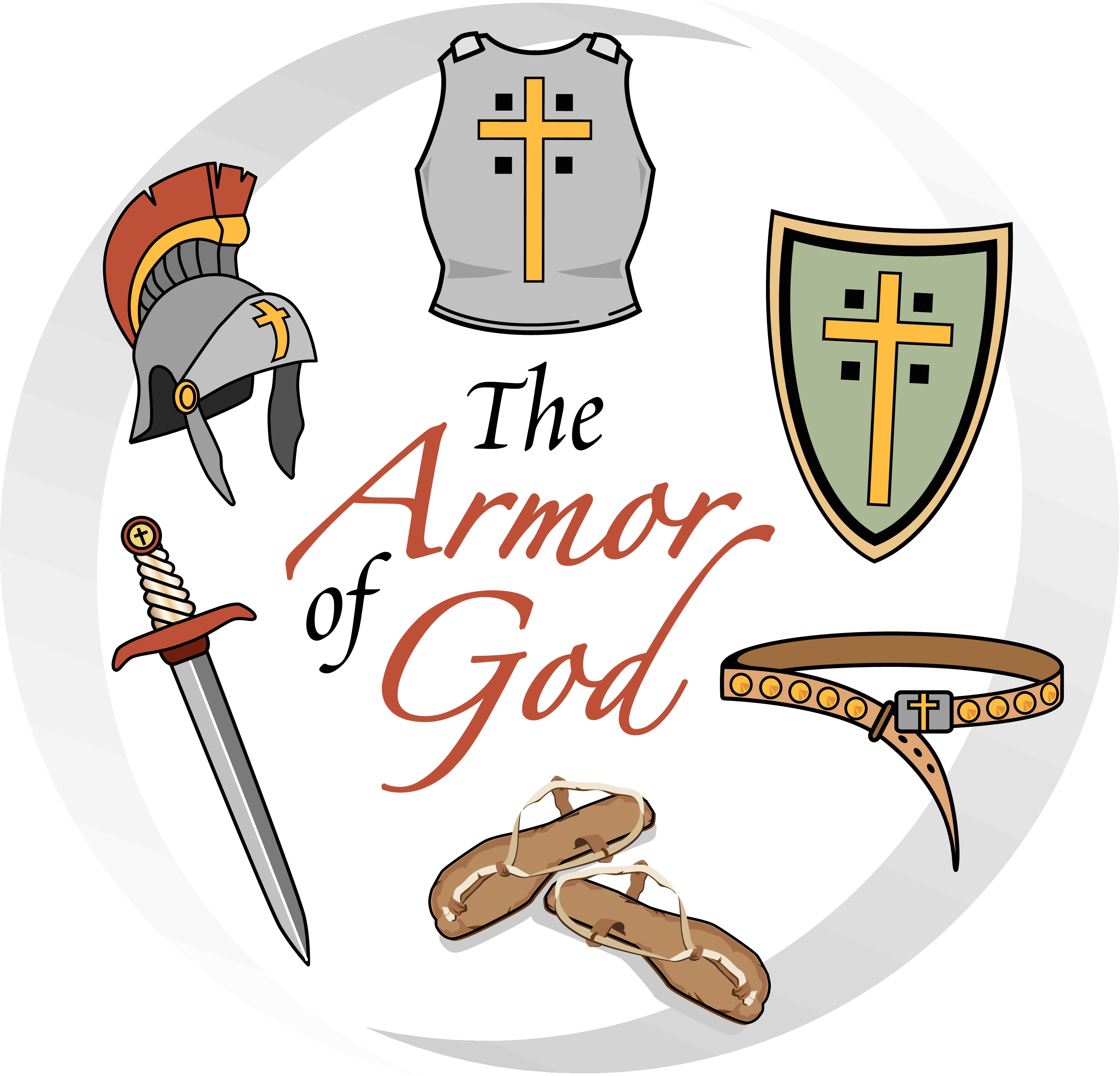
So, God help me stand firm.  Do not let me slip into the attire of frivolity but strap on the armor of battle.  Whether I am at home, in the community, or in worship, bind me with the belt of truth.  Cover me with the breastplate of righteousness and shield of faith so no flaming darts will pierce my soul.   In my hand, secure the Sword of the Spirit.

Keep me alert.  Help me persevere — to victory.

(Ephesians 6:10-18)

Damage Control

Was Dr. Mary Wood-Allen, the author of my grandmother’s book, able to see into the future?  No, but when she wrote about taking care of the body, I believe she was thinking generationally.  Let’s fast forward to the words of another woman physician.

Miriam Grossman, M.D., also believes that the body deserves respect and care.  That’s because she sees — up close and personally — how complex the human body really is.

Dr. Grossman is a campus psychiatrist who meets with countless young women.  It is the fear, anger, and depression of these young women that motivated her to write the book Unprotected.  This short and politically-incorrect book is a must-read for young women in high school and college.  It is a must-read for young men who hope to someday marry a woman.  It is a must read for parents.

Consider the topic of sexually transmitted diseases, HPV in particular.  HPV (human papilloma virus) often catches young women by surprise.  There is emotional fallout.  Trauma.  What is a girl to do?  Damage control kicks in at student health centers.  Pamphlets explain that “HPV infection is very common . . . almost everyone gets HPV at some time . . . having only a single lifetime partner does not assure protection . . .  anyone who has ever had sexual relations has a high chance of being exposed to this virus . . . most men and women are infected with HPV at some time in their lives.”

With these “calming” words, observes Dr. Grossman, young women with a serious and possibly life-threatening disease are led to believe that “everyone’s in the same boat,” so “chill out, and welcome to the club.”

But, writes Dr. Grossman, “these reassurances are inaccurate, and do no favor to women: in fact, infection with HPV is completely preventable.  It is not an inevitable consequence of becoming sexually active.  It is not something that will happen sooner or later.  Even if well-intentioned, to imply otherwise is misleading.

“This may not be popular to talk about, but there exists a population of young women and men who do not have to worry about HPV.  Or, for that matter, about herpes, chlamydia, or HIV.  They are safe because they wait, and marry someone else who waited.  Yes, it can be done; people have been known to survive and tell others about it.  Medicine should be studying them, and how they avoid risky behaviors, then applying that knowledge to our reproductive health education campaigns.  Instead, there is an odd approach in sexual health: instead of asking our youth to strive for self-control and smart choices, we assume they’ll make poor choices and have multiple partners including some they hardly know.  Why else would every pamphlet and Web site advise them, ‘First, talk with your partner.’  It’s as if whoever’s composing this material has given up on standards, and expects the behavior of the lowest common denominator.”

Dr. Grossman quotes a doctor who, on an HPV support site, is trying to provide words of comfort.   He put it this way:  “. . . Sex is simply one of the many ways in which humans interact with one another.  All those interactions involve sharing bacteria, viruses, etc.”

“What?” asks Dr. Grossman.  “One of the many ways in which humans interact with one another?  Is that the message we want to give to young people?”

Dr. Miriam Grossman, like Dr. Mary Wood-Allen before her, doesn’t want young women (or men) to be at risk.  She doesn’t settle for risk reduction but presses for risk elimination.  And, lest you missed it, neither of these women physicians of 1898 or 2011 seems to find benefit in tiptoeing around or worrying about “judging.”   If we talk to young people about healthier eating and not smoking, using drugs, or drinking and driving, then shouldn’t we also talk to them honestly about the consequences of sexual bonding outside of faithful and Biblical marriage?

Unprotected is a quick read.  Please toss political correctness to the wind and purchase a copy.

The Body is Our House

Your body, wrote Mary Wood-Allen, M.D., is not you.  It is your dwelling, but not you.  It does, however, express you.

She explains: A man builds a house and, through it, expresses himself.  As someone else looks at the house and then walks through it, they will learn a great deal about the man.  The outside will give evidence of neatness, orderliness, and artistry or it may show that he cares nothing for elements of beauty and neatness.  His library will reveal the character of his mind.  Care of his house — preservation of its health — speaks of respect and value.

The author of the book found among my grandmother’s treasures notes that  many young people just want to have a “good time.”  Dr. Allen wrote that she heard many young people remark that it’s o.k. for the “old folks” to take care of their bodies and health, but “I don’t want to be so fussy . . . I’d rather die ten years sooner and have some fun while I do live.”

But, what serious pianist would neglect the care of his piano because it’s too “fussy” and then add, “I’ll treat it more kindly when it’s old”?  Dr. Allen observed that, too often, we prize the body far more after its use for us is at an end than while it is ours to use.   We don’t neglect the dead; we dress them in beautiful garments, we adorn them with flowers, we follow them to the grave with religious ceremonies, we build costly monuments to place over their graves, and then we go to weep over their last resting-place.”  I wonder: Do we treat our living, breathing bodies with such respect?  Do we treat the living, breathing bodies of others with such care?

There are those among us who consider themselves “progressive.”  A “progressive” would find no value in “going back” to a book from their grandmother’s collection.  But, in reading What A Young Woman Ought to Know by a woman physician published in 1898, I am more deeply committed to the Titus 2 style of mentoring.  Yes, there are trends.  There are new styles.  Technology changes, even improves.   But, care of our bodies is a truth that does not change with time.  What we do to and with our bodies, what we put in them, how we dress them, what environment we allow them to be in, and how we expect others to treat them matters today as much as it did yesterday.

Does it matter how we treat our bodies?  The answer to that question depends on what we believe about our origin.  Are we here by chance, just accidents of nature?  Or, are we “knit together in our mother’s wombs” by God Himself (Psalm 139)?  Is the value of our bodies determined by how we or others see them, or by the price that Jesus Christ paid for them?

Dr. Allen asks:

Is it not life that we should value?  Life here and hereafter, not death, is the real thing for which we should prepare . . . Life should increase in beauty and usefulness, in ability and joyousness, as the years bring us a wider experience, and this will be the case if we in youth have been wise enough to lay the foundation of health by a wise, thoughtful, prudent care of our bodies and our minds.

1898

My Grandmother Barhite died when I was 13.  I spent a lot of time with her.  She was a teacher, listener, encourager, friend, and faithful helper.  I learned about the gift of hospitality and service from both my mom and my dad’s mom.  Both taught me to serve others rather than self.  Sleep-overs with Grandma were more than fun, they were lessons in womanhood, family life and growing in faith.  When Grandma died, I lost a mentor.

Or did I?  In a box of Grandma’s photos, I discovered one of her girlhood books.  It is a keepsake.  Often, I quote from it during Titus 2 Retreats.  The book was published in 1898 by author Mary Wood-Allen, M.D.  Notable women of Dr. Allen’s day recommend the book.  They include Mrs. Lillian M.N. Stevens, President of National Woman’s Christian Temperance Union; Mrs. Helen Campbell, Dean of the Department of Household Economics in the Kansas State Agricultural College, and Mrs. Elizabeth Cady Stanton, noted Woman Suffragist, Lecturer, and Author.  The book is titled What a Young Woman Ought to Know from the “Purity and Truth: Self and Sex Series.”  In reading this book, I realize that Grandma is still mentoring me.  I also realize that Biblical womanhood (and  manhood) has been foundational for the benefit of society for a long, long time.

From time to time, I hope to share a few quotes from my grandma’s book.  Consider the Preface:

During a number of years it has been my privilege to be the confidante and counselor of a large number of young women of various stations in life and in all parts of the United States.

Hmmm.  I’m not a physician like Dr. Mary Wood-Allen, but I have been privileged to be taken into the confidence of a number of young women both far away and close to home.

These girls have talked freely with me concerning their plans, aspirations, fears and personal problems.  It has been a great revelation to me to note with what unanimity they ask certain questions concerning conduct — queries which perhaps might astonish the mothers of these same girls, as they, doubtless, take it for granted that their daughters intuitively understand these fundamental laws of propriety.

Hmmm.  Girls have also shared with me their hopes, dreams, and personal problems.  They ask many of the same questions about behavior and choices.  They express frustration about their identity, their bodies, and relationships.  Fewer mothers and grandmothers have tried to pass on ideas of Biblical womanhood so most of these girls have learned about being a woman from the culture.

The truth is that many girls who have been taught in the olgies of the schools, who have been trained in the conventionalities of society, have been left to pick up as they may their ideas upon personal conduct, and, coming face to face with puzzling problems, are at a loss, and perhaps are led into wrong ways of thinking and questionable ways of doing because no one has foreseen their dilemma and warned them how to meet it.

Hmmmm.  Today’s young women have been “oligized.”  But, far too many have little or no idea about their origin, purpose, or destination.  They have been taught how to “feel” but perhaps not how to think.

Life will be safer for the girl who understands her own nature and reverences her womanhood, who realizes her responsibility towards the human race and conducts herself in accordance with that realization . . . Life will be nobler and purer in its possession and its transmission if, from childhood onward to old age, the thoughts has been held that ‘Life is a gift of God and is divine.’

I am an ezerwoman.  A helper woman.  This is a vocation through which I can help younger women be safer, realize responsibility, and make choices that lead toward hope.  This begins with the confidence of identity: I am a creation of God and treasure of Jesus Christ.

Truth in 1898.  Truth in 2011.  Timeless.  Life-changing.  Rich with promise.

Tired Helper

A sudden and strange sounding illness has forced a good friend of mine to a hospital bed.  As her husband explained, God must want her with us because she could have died.

I know my friend very well.  She is a true caregiver.  Many in her extended family depend on her.  I pray that the Great Physician restores my friend to good health.  Selfishly, I’d like to grow old(er) with her.  But, this is probably a good time to remind my friend (and myself) of something.

Sometimes, caring for people is what we do.  It is what we’re known for.  It becomes our identity.  But, our identity is first and foremost a creation of God and treasure of Christ.  As women, our vocation is “helper.”  Our identity doesn’t change with the circumstances of life; we don’t lose our identity.  But, we do need a break from our vocation of helping others… at least once in awhile.

There need be no fear.  Such “time out” will not make us less valuable.

“Time out” to rest in God’s hands can be encouraging time for a “helper.”

No Words

Oklahoma City.  Columbine.  9/11.  Fort Hood. Tucson.  Lives ended at the whim of another.  Words are used to describe the tragedy.  Express sadness.  Place blame.  Describe loss.

But, there are no adequate words to describe God’s gift of human life or really comprehend its loss.

How do we put into words the thoughts and timing of God?  What causes Him to say, “Now.  Now I desire to knit this person or that person together in his or her mother’s womb”?   How can we imagine the value of such life to the God who numbers each hair upon our head?  There are no words.

Be still and know that I am God.”

Before Him, we stand — no, kneel — in awe of his creative power.

Where were you when I laid the foundation of the earth?  Tell me if you have understanding (God to Job).”

What can we say to the One who “binds the chains of the Pleiades” or loosens “the cords of Orion,” who gives “the horse his might,” who commands the eagle to “mount up and make his nest on high” (Job 38-39)?

If there is a word to be said to the Giver of life, it is “Yes.”  “Yes” to each human life knit together by God’s hands.  Our “yes” to life is a “no” to death.  Death at the whim of another.  Death as a response to inconvenience.  Death as a form of control.   Death by abortion.  Death by embryonic stem cell research.  Death by assisted suicide.

Our “yes” is a whisper of trust.  In humbled reverence we are moved to care.  Serve.  Love one another… as He first loved us.


Loss of Respect

What followed the tragedy in Tucson testifies to our nation’s loss of respect for human life.

A young man, for no sane or sensible reason, chose to coldly shoot and kill six people.  He wounded thirteen others.   The choices and behaviors that followed this tragedy are, perhaps, just as chilling.

A sheriff traditionally called upon to bring order and serve justice chose, instead, to build a platform for his own personal and political opinions.  He stepped over the boundary of his role as a servant of the people to take advantage of a tragic event.  In so doing, he diverted attention away from the dignity of human life to himself.

A national president traditionally called upon to serve the best interests of his countrymen chose, instead, to allow a  memorial service to be transformed into a rally.   In so doing, he diverted attention away from the dignity of human life to himself.

A government staff and university administration, captivated perhaps by this national moment, missed the opportunity to call a community and country to reverence and respect for human life.  Instead, multiculturalism was showcased.  The students in attendance were motivated not to silence and reflection but to “rah rah” and “hoopla.”   With the loss of respect for human life comes a loss of common decency and good manners.

I was distracted by sensational yet conflicting messages.   Then, I re-focused: What sensitivity was expressed toward the families of the dead and wounded?  The judge, shot and killed that morning in front of Safeway, was returning from Mass.  Yet, instead of a priest, a Native American professor raised his feather and called upon the “masculine” spirit from above and the “feminine” spirit from the earth.  In an odd twist, two presidential staff members read from Isaiah and Corinthians.  Jesus’ name was spoken, not by a churchman but by a statesman.

I was confused.  Upon whom fell the spotlight?  And why?  As this week comes to a close, who will be remembered?

The young intern to whom the congresswoman may owe her life spoke with humility.  He rejected the title of “hero” to instead point to many others who were willing to lay down their own lives for another. There were several who chose to, intentionally or unintentionally, honor the Creator and Redeemer of life by “loving their neighbor.”  Their selflessness is a ray of hope.

Not to us, O Lord, not to us but to Your name be the glory, because of your love and faithfulness

(Psalm 115:1)