 Alexander Tsiaras gives us opportunity to marvel at the miracle of human life. I’ve shared his video with you before, but I encourage you to look again…
…and share with everyone you know 🙂
Posted in Identity, Life issues, tagged creator God, fetal development, human life on April 16, 2012| Leave a Comment »
Alexander Tsiaras gives us opportunity to marvel at the miracle of human life. I’ve shared his video with you before, but I encourage you to look again…
…and share with everyone you know 🙂
Posted in Culture Shifts, Faith & Practice, Identity, Life issues, tagged behavior, Charles Darwin, creation, creator God, critical thinking, education, evolution, faith, God's Word, intelligent design, moral choices, Richard Dawkins, science, values on June 2, 2011| Leave a Comment »
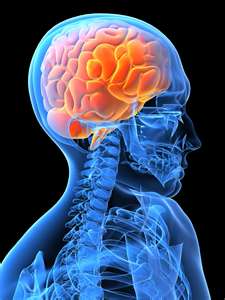 In his article, “Are We Dumb and Getting Dumber?,” Regis Nicoll writes, “Distinguishing between science and faith is problematic, given that there is more than a little measure of faith in science; especially, materialistic science:
Nicoll continues, “Similarly, discriminating conventional wisdom from actual wisdom is difficult-to-impossible, given their considerable overlap. The conventional wisdom that ‘what goes up, must come down,’ is congruent with the actual wisdom of Newton’s laws. In the same way, conventional beliefs about things like murder, cruelty and rape accord with the universal conviction of their actual immorality.”
Nicoll notes that, “Our real challenge is not discerning between such false dichotomies but discerning science from science fiction and truth from falsehood. When a frog-turned-prince tale is dismissed as myth until the time frame is changed from a bibbidi-bobbidi-boo instant to 150 million years, it signals a discernment deficit. When the time frame is extended to a few billion years to spin a neutrino-turned-prince tale, it signals a discernment crisis.”
Who are the “gatekeepers” of truth? Nicoll recalls a NOVA special featuring an astrophysicist who stated, “We’re descended from neutrinos!” Then, after a reverential pause, he added, “They’re our parents.” (This… from an astrophysicist? He’s joking, right?) Nicoll writes, “The gatekeepers have spun many an imaginative yarn about how the universe came to be and how matter ‘went live.’ But despite the intellectual charm of creative neutrinos, cosmic inflation, multiverses, emergence, abiogenesis, and the like, their ever-inventive tales remain, and will always remain, just that: tales with no more claim to truth than those of a court astrologer.”
I came across Nicoll’s article in Breakpoint (5-6-11) while trying to respond to my agnostic friend. He’s the one who threw into the “hopper of our discussion” the quote from William Inge (see Part I, previous post). I explained to my friend that I am a builder of relationships. I am a woman who, because of both facts and faith, accepts and finds joy in my defined role of “helper.” My Biblical worldview defines my role in Genesis 2:18. “The the Lord God said, ‘It is not good that the man should be alone; I will make him a helper fit for him.’ ” (The Hebrew word for “helper” is ezer, which elsewhere in Scripture also means “assistant” or “ally.” Thus, my blog name ezerwoman. In no way do I find “helper” to be inferior; rather, I find order, sanity, and hope in a chaotic, insane, and hopeless world.) As a builder of relationships and a “helper,” I could have been blessed with a brain that easily processes scientific data and enjoys doing so. But, no. Such a brain belongs to my husband and sons. Nevertheless, I do possess reason and logic. My reason and logic agrees with Nicoll when it comes to these “gatekeepers of truth.”
Nicoll writes, “The idea that ‘in the beginning were neutrinos’ that went bump in the cosmos to form intelligent beings is as fantastic (more so, really) as the Mayan account that ‘in the beginning were only Tepeu and Gucumatz . . .[who] sat together and thought, and whatever they thought came into being.’ ”
Are we witnessing an intentional change in education? Isn’t the proper goal of education to teach students how to think, not what to think?
“Intelligent design and Darwinism,” writes Nicoll, “are controversial theories that enjoy wide currency in the marketplace of ideas. Teaching one theory to the exclusion of others, and without presenting its weaknesses along with its strengths, is indoctrination, not education.”
Posted in Citizenship, Faith & Practice, Life issues, Relationships, tagged atheists, attack on God, catastrophe, compassion, creator God, hope, Japanese earthquake, mercy, observable laws, science, tsunami on March 15, 2011| Leave a Comment »
 It was predictable. The “chattering atheist class is once again mocking those of us who believe in God,” writes Chuck Colson. In the wake of the earthquakes and tsunami, they ask: Why would our so-called good God permit such a catastrophe? Colson observes, “It’s amazing how much time some people spend railing against a God they don’t believe exists.”
My son, Jon, notes, Christianity isn’t for dummies. We don’t have to leave our brains at the door in order to have faith in a creator God. Look at what’s happening. The earth and the physical creation — reflecting its rational creator — is behaving according to observable laws. Observe these laws and principles, encourages Colson, and you’ll know much about plate tectonics and how earthquakes occur. They are a result of natural processes.
Can we stop earthquakes? No. But, as rational beings created in God’s image (although fallen to sin), we enjoy the opportunity to use the gifts of knowledge God has entrusted to us. We, as Colson points out, can use that knowledge and good sense. Perhaps we should not be so arrogant as to build cities on already-known fault lines. Or homes in hurricane zones.
When an earthquake, tsunami, or tornado claim the lives of thousands, can we complain that God let it happen? When a hurricane wrecks havoc in a community, can we question or blame God? No. “Hurricanes are a natural phenomenon that occurs because of climactic changes and shifting winds and temperature gradients,” notes Colson, “all of those things which can now be clearly demonstrated to be physical laws of the universe.” Has it always been this way? Nasty upheavals of the earth and killer storms?
No. Such things did not exist in the beginning. But, in a perfect Garden, man and woman rebelled against God. (I hear you atheists… go ahead and scoff.) When the created thought itself better than the Creator, sin entered the world. Now we live with the consequences of that sin: an earth in turmoil.
What can we do? Mourn with those who mourn. Love our neighbors as ourselves. Help those in need. Share our resources. Give up a new pair of shoes, a steak dinner, or a round of golf and send the money to world relief.
Then, listen.
Where were you when I laid the foundation of the earth? Tell me, if you have understanding. Who determined its measurements — surely you know! Or who stretched the line upon it? On what were its bases sunk, or who laid its cornerstone . . . Have you commanded the morning since your days began, and caused the dawn to know its place . . . Who has cleft a channel for the torrents of rain and a way for the thunderbolt . . . Can you bind the chains of the Pleiades or loose the cords of Orion . . . Shall a faultfinder contend with the Almighty? He who argues with God, let him answer it.”
(Job 38:4-6; 12; 25; 31; 40:1-2)

| M | T | W | T | F | S | S |
|---|---|---|---|---|---|---|
| 1 | 2 | 3 | 4 | 5 | ||
| 6 | 7 | 8 | 9 | 10 | 11 | 12 |
| 13 | 14 | 15 | 16 | 17 | 18 | 19 |
| 20 | 21 | 22 | 23 | 24 | 25 | 26 |
| 27 | 28 | 29 | 30 | |||


 Ezerwoman's Blog