Feeds:
Posts
Comments

Archive for the ‘Biblical manhood & womanhood’ Category

candle lightTwo thousand fourteen years ago, God came into this sin-tainted world so that Light would shine in the darkness.

But, today, the darkness seems so oppressive.  Will it overwhelm the Light?”

Sexual immorality abounds. Sensuality is an idol. Girls assume that it’s “normal” to be sexually intimate with boys. Planned Parenthood uses the book Fifty Shades of Gray to explain to 15-year-old girls why sadistic and masochistic sex is “okay” if the girl “gives permission.” Pedophilia is on the rise. Sodomy is tolerated as just another expression of “love.” Marriage is assaulted not just by advocates of same-sex “marriage,” but by adultery, cohabitation, no-fault divorce. Children grow up in homes with their mommy and her boyfriend. Grandchildren see their grandparents “shacking up.”

The darkness seems so oppressive… will it overwhelm the Light?  No!

In the beginning was the Word, and the Word was with God, and the Word was God.  He was in the beginning with God. All things were made through him, and without him was not anything made that was made. In him was life, and the life was the light of men.  The light shines in the darkness, and the darkness has not overcome it (John 1:1-5).

But aren’t we living in times more dark than any other? Isn’t darkness more oppressive and evil more ominous than ever before? No!

Alvin Schmidt, the author of How Christianity Changed the World, explains that from early on, Christians have found themselves in cultures that, indeed, “exchanged the truth of God for a lie, and worshiped and served created things rather than the Creator,” and because of this, “God gave them over to shameful lusts” (Romans 1:25-26). This is how St. Paul described the Greco-Roman society of his day.

Schmidt writes, “By the first and second centuries after Christ, undefiled sexual intercourse, along with marital faithfulness, had essentially disappeared. Not only were adultery and fornication common, but people engaged in all sorts of sexual methods, many of them obscene.”

He continues, “Roman marriages had greatly deteriorated; they had become a ‘loose and voluntary compact [and] religious and civil rites were no longer essential.’ Marriage was ‘detested as a disagreeable necessity.’ Since people had become obsessed with sex, marital unions were very short-lived.” The Latin Church father, Tertullian, “noted that male/female sex relations had become sadistic and masochistic . . . Heterosexual love had turned into a type of sport.” Prostitution, incest, and mutilation were not uncommon.

The world at that time seemed very, very dark. Overwhelmingly dark.

But, writes Schmidt, “into this immoral sexual environment came the Christians with a radically different sexual ethic and lifestyle . . . [W]hen God instituted marriage at the time of creation, He told Adam and Eve that the sex act made a husband and wife one flesh (Gen. 2:24). The one flesh concept required the married couple to be totally faithful to each other.” Schmidt points to a second-century document that describes how the early Christians differed from the pagan Romans by confining their sexual behavior to married life. The document reads: “They [Christians] marry as do all; they beget children . . . They have a common table, but not a common bed” (Epistle to Diognetus).

One would think that the darkness of the Roman culture was so oppressive that Christians would shrink away and take their Light with them.  But, no!

Schmidt writes that “Galen, a Greek physician of the second century, was impressed with the upright sexual behavior of Christians. He said they were ‘so far advanced in self-discipline and . . . intense desire to attain moral excellence that they are in no way inferior to true philosophers.’”

The Christian doctrine and practice of marriage was “so powerful,” writes Schmidt, that historian Edward Gibbon says, “The dignity of marriage was restored by the Christians.”

The dignity of marriage was restored! And there’s more! Schmidt writes, “The dignity and sanctity of marriage that Christianity brought to Roman culture were mostly due to the early Christian women. They appreciated the dignity and worth that Christ’s teachings accorded them” (prior to Jesus’ earthly ministry, women were too often held in low esteem). Women, “more so than men, understood the seriousness of their biological role as bearers of children in God’s created order. Thus, the wedding rite, the precursor to the fulfillment of that role, needed to be conducted with solemnity and reverence.”

Lest we think this is mere speculation on the part of Schmidt or any other historian, here’s what the pagan Libanius said about the dedication of Christian wives and mothers of that time: “What women these Christians have!”

It is no different today.  A woman who sees herself in the Light of Christ can also see her relationships, choices, and behaviors in that same Light.  As she begins to see the seriousness of her biological role as a bearer of children in God’s created order, she can also help her boyfriend, fiancé, or husband understand this, too.  As she contrasts passionate eros love with patient and virtuous agape love (1 Corinthians 13), she can positively influence not only the man in her life but her children and grandchildren.

It is true that the darkness of sin and evil is oppressive.  Marriage is under assault and weakened by every form of sexual idolatry.  But the Light shines in the darkness, and the darkness has not overcome it.  God is faithful to use men and women who trust the Light to make a difference one person, one family, one neighborhood at a time.  Sometimes, as happened in Rome, even seemingly hopeless and depraved cultures begin to look with favor on wives and mothers, husbands and fathers.

Darkness is oppressive, but the Light cannot be overcome.  And in that Light, the dignity of marriage and family can slowly be restored.

I believe it.

Read Full Post »

older couple's handsWe are witnessing the deconstruction of marriage. But, how did it happen and why? Can we place the blame on those who advocate same-sex “marriage”?  Are they the only ones  chipping away at the institution of marriage?

Long before society began to tolerate the “marriage” of two men or two women, it accepted cohabitation, adultery, and no-fault divorce. It accepted the lie that we are, first and foremost, sexual beings who have the “right” to love, be loved, and have our needs met. Society, however, would not be left in such darkness if we in the Church had trusted the Light and resisted the sexualization of marriage.

What does this mean? In 1961, Mary Calderone, the co-founder of SIECUS (Sex Information and Education Council of the U.S.) and former medical director of Planned Parenthood, lectured on the role of churches in sex education to 500 delegates from 38 Protestant denominations. Calderone worked her way into churches and homes because she feared that parents did a poor job of teaching their children about “sexuality.” She wanted parents to teach children the “yeses” of sex instead of so many “thou shalt nots.” She wanted boundaries and inhibitions removed. Calderone wanted children to experience the “wow” factor of sex. There were those in the Church who embraced this thinking. It was their hope that talking about sex with children beginning at an early age would help boys and girls grow up to be husbands and wives who would experience the “wow” factor of sex.

And so, for half a century and from kindergarten on, children hear: “God created sex to be beautiful within marriage.” “Sex in marriage is the best thing ever.” “Sex is worth waiting for.” “Sex within marriage is when we are the closest to God.” “Sex is so amazing, my dear child, that we are going to talk about it a lot.”

Because sin permeates all relationships, including marriage, is it possible that years of fantasizing on the ecstasy of sex might have an impact on a husband and wife? Might sexual expectations be so high that when marriage is put to the everyday challenges of real life, husbands and wives are disappointed? Might they be so disappointed that they are tempted to believe that sex with someone else might be better, maybe even with someone of the same gender who might better understand their partner’s needs?
Has marriage been sexualized?

Consider the husband and wife who desire to bring new life into the world, but are barren. Rebecca Mayes writes, “One of the aspects of barrenness that is so awkward is the fact that the ‘success’ of your marital relations (more modernly called your ‘sex life’) with your spouse is often scrutinized by those around you, either privately in their own minds, or quite publicly to your face. The joining of two fleshes into one in the bonds of holy matrimony used to be treated with such modesty and respect. No one would dare ask you whether you’re ‘doing it’ right or if you’ve tried such-and-such a method. But the sexual revolution has changed all that, and in numerous Christian publications we read that the act is a beautiful, natural part of marriage and there’s nothing to be embarrassed about. We should celebrate our ‘gift of sexuality’ and teach children in our Church all they need to know to be prepared for utilizing this ‘gift.’ But is this what the Bible says? When we blush at the questions about what’s wrong with our reproductive organs, is that for a good reason, or are we just prudes?” (He Remembers the Barren, 6-15-2014)

Sex matters, but marriage matters more. Some pastors take care during pre-marital instruction not to overemphasize sexuality because they believe that it could threaten the hierarchy of values in marriage and assume too predominant a place in terms of producing a well-grounded and joyful marriage. The “wow” factor of sex can be wonderful, but it is the friendship, trusted companionship, communication, and agape love of a husband and wife that carries them through good times and bad, sickness and health. With an identity that is primarily “sexual,” we are limited in the ways we can serve others. Not so with our holy identity; for indeed, when we see ourselves as “uncommon” and set apart for use not just by anyone but by God, our opportunities to serve are multiplied.

Instead of detailed sex talk, parents do better—with the support of the Church—to help boys understand the vocation of manhood and girls to understand the vocation of womanhood. Boys need to know how they, as the stewards and defenders of life, should regard women, most especially their someday wives. Girls need to know how they, as the co-stewards and nurturers of life, should regard men, most especially their someday husbands. Parents go a long way in preparing sons and daughters for marriage by mentoring respect, patience, selflessness, and forgiveness. Parents also do well in preparing young men and women for the realities of married life. Because of the Fall, marriage is hard work. It requires appreciation of our differences as male and female, the commitment to work together, trust, friendship, and more agape than eros love. Marriage can be a beautiful relationship, not just because of the sexual union, but sometimes even in spite of it.

It is God’s design that the marital union of man and woman become the nest for new life; the foundation for home and family. Sin has distorted God’s perfect design but, even in disappointment and difficulty, a faithful marriage is the bedrock of a finely-tuned and healthy society. Marriage is the amazing teamwork of male and female; indeed, the two eyes of the human race. Both eyes are needed for a proper perspective on all matters of life. Biblical marriage is the only pairing that allows a man formed from the dust of the ground to welcome the help of a woman made from his rib. The world is better for it.

Intimacy in marriage is not all about the sexual act. It is the most perfect trust, companionship and loving faithfulness this side of heaven. It is the unity of two spirits in this life—male and female, each encouraging the other to journey well to a sure and certain destination.

Photo Credit: Dreamstime.com
Linda Bartlett strives to help mentor
biblical womanhood through Titus 2 for Life .
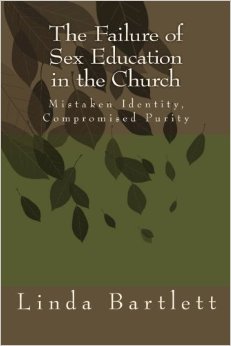
She is the author of The Failure of Sex Education in the Church:
Mistaken Identity, Compromised Purity (Amazon.com)
Visit: Our Identity Matters

Read Full Post »

My book coverThere is hope.  There is always hope.

Many parents, grandparents, pastors and teachers mourn the sexualization of children.  They ask: Why?  How did this come to be?  In what ways have we failed Jesus’ little ones?  Were we deceived?  If so, by whom?  Did we put our trust in something other than God’s Word?

These questions and others are being discussed this fall in various locations across the Midwest.  Together with pastors who have read and affirm my book, The Failure of Sex Education in the Church: Mistaken Identity, Compromised Purity,  I am engaging Christians who grieve the loss of childhood innocence and want to do something about it.  Most hopeful is the vocal and discerningly wise response of a younger generation of parents and pastors.  Soon, I hope to make public some of those responses.

For now, however, let me encourage all moms and dads who want to guard the physical and spiritual health of sons and daughters; who want to guard a son’s right to childhood, right to boyhood, and right to godly manhood; who want to guard a daughter’s right to a childhood, right to girlhood, and right to maidenhood.  Be not ashamed to instruct your child in purity for it is the Word of God.  Sex education, in or out of the Church, builds on a secular humanist foundation; therefore, it will always lean the wrong way.  Instruction in purity is rooted in Christ Himself; therefore, it will serve well in this life and into the next.  Sex education too easily shapes a sexual identity.  Instruction in purity reminds the baptized of their holy identity.

Sex education helps children focus more on the “yeses” of sex and less on the “shalt nots.”   Sex education dangles the carrot of glorious marital sex before children beginning at a young age, but then instructs young people to delay marriage until graduating from college, securing a good job and paying off some debt.  Instruction in purity understands that we no longer live in the Garden of Eden.  For this reason, it neither arouses love before its time nor does it place obstacles in the way of youthful marriage and the faithful growing of family.

True to God’s Word, there is an order for instruction in purity.  When a Christian mother by the name of Laeta asked how she could raise her daughter to purity, the Church father Jerome answered: First teach the rules of life from Proverbs, the patience and virtue of Job, the epistles, and the prophets.  Only then, and at a more mature age, is there wisdom in directing a young woman to read about marriage and the spiritual bride in Song of Songs. *

There is hope.  There is always hope in God’s design and order for life.

*With appreciation to Christopher W. Mitchell,
Concordia Commentary The Song of Songs, p. 278

The Failure of Sex Education in the Church:
Mistaken Identity, Compromised Purity
by Linda Bartlett (Amazon.com)

Read Full Post »

The following was written by Rebecca Mayes and posted on He Remembers the Barren.  Thank you, Rebecca.

One of the aspects of barrenness that is so awkward is the fact that the “success” of your marital relations (more modernly called your “sex life”) with your spouse is often scrutinized by those around you, either privately in their own minds, or quite publicly to your face. The joining of two fleshes into one in the bonds of holy matrimony used to be treated with such modesty and respect. No one would dare ask you whether you’re “doing it” right or if you’ve tried such-and-such a method. But the sexual revolution changed all that, and in numerous Christian publications we read that the act is a beautiful, natural part of marriage and there’s nothing to be embarrassed about. We should celebrate our gift of sexuality and teach the children in our Church all they need to know to be prepared for utilizing this gift. But is this what the Bible says? When we blush at the questions about what’s wrong with our reproductive organs, is that for a good reason, or are we just prudes?

Linda's bookLinda Bartlett, former national president of Lutherans for Life, has just published The Failure of Sex Education in the Church: Mistaken Identity, Compromised Purity, which exposes the myths that our generation, as well as our parents’ and grandparents’ generations, have been taught to believe about what children should know to be prepared for marriage, the marital act, and procreation.

Bartlett begins by giving the necessary history of how the Church,  during the mid-20th century, put too much trust in “experts” instead of the inspired Word of God and willingly traded in our biblical understanding of manhood, womanhood, procreation, parenting, and purity for a more “scientific” approach to teaching children about the intimacies of marriage. Falsified, inaccurate, and even perverted studies on the “sexuality” of the human male and female conducted by Alfred Kinsey were presented to universities, medical associations, and church bodies as facts which could not be ignored by enlightened academics. Christianized versions of the sexual revolution’s message were then (and still are) passed down to schools and parents to share with children.

Are just what are some of these myths?

  • Children are sexual from birth.
  • Children should be taught about sex, and with the proper terminologies, beginning in early elementary school.
  • If children are not taught about sex early on, their naiveté could make them prey to sexual predators.
  • Parents aren’t trained to properly teach their children about sex. The schools are the best environments for this to take place.
  • Boys and girls should be taught about puberty and sexuality while in the same classroom, since there’s nothing to be embarrassed about.
  • Sex education will help prevent unplanned pregnancies, STD’s, and abortions.

The Church was naive in its promotion of sex education in the parochial schools, Bartlett points out, but not malicious. We were deceived into believing that we are “sexual from birth,” and this brainwashing had the complete opposite effect on our Church members as what was intended. It cleared the way for the acceptance of fornication, homosexuality, birth control, and even abortion as a normal part of life for those who are simply expressing their sexuality – being who they thought they were created to be.

But that’s not how we were created, Bartlett reminds us. The solution to the mess we are in now is our Baptism. This is where we received our true identities as children of the Heavenly Father, not sexual beings created to express our sexuality, but holy beings, created to live holy (not sexual) lives. “It is important,” Bartlett says, “for the Body of Christ to see each member as fully human as opposed to sexual and, therefore, an instrument for God’s purpose and glory whether a child or adult, single or married, in this circumstance or that,” (pg. 108).

Because Bartlett presents such shocking evidence of our deception, she presents her case in the form of a patient dialogue between herself and her readers, including over 100 questions and then answering almost every objection one could think of to the notion that there is anything wrong with the way the Church has been educating her children. Her love and concern for her Church family flow through each section as she gently reminds us all that, “Even well-intentioned sex education in the Church leans the wrong way if built on the wrong foundation,” (pg. 129).

If you have children, if you teach children, if you are related to children, or if you once were a child, this book is for you.

Rebecca Mayes
He Remembers the Barren

Read Full Post »

crown of thorns with crossJesus Christ welcomes sinners.  He wants us to acknowledge and repent of our sins, but He does not identify us by our sinful desires and inclinations.

It is for this reason that I, a confessional Lutheran, am appreciative of the documentary produced by Blackstone Films to help the Catholic Church share its view on homosexuality.  The film is entitled The Third WayMercatorNet notes that even though it is “not perfect” and features “stereotypical religious” settings, the film is powerfully compelling because of the “authentic, convincing and coherent” voices of seven men and women who live with same-sex attraction.  These men and women  do not deny their personality nor do they argue that same-sex attraction must lead to same-sex lifestyle and same-sex “marriage”.  They confess that homosexuality is a sin even as they confess the struggle to live self-controlled and pure lives.  In the struggle, however, comes joy.  Joy comes when we relinquish our own identity and, in Jesus Christ, see ourselves the way God sees us.

The Word tells us to remember Whose we are and to live accordingly.  In Baptism, Jesus assures our true identity as sons and daughters of God through His sacrificial and redemptive work.  What does this mean?  It means that we are daily called to resist the devil, the world, and our own sinful nature.  It means that we are not common for use by anyone, but uncommon for use in the hands of the holy God.

I am especially appreciative of The Third Way because, for many years, I have been moved by the stories of men and women who were caught in a lifestyle shaped by the lie of a homosexual identity.  Their life experiences and encouragement of the Holy Spirit motivate me to speak Truth on their behalf.  Forgiven of every sin, the repentant sinner stands at the foot of the Cross where we hear Jesus say: Come!  Deny yourself!  Take up your cross and follow Me!  Lose your life and in Me you will find it.  (Matthew 16:24-25).

Please.  Take the time to watch this film.  Its message is for all who are deceived by mistaken identity.

Linda Bartlett is the author of
The Failure of Sex Education in the Church:
Mistaken Identity, Compromised Purity (Amazon)

Read Full Post »

people on beachWhat is mature manhood and womanhood?  Here is perhaps one of the most important questions for Christian parents to help their adolescent children answer.  If we place emphasis on an identity as a “sexual being,” we miss the opportunity to discuss what masculine or feminine personhood really is.  Men are not men and women are not women because of their sexual urges or desires, nor does marriage make a person more fully male or female.  By labeling children or adults as “sexual beings,” we can actually distort the purpose and vocation of manhood and womanhood.

Genesis 1:27 tells us four things about the first man and women.  They were created by God to be human, not the same but male or female, in the image of God (not animals) and, because they were created in God’s image, they were created to be holy.  There is no mention of anything of a sexual nature (“one flesh”) until God brings man and woman together as husband and wife (Gn. 2:24).  Too may of us scurry from Genesis 1:27 and skip straight to that union.  But in doing so, we miss something very important about the essence of male and female.

We are more than sexual beings because God first spoke to Adam about being a man.  Man was put in the Garden to “work and keep it” (Gn. 2:15).  Man was to be a good steward over all of creation.  In faithfulness to God, he was to defend life and avoid death (Gn. 2:16-17).  “Then the Lord God said, ‘It is not good that the man should be alone; I will make him a helper fit for him” (Gn. 2:18).  The creation was incomplete without woman.  Man had no one like himself nor did he have a way to procreate.  God made (literally “built”) woman from man’s rib.  In marriage, the woman is her husband’s “helper” (Hebrew: ezer), assistant and ally.  The vocation of “helper” is not inferior.  Jesus called the Holy Spirit a “Helper” in John 14:16 which can be translated as “comforter,” “encourager,” or “advocate.”  In her “one flesh” union with Adam, Eve became the bearer of life who would nurture, comfort, and encourage husband and children.

Sin distorted God’s perfect design and rhythm of life.  Sin causes the relationships of men and women–married or not–to be difficult.  But even in chaos, God’s order of creation stands.  Whether  married or single, men are stewards of creation.  Whether married or single, men are called to defend life and lead away from death in faithfulness to God.  In or out of marriage, women are called to help men do good (not evil), be encouraged (not discouraged), built up (not torn down).  Mature manhood and womanhood are not dependent on being married; thus, neither are sensually or sexually driven.

Do you see that boys can be mentored to work, build, protect and engage life without sensual implications?  Do you see that girls can be mentored to help, encourage, counsel and build relationships without sensual suggestions?

From The Failure of Sex Education in the Church:
Mistaken Identity, Compromised Purity (pp. 100-101)
by Linda Bartlett (Amazon)

Read Full Post »

???????????????????????????????We recently returned from a week on the northern shore of Lake Superior with our sons, daughter-in-laws and grandchildren. Paul and I wanted to celebrate 40 years of marriage with the family that matters so much to us. Hundreds of photos testify to the fact that precious memories were made.

We hiked, biked and dove into the cold waters together. We bumped heads and dried tears. We sat at table together. Laughed together. Prayed together. We are three generations not randomly thrown together by chance but purposefully knit together by the God of design.

On Sunday morning, we gathered in the great room of the cabin to read God’s Word, sing, and encourage generational faithfulness. It seemed fitting for me as a grandmother to speak to the eldest of the grandchildren Jaden, Ethan, Andrew and Max because they will always have the privilege of setting examples for their younger brothers and sisters Kate, Leah, Sam and Lane.

To get their attention, I asked: “What do worms, mosquitos, bedbugs and flies have to do with being a Christian and following Jesus?” Then I shared with them the true story of Darlene Diebler.

Darlene was born in Boone, IA. She was raised in a Christian home and knew Jesus Christ as her Savior. Encouraged by parents and pastors, she memorized Scripture and words of hymns. As her love for the Lord grew, so did her desire to become a missionary. When Russell Diebler, an experienced missionary, asked her to marry him, she said “Yes!”

The newlyweds settled in New Guinea before their first anniversary. Darlene was excited by the possibilities of living among people who had never heard of Jesus Christ. But Darlene did not become the kind of missionary she had dreamed of. A world war broke out and, together with other missionaries, she was taken prisoner by the Japanese. Men were put in one camp; women and children in another.

Darlene spent her days caring for the sick, comforting the fearful, working in the gardens or pig house, and repeatedly shared the hope of God’s Word—even with the camp commander. On the day when he called her into his office to tell her that her husband had died, a strange thing happened. Instead of breaking down in despair, Darlene witnessed to her captor about why her faith in Jesus Christ would sustain her. Her confidence and uncommon behavior caused the man to leave the room, but not before Darlene saw his eyes glisten with tears.

The only personal item not taken from Darlene was her Bible. God’s Word was light in her darkness. When she got mad at God, she read. When she questioned His will, she read. When she felt sorry for herself, she read. We might wonder: Why didn’t she just give up? Why continue fighting for life when all seemed so hopeless? Darlene didn’t give up because God’s Word was life to her! In meditating upon the Word, the Holy Spirit overcame doubt and turned her eyes to the goodness, faithfulness and promise of God. She was reminded that God had already gone before her and yet, at the same time, was right beside her.

Fear rose up again when Darlene was accused of being a spy for the American army. She was taken away by angry men who had no respect for her as a human being. They placed her in solitary confinement and took away her Bible. Her meals consisted of rice infested with worms. There was no way to protect herself from the flies and mosquitos that carried diseases. Bedbugs bit her flesh all night. Soon, Darlene became very ill. Malaria, beriberi, and dysentery ravaged her body and drained her physical strength. At times, words of prayer failed her. But the Holy Spirit was interceding for her with “groanings too deep for words” (Romans 8:26). He brought to mind Words of the Lord she had committed to memory and verses of hymns sung as a child.

When Darlene was feverish and quite possibly near death, a man appeared with a little bit of medicine. She never saw that man again; in fact, no one else saw or knew of him. To this day, she is convinced he was an angel. Within a very short time—and without a doctor—Darlene regained her strength.

All the worms, flies, mosquitos, and bedbugs tortured her body, but they did not kill her. The Japanese soldiers treated her worse than an animal, but they could not remove her identity as a daughter of God or take from her the Holy Spirit who dwelled within her.

What does this story have to do with my grandchildren? I believe that the prince of this world, the devil, and the culture shaped by his deception will pester my grandsons and granddaughters like so many mosquitos and flies. God’s Word is their only defense. Jesus says,

Behold, I have given you authority to tread on serpents and scorpions, and over all the power of the enemy, and nothing shall hurt you . . . your names are written in heaven” (Luke 10:19-20).

I believe the names of my grandchildren are written in heaven. As baptized children of God in Jesus Christ, I believe they have power over the enemy. I also believe that when they live their faith, they will have an uncommon effect on the people around them.

Darlene’s faith in Christ had an effect on the Japanese prison commander. When he saw that she was not crushed under her load of suffering but had the strength to speak of Jesus even to him—her enemy, his attitude toward her changed. He became her advocate and, even though she was removed from under his authority into the hands of others, he did everything he could to keep her alive during her time in solitary confinement.

It won’t be easy for my grandchildren to live their faith; to “pursue righteousness, godliness, faith, love, steadfastness, gentleness” (1 Timothy 6:11). Even their friends may taunt them or abandon them for not “fitting in”. But God does not want His children to be common and malleable in the hands of just anybody. He wants them to be uncommon and malleable in His hands and for His purpose.

To help my grandsons and granddaughters, I want to be what my grandmother was to me. She was my encourager. My comfort. My example of faithfulness.

When I think of my grandmother, the words of one of her favorite Scripture passages speak to me. They are also words to a hymn. Because I pray my family will fight the good fight, I asked my husband, sons, daughters, grandsons and granddaughters to sing it with me:

Fight the good fight with all your might;
Christ is your strength and Christ your right.
Lay hold on life, and it shall be
Your joy and crown eternally.

Run the straight race through God’s good grace;
Lift up your eyes, and seek His face.
Life with its way before us lies,
Christ is the path, and Christ the prize.

Faint not nor fear, His arms are near;
He changes not who holds you dear;
Only believe, and you will see
That Christ is all eternally.

(LSB 664 “Fight the Good Fight” –
Text: John S.B. Monsell – 1 Timothy 6:12)
This post inspired by Darlene Deibler Rose
Evidence Not Seen:
A Woman’s Miraculous Faith in the Jungles of World War II
A Ruth Graham Dienert Book, 1988

Read Full Post »

potter and woman

Do you have a few quiet moments today?

Do you need to ponder your identity in this crazy, mixed up world?

Then, if you like, please visit Case of Mistaken Identity.

Read Full Post »

unhappy girlThe young women who find their way to the Lighthouse, a pregnancy and parenting resource center in my home town, might seem familiar to you. Actually, they could be your neighbor’s daughter, your pastor’s daughter or your daughter. They are not “bad” girls; rather, they are “normal” girls.

A negative pregnancy test provides opportunity to talk about their “normal” lives. One young woman, with goals of finishing high school and going on to college, opened the door to that conversation with a heartfelt confession. “I don’t understand. I’m not any different from my Facebook friends. I’m not any different from the people on TV. I dress like the models in my favorite magazines and do the things everyone else says they are doing. But if I’m so normal, why am I so unhappy?”

As a campus psychiatrist at UCLA, Dr. Miriam Grossman spent a lot of time with “normal” but “unhappy” young women. These educated women with goals of med school, performing arts or corporate law had little in life to complain about. They had active social lives, enough money and caring families. “Life is good,” they would tell Dr. Grossman, “so why do I feel so depressed? So emotionally stressed? So worthless?”

“If I’m so normal, why am I so unhappy?” This question—asked in small town pregnancy centers and on Ivy League campuses—should tug at the heart and soul of every pro-life parent, grandparent and pastor. “No amount of Prozac or Zoloft,” writes Dr. Grossman, “is going to solve this problem. These young women must, for their physical and emotional well-being, change their lifestyle.”

Change their lifestyle? But aren’t young women today more liberated than ever before? Haven’t the barriers that prevented complete happiness been chipped away? Isn’t it true that women can compete with men in sports, the workplace and the bedroom? It’s true, but all the supposed liberation in the world only puts us in conflict with ourselves.

In Genesis 1: 27, we learn that God created humans to be male and female. Later, and with more detail (Genesis 2), we learn that God created male and female at different times, in different ways and for different purposes. Try to ignore it if you will but a woman is built to bear and nurture children.

Matters of a woman’s heart are influenced by her biological design. Yes, my feminist friends, I said biological design. “The blurring of differences between male and female,” writes Dr. Grossman, “is a radical agenda unsupported by hard science.” One of the failures of nearly every kind of sex education, including Christianized sex education, is that we lump boys and girls together as equally “sexual beings” who just need more information and more comfort with their sexuality. But Dr. Marianne Legato, founder and director of the Partnership for Gender Specific Medicine at Columbia University, sees women’s health as more than a political or feminist issue because women differ from men in every system of their body.

It would seem that this important piece of biblical and scientific truth has been withheld from the young women who carry the burdens of depression, disease, fear, and broken hearts in the door of the Lighthouse and every other pregnancy center across this country.

Matters of a woman’s heart, by design, are connected to the love of one man, home and family. At the Lighthouse, however, we see young women who’ve been disconnected from all that is naturally womanly—most especially anything related to motherhood and childbearing—as something to be managed, minimized or even overcome. They have been shot up with Gardacil and soon after, like a right of passage, ceremoniously prescribed the Pill. They are prodded onto the football field, wrestling mat and arena of combat—no “holds barred”—which puts them at odds with their own biological and psychological functions and renders them more vulnerable. In abstinence class, they are reminded over and over again that sex is the most wondrous of all earthly gifts but not to be opened until marriage after first getting their degree, securing a good job and paying off loans. However, next to their heart is a biological clock that “tick, tick, ticks” the years of fertility away.

Girls have been told that they are no less sexual than any boy and have every right to enjoy the pleasantries of intimacy. But most girls have not been told about oxytocin, the neurochemical that floods a woman’s brain during a cuddle or a kiss. By design, oxytocin promotes trust and serves to bond a woman to the man she is with. Oxytocin at work in a wife who is sexually intimate with her husband helps produce long-term connectedness which is good for children.

But bonding is like glue. It can’t be undone or ripped apart without great emotional pain. Once, I asked a young woman why she was spending nights with her boyfriend. She responded, “Well I was hoping that if I did, he would ask me to marry him.” During another visit, she told me how much she liked tending “their” garden and decorating “their” house. “But,” I asked, “when it’s the end of the day and you sleep over, whose bed do you sleep in? Do you think of it as his… or ‘ours’”? Her eyes dropped. Her shoulders slumped. She whispered, “It’s his.”

A great many young women, despite the cultural acceptance of multiple partners, want to be married to one man and make a nest for their children. But a woman’s consent to play house without commitment of marriage actually encourages many young men to postpone marriage.

“I’m just doing what everyone else is doing. I’m normal.” So then why is this girl so depressed and unhappy? Because it is simply abnormal for a woman to be in conflict with the design of her own body. “Thus says the Lord, your Redeemer, who formed you from the womb: I am the Lord, who made all things, who alone stretched out the heavens, who spread out the earth by myself, who frustrates the signs of liars . . . who turns wise men back and makes their knowledge foolish” (Isaiah 44:24-25).

At the Lighthouse, we take matters of the heart very seriously. We want to guard the physical and spiritual health of a young woman just as we want to guard her right to a childhood, right to girlhood, and right to maidenhood.

This was first written as an article for LifeDate (LFL).
Linda Bartlett is co-founder/president of the Lighthouse Center of Hope
and author of The Failure of Sex Education in the Church:
Mistaken Identity, Compromised Purity

(Amazon – Our Identity Matters)
Miriam Grossman, M.D., is the author of Unprotected (Amazon).

Read Full Post »

dark_chocolate_2048px_02The following blog was written by Karee Santos.   Perhaps it is tongue-in-cheek.  I think it’s inspiration.  Hobby Lobby won their Supreme Court case.  The privately-owned, Christian company is not forced to betray their conscience by providing employee “health care” that includes four contraceptives that are potential abortifacients. (Note: Irrational feminists and abortion advocates seem to overlook the fact that HL’s health care plan does include coverage of 16 contraceptives.  What does this tell you?)  Karee’s blog is worthy of your consideration ~

The Supreme Court decision in Hobby Lobby allowing corporations not to pay for abortifacient contraceptives on conscience grounds infuriated many. Some activists responded by rearranging the goods on Hobby Lobby shelves to spell out slogans such as “Pro-Choice” and “All Women Deserve Birth Control” in order to demonstrate their mature femininity fitness as sexual partners political savvy anger.  The battle cry seemed to be “we want our non-procreative sex and we want it for free!”

“There is this new attitude that ‘if my pleasure is something I deem good, then you should pay into it and enable me as well,'” commented one of my friends on Facebook. With utterly inescapable logic, she concluded that, based on this reasoning, the government should subsidize her daily ration of dark chocolate as well. The argument is as follows:

1. Many people want dark chocolate.
2. Eating dark chocolate every day has proven health benefits, such as decreasing the risk of high blood pressure and heart disease.
3. Decreased risk of high blood pressure and heart disease leads to lower medical costs to be borne by individuals and the healthcare system.
4. The government should therefore provide dark chocolate for free.

The social, medical, and economic benefits of such a scheme are clear. Politicians would be wise to start a political party based on these principles, or at least incorporate these ideas into the plank of an already-existing party platform. Not only would chocolate-for-free garner even more popular support than contraception-for-free, it would also encounter less opposition. Consider this:

1. Chocolate appeals to men, women, and children of all ages, whereas contraception would only arguably be beneficial for men and women of child-bearing age.
2. Chocolate does not contain synthetic hormones that may raise the risk of cancer and harm the environment by polluting our streams.
3. Chocolate does not cause a small but real risk of increased blood pressure, blood clots, heart attack, and stroke.
4. No one (as far as I know) has a religious objection to eating chocolate or providing free chocolate to others.

So I say, forget free sex. We want free chocolate. Are you with me?
Karee Santos is a happily married mother of six. She blogs in English at Can We Cana? and in Spanish at Comencemos en Caná. This article was originally published at Can We Cana?

The Supreme Court decision in Hobby Lobby allowing corporations not to pay for abortifacient contraceptives on conscience grounds infuriated many. Some activists responded by rearranging the goods on Hobby Lobby shelves to spell out slogans such as “Pro-Choice” and “All Women Deserve Birth Control” in order to demonstrate their mature femininity  fitness as sexual partners  political savvy  anger. (For more equally emotional responses, click here.) The battle cry seemed to be “We want our non-procreative sex and we want it for free!”

“There is this new attitude that ‘if my pleasure is something I deem good, then you should pay into it and enable me as well,'” commented one of my friends on Facebook. With utterly inescapable logic, she concluded that, based on this reasoning, the government should subsidize her daily ration of dark chocolate as well. The argument is as follows:

  1. Many people want dark chocolate.
  2. Eating dark chocolate every day has proven health benefits, such as decreasing the risk of high blood pressure and heart disease.
  3. Decreased risk of high blood pressure and heart disease leads to lower medical costs to be borne by individuals and the healthcare system.
  4. The government should therefore provide dark chocolate for free.

– See more at: http://www.mercatornet.com/articles/view/why_we_all_deserve_free_yummy_dark_chocolate#sthash.GHEbMBzN.dpuf

The Supreme Court decision in Hobby Lobby allowing corporations not to pay for abortifacient contraceptives on conscience grounds infuriated many. Some activists responded by rearranging the goods on Hobby Lobby shelves to spell out slogans such as “Pro-Choice” and “All Women Deserve Birth Control” in order to demonstrate their mature femininity  fitness as sexual partners  political savvy  anger. (For more equally emotional responses, click here.) The battle cry seemed to be “We want our non-procreative sex and we want it for free!”

“There is this new attitude that ‘if my pleasure is something I deem good, then you should pay into it and enable me as well,'” commented one of my friends on Facebook. With utterly inescapable logic, she concluded that, based on this reasoning, the government should subsidize her daily ration of dark chocolate as well. The argument is as follows:

  1. Many people want dark chocolate.
  2. Eating dark chocolate every day has proven health benefits, such as decreasing the risk of high blood pressure and heart disease.
  3. Decreased risk of high blood pressure and heart disease leads to lower medical costs to be borne by individuals and the healthcare system.
  4. The government should therefore provide dark chocolate for free.

– See more at: http://www.mercatornet.com/articles/view/why_we_all_deserve_free_yummy_dark_chocolate#sthash.GHEbMBzN.dpuf

Read Full Post »

« Newer Posts - Older Posts »