 Two thousand fourteen years ago, God came into this sin-tainted world so that Light would shine in the darkness.
But, today, the darkness seems so oppressive. Will it overwhelm the Light?”
Sexual immorality abounds. Sensuality is an idol. Girls assume that it’s “normal” to be sexually intimate with boys. Planned Parenthood uses the book Fifty Shades of Gray to explain to 15-year-old girls why sadistic and masochistic sex is “okay” if the girl “gives permission.” Pedophilia is on the rise. Sodomy is tolerated as just another expression of “love.” Marriage is assaulted not just by advocates of same-sex “marriage,” but by adultery, cohabitation, no-fault divorce. Children grow up in homes with their mommy and her boyfriend. Grandchildren see their grandparents “shacking up.”
The darkness seems so oppressive… will it overwhelm the Light? No!
In the beginning was the Word, and the Word was with God, and the Word was God. He was in the beginning with God. All things were made through him, and without him was not anything made that was made. In him was life, and the life was the light of men. The light shines in the darkness, and the darkness has not overcome it (John 1:1-5).
But aren’t we living in times more dark than any other? Isn’t darkness more oppressive and evil more ominous than ever before? No!
Alvin Schmidt, the author of How Christianity Changed the World, explains that from early on, Christians have found themselves in cultures that, indeed, “exchanged the truth of God for a lie, and worshiped and served created things rather than the Creator,” and because of this, “God gave them over to shameful lusts” (Romans 1:25-26). This is how St. Paul described the Greco-Roman society of his day.
Schmidt writes, “By the first and second centuries after Christ, undefiled sexual intercourse, along with marital faithfulness, had essentially disappeared. Not only were adultery and fornication common, but people engaged in all sorts of sexual methods, many of them obscene.”
He continues, “Roman marriages had greatly deteriorated; they had become a ‘loose and voluntary compact [and] religious and civil rites were no longer essential.’ Marriage was ‘detested as a disagreeable necessity.’ Since people had become obsessed with sex, marital unions were very short-lived.” The Latin Church father, Tertullian, “noted that male/female sex relations had become sadistic and masochistic . . . Heterosexual love had turned into a type of sport.” Prostitution, incest, and mutilation were not uncommon.
The world at that time seemed very, very dark. Overwhelmingly dark.
But, writes Schmidt, “into this immoral sexual environment came the Christians with a radically different sexual ethic and lifestyle . . . [W]hen God instituted marriage at the time of creation, He told Adam and Eve that the sex act made a husband and wife one flesh (Gen. 2:24). The one flesh concept required the married couple to be totally faithful to each other.” Schmidt points to a second-century document that describes how the early Christians differed from the pagan Romans by confining their sexual behavior to married life. The document reads: “They [Christians] marry as do all; they beget children . . . They have a common table, but not a common bed” (Epistle to Diognetus).
One would think that the darkness of the Roman culture was so oppressive that Christians would shrink away and take their Light with them. But, no!
Schmidt writes that “Galen, a Greek physician of the second century, was impressed with the upright sexual behavior of Christians. He said they were ‘so far advanced in self-discipline and . . . intense desire to attain moral excellence that they are in no way inferior to true philosophers.’”
The Christian doctrine and practice of marriage was “so powerful,” writes Schmidt, that historian Edward Gibbon says, “The dignity of marriage was restored by the Christians.”
The dignity of marriage was restored! And there’s more! Schmidt writes, “The dignity and sanctity of marriage that Christianity brought to Roman culture were mostly due to the early Christian women. They appreciated the dignity and worth that Christ’s teachings accorded them” (prior to Jesus’ earthly ministry, women were too often held in low esteem). Women, “more so than men, understood the seriousness of their biological role as bearers of children in God’s created order. Thus, the wedding rite, the precursor to the fulfillment of that role, needed to be conducted with solemnity and reverence.”
Lest we think this is mere speculation on the part of Schmidt or any other historian, here’s what the pagan Libanius said about the dedication of Christian wives and mothers of that time: “What women these Christians have!”
It is no different today. A woman who sees herself in the Light of Christ can also see her relationships, choices, and behaviors in that same Light. As she begins to see the seriousness of her biological role as a bearer of children in God’s created order, she can also help her boyfriend, fiancé, or husband understand this, too. As she contrasts passionate eros love with patient and virtuous agape love (1 Corinthians 13), she can positively influence not only the man in her life but her children and grandchildren.
It is true that the darkness of sin and evil is oppressive. Marriage is under assault and weakened by every form of sexual idolatry. But the Light shines in the darkness, and the darkness has not overcome it. God is faithful to use men and women who trust the Light to make a difference one person, one family, one neighborhood at a time. Sometimes, as happened in Rome, even seemingly hopeless and depraved cultures begin to look with favor on wives and mothers, husbands and fathers.
Darkness is oppressive, but the Light cannot be overcome. And in that Light, the dignity of marriage and family can slowly be restored.
I believe it.









 Ezerwoman's Blog
Has the Sexualization of Children Led to the Sexualization of Marriage?
Posted in Biblical manhood & womanhood, Commentaries of others, Culture Shifts, Faith & Practice, Identity, Life issues, Parenting & Education, Relationships, Sexy or holy?, Vocation, tagged abortion, church, procreation, sexuality, social science on June 17, 2014| 1 Comment »
The following post was written by Rebecca Mayes
and posted on He Remembers the Barren~
One of the aspects of barrenness that is so awkward is the fact that the “success” of your marital relations (more modernly called your “sex life”) with your spouse is often scrutinized by those around you, either privately in their own minds, or quite publicly to your face. The joining of two fleshes into one in the bonds of holy matrimony used to be treated with such modesty and respect. No one would dare ask you whether you’re “doing it” right or if you’ve tried such-and-such a method. But the sexual revolution changed all that, and in numerous Christian publications we read that the act is a beautiful, natural part of marriage and there’s nothing to be embarrassed about. We should celebrate our gift of sexuality and teach the children in our Church all they need to know to be prepared for utilizing this gift. But is this what the Bible says? When we blush at the questions about what’s wrong with our reproductive organs, is that for a good reason, or are we just prudes?
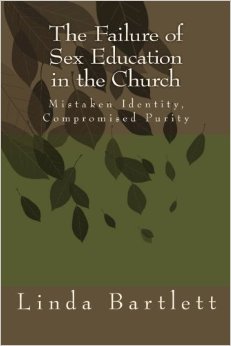
Bartlett begins by giving the necessary history of how the Church, during the mid-20th century, put too much trust in “experts” instead of the inspired Word of God and willingly traded in our biblical understanding of manhood, womanhood, procreation, parenting, and purity for a more “scientific” approach to teaching children about the intimacies of marriage. Falsified, inaccurate, and even perverted studies on the “sexuality” of the human male and female conducted by Alfred Kinsey were presented to universities, medical associations, and church bodies as facts which could not be ignored by enlightened academics. Christianized versions of the sexual revolution’s message were then (and still are) passed down to schools and parents to share with children.
And just what are some of these myths?
The Church was naive in its promotion of sex education in the parochial schools, Bartlett points out, but not malicious. We were deceived into believing that we are “sexual from birth,” and this brainwashing had the complete opposite effect on our Church members as what was intended. It cleared the way for the acceptance of fornication, homosexuality, birth control, and even abortion as a normal part of life for those who are simply expressing their sexuality – being who they thought they were created to be.
But that’s not how we were created, Bartlett reminds us. The solution to the mess we are in now is our Baptism. This is where we received our true identities as children of the Heavenly Father, not sexual beings created to express our sexuality, but holy beings, created to live holy (not sexual) lives. “It is important,” Bartlett says, “for the Body of Christ to see each member as fully human as opposed to sexual and, therefore, an instrument for God’s purpose and glory whether a child or adult, single or married, in this circumstance or that,” (pg. 108).
Because Bartlett presents such shocking evidence of our deception, she presents her case in the form of a patient dialogue between herself and her readers, including over 100 questions and then answering almost every objection one could think of to the notion that there is anything wrong with the way the Church has been educating her children. Her love and concern for her Church family flow through each section as she gently reminds us all that, “Even well-intentioned sex education in the Church leans the wrong way if built on the wrong foundation,” (pg. 129).
If you have children, if you teach children, if you are related to children, or if you once were a child, this book is for you.
Read Full Post »