
Feeds:
Posts
Comments

Archive for the ‘Sexy or holy?’ Category

love your neighborWho is our neighbor? In God’s world, our neighbor is more than the person who lives in the house next door. Our neighbor is the stranger in need, the student in our class, our associate at work, our parent or grandparent, and our child. Our neighbor may not think and act the way we do. We may feel awkward with them because our beliefs are polar opposite. But, in God’s world, they are our neighbor.

What are we to do with our neighbor? Jesus says, “You shall love your neighbor as yourself” (Mark 12:31). This love is second only to the love we are to have for God.

I am thinking right now of four Christian friends. Each one is the parent of a son or a daughter who has admitted they are in a gay or lesbian relationship. These parents love their children but, with the desire to live under the character and authority of God and His Word in Christ, these parents cannot accept the behavior and lifestyle of their children.

My friends, and others like them, agonize, asking: What can we do? How do we embrace our child but not their behavior? How do we nurture a godly relationship with our child? In fact, how do we even engage in conversation with our child on some kind of common ground?

Glenn T. Stanton, author of the new book Loving My (LGBT) Neighbor, offers six truths that he defines as “mere Christianity.” These points, writes Stanton, “are the great equalizers of humanity, putting us all in the same boat for good and for bad, proclaiming that no one person is better or worse, loved more or less, nor more or less deserving of love than another.” These truths are:

  • Everybody is a human person. No exceptions.
  • Every human person is of inestimable worth and value, none more than another. No exceptions.
  • Everyone is deeply and passionately loved by God. No exceptions.
  • Unfortunately, everyone is burdened with a terminal illness: sin. No exceptions.
  • All, as children of Adam, are tragically separated from God, but this does not diminish God’s boundless love for us. But it does devastatingly hinder our relationship with Him. All of us, no exceptions.
  • Therefore, everyone is in desperate need of repentance, healing and a new life that comes only in surrender and submission to Christ. No exceptions.

Because we live in such a sexualized culture, there is need, I think, to explain what it means to be a “human person.” In this culture, sexuality is “central to being human.” But the Christian parent is called to see their neighbor; indeed, their child, differently. Parents of a son or daughter who struggles with any kind of sexual desire (for the opposite or same sex) will best love that child in light of how God sees them.

To be human means to be male or female created in God’s image. Although fallen from that perfect image (and burdened with the terminal illness called sin), God still wants His people to reflect His holiness. Nowhere in Scripture does God say: be sexual for I the Lord your God am sexual. What He says is this: “As obedient children, do not be conformed to the passions of your former ignorance, but as He who called you is holy, you also be holy in all your conduct, since it is written, ‘You shall be holy, for I am holy’” (1Peter 1:14-16). Sexuality is not the central part of being human. Sexual describes feelings, desires, thoughts, and physical intimacy. Because of sexual procreation, life goes on. We have birthdays and anniversaries. But sexuality is not the sum total of who we are as male or female persons.

Here is the evidence. Who we are in this temporal life is who we will be for eternity. If we were fundamentally “sexual,” then this would hold true not just before the resurrection but also after the resurrection. (Otherwise after the resurrection, we would be less than human.) But what does Jesus say? When asked whose wife the widow of seven deceased husbands would be in heaven, Jesus answered, “You are wrong, because you know neither the Scriptures nor the power of God. For in the resurrection they neither marry nor are given in marriage, but are like angels in heaven” (Matthew 22:29-30). Therefore, being sexual, that is, capable of sexual activity, is not part of what it means to be human after the resurrection. And if it is not part of our divinely-created human identity in the resurrection where everything will be made perfect, then it is not the central part of our divinely-created identity now. In heaven, there will be no act of marriage, no “one flesh” union. So, do we lose our identity in heaven? No! Our true identity will remain intact. We will be as He created us—fully human, but perfect in every way, sons and daughters at the Father’s table. We will still be His treasures in Christ but, at last, able to truly reflect His magnificence.

Our human yet holy identity is the common ground for even the most awkward discussions between one neighbor and another, between parent and child. Failing to see our neighbor or child as God does will ultimately affect the way we fear, love and trust God. It may cause us to love conditionally rather than unconditionally or close doors rather than open them.

It’s true that I am not facing the same challenge as my four friends. If they said to me, “You speak so easily of all this, what can you possible know,” I would have to confess that I know only what Jesus tells us all: “Love your neighbor as yourself.” How we see our neighbor—indeed, our child—matters. It changes the way we approach them, welcome them, speak to them, serve them, and endure with them.

(“Six truths” from “The Odd Couple” by
Glenn T. Stanton in CITIZEN, March 2015.)

Suggested resources:
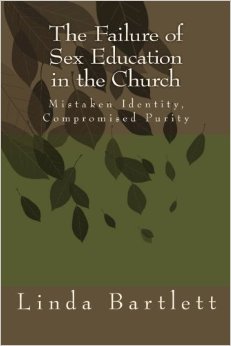
The Failure of Sex Education in the Church:
Mistaken Identity, Compromised Purity by Linda Bartlett (Amazon.com)
and Out of a Far Country by Christopher Yuan and Angela Yuan

Read Full Post »

???????????????????????????????Sex education is built on a foundation that diametrically opposes God’s design for parents to instruct their children in purity.

Sex education is not biblical; rather, it grows from the ideologies and humanist faith of sexologists like Alfred Kinsey and Wardell Pomeroy, birth control and eugenics advocate Margaret Sanger, social reformer and SIECUS (Sexuality Information and Education Council of the U.S.) co-founder Mary Calderone, and advocate of child sexual rehearsal play, Dr. John Money.

Sex and sexuality education, sometimes called family life education, is described by Miriam Grossman, M.D., as “a social movement, a vehicle for changing the world. It happens one child at a time, and it goes on right under your nose.”

Sex education has led our boys and girls closer to the edge of the cliff. Parents and grandparents are not to lead children as close to the edge without falling off, but to keep them far away from the cliff. In a sexually-saturated society, what can a parent or grandparent do? First, we need to prepare ourselves:

1. Develop your parental “mission statement.” What do you want your son or daughter to know about their identity in God’s eyes? What do you want your child to know about sex or things of a sexual nature? Why will you strive to teach and mentor your child while also guarding the innocence of childhood?

2. Spend time with your child so that you can discern his or her questions. When your five-year-old asks, “Where did I come from?” don’t be too quick to assume, “Oh! It’s time for the full-fledged sex talk!” He might just want to know what city he came from because his friend Billy came from Denver. As the parent, you can ask questions of your child that will go a long way in determining what he or she really wants to know and is ready to hear and process, i.e. “Why are you asking me this?” or “What do you think?”

3. Follow the order of purity. When the Christian mother Laeta wondered how she could prepare her daughter for a life of purity in Christ, the Church father Jerome offered this order of instruction using God’s Word: First, teach the rules of life from Proverbs, the patience and virtue of Job, the Epistles, and the prophets. Only then, and at a more mature age, is there wisdom in directing a young woman to read about marriage and the spiritual bride in Song of Songs. (Appreciation to Rev. Dr. Christopher W. Mitchell, Concordia Commentary The Song of Songs, 278.)

4. You may have never thought about it, but fatherhood, motherhood, and grandparenthood are vocations. They are vocations that show love for God by serving others. Parents serve their children by teaching them to fear and love God, mentoring biblical manhood and womanhood, and preparing them to be good neighbors and citizens. (To consider parenthood from a biblical perspective, you might read God at Work by Gene Edward Veith, Jr.)

5. Many resources that instruct in purity come from Christians who do not believe in original sin. With the psalmist, I believe: “In sin did my mother conceive me” (Psalm. 51:5). Every Christian parent must bear in mind that even if we try to keep the walls up and the gates closed, evil still dwells within children. The purpose of instruction in purity should be to guard against temptations and attacks from the outside while we do our best with the help of the Holy Spirit to fight and clean things up on the inside, too. Our goal is not to keep children pure, but to purify them with the grace of the Holy Spirit and guard them from daily attack. We are to help them: “Put on the whole armor of God, that [they] may be able to stand against the schemes of the devil . . . and spiritual forces of evil (Ephesians. 6:10-18).

6. In every culture of madness, the unchanging Word of God gives fathers and mothers what they need to resist evil and build a future of hope. Don’t let anyone tell you that you’re not “progressive.” Tell them you’re progressing out of the insanity and chaos of this world into the sanity and order of God’s Word.

7. Become uncommon parents in a highly sexualized world. Look to the example of Joshua who proclaimed, “Choose this day whom you will serve, whether the gods your fathers served in this region beyond the river, or the gods of the Amorites in whose land you dwell. But as for me and my house, we will serve the Lord” (Joshua 24:15). Do not be faint of heart by what you see and hear. Sexualized cultures have always pressed on the Christian home. Create opportunities to talk with your child and contrast myths and half-truths with what is holy and pure.

8. Do not be afraid to question professionals and experts. If you remember, the Bereans “received the word with all eagerness, examining the Scriptures daily to see if these things were so” (Acts 17:11). The Berean Christians questioned the Apostle Paul, the one called by God to instruct them! Contrast God’s Word of purity with those who have a wall of diplomas but advocate sex education. A diploma doesn’t necessarily reflect wisdom. If your discerning conscience says, “No! Not for my child,” listen to it!

9. Personalize God’s call to live a life of holiness and purity. Familiarize yourself with His Word and how it contrasts “purity” with “sensuality.” Then ask: Do I dress in a way that tempts the opposite sex? What books, magazines, and movies do I bring into my home? What do I look at on the internet? Do I go against the “flow” of a sexualized culture? Your child needs an example to follow.

10. As a parent, take comfort and instruction from your own Baptism and that of your child. In the flood, Noah and his family were preserved. In Baptism, Christ the Savior brings parent and child into the holy ark of the Christian Church where He marks us as His own, cleanses us from sin and, for our sake, appeals to God for good conscience (1 Peter 3:18-22). Remind yourself of the promise of Baptismal identity and life by reading the Order of Baptism and the words of hymns. (Suggestion: Lutheran Service Book [Concordia Publishing House, St. Louis, MO.], page 268 and pages 594-605.)

11. As a family, pray that the Lord be in your home and drive from it all the snares of the enemy. Develop friendships with other parents whose greater desire is to help children trust their identity as heirs of God in Christ rather than identity shaped by a restless and shallow culture.

12. Don’t be ashamed by what you believe and teach; rather, be convinced that the Holy Spirit sustains you and your child. Together with your child, live as people who know that Jesus is coming again (1 John 2:28-3:3).

(Note: These preparation suggestions for parents were excerpted from The Failure of Sex Education in the Church: Mistaken Identity, Compromised Purity by Linda Bartlett [Amazon.com.] The book offers questions and answers to help Christian parents and pastors navigate a sexually-saturated society. It includes age-appropriate suggestions and resources for teaching purity and biblical manhood and womanhood.)

Read Full Post »

My book coverThere is hope.  There is always hope.

Many parents, grandparents, pastors and teachers mourn the sexualization of children.  They ask: Why?  How did this come to be?  In what ways have we failed Jesus’ little ones?  Were we deceived?  If so, by whom?  Did we put our trust in something other than God’s Word?

These questions and others are being discussed this fall in various locations across the Midwest.  Together with pastors who have read and affirm my book, The Failure of Sex Education in the Church: Mistaken Identity, Compromised Purity,  I am engaging Christians who grieve the loss of childhood innocence and want to do something about it.  Most hopeful is the vocal and discerningly wise response of a younger generation of parents and pastors.  Soon, I hope to make public some of those responses.

For now, however, let me encourage all moms and dads who want to guard the physical and spiritual health of sons and daughters; who want to guard a son’s right to childhood, right to boyhood, and right to godly manhood; who want to guard a daughter’s right to a childhood, right to girlhood, and right to maidenhood.  Be not ashamed to instruct your child in purity for it is the Word of God.  Sex education, in or out of the Church, builds on a secular humanist foundation; therefore, it will always lean the wrong way.  Instruction in purity is rooted in Christ Himself; therefore, it will serve well in this life and into the next.  Sex education too easily shapes a sexual identity.  Instruction in purity reminds the baptized of their holy identity.

Sex education helps children focus more on the “yeses” of sex and less on the “shalt nots.”   Sex education dangles the carrot of glorious marital sex before children beginning at a young age, but then instructs young people to delay marriage until graduating from college, securing a good job and paying off some debt.  Instruction in purity understands that we no longer live in the Garden of Eden.  For this reason, it neither arouses love before its time nor does it place obstacles in the way of youthful marriage and the faithful growing of family.

True to God’s Word, there is an order for instruction in purity.  When a Christian mother by the name of Laeta asked how she could raise her daughter to purity, the Church father Jerome answered: First teach the rules of life from Proverbs, the patience and virtue of Job, the epistles, and the prophets.  Only then, and at a more mature age, is there wisdom in directing a young woman to read about marriage and the spiritual bride in Song of Songs. *

There is hope.  There is always hope in God’s design and order for life.

*With appreciation to Christopher W. Mitchell,
Concordia Commentary The Song of Songs, p. 278

The Failure of Sex Education in the Church:
Mistaken Identity, Compromised Purity
by Linda Bartlett (Amazon.com)

Read Full Post »

crown of thorns with crossJesus Christ welcomes sinners.  He wants us to acknowledge and repent of our sins, but He does not identify us by our sinful desires and inclinations.

It is for this reason that I, a confessional Lutheran, am appreciative of the documentary produced by Blackstone Films to help the Catholic Church share its view on homosexuality.  The film is entitled The Third WayMercatorNet notes that even though it is “not perfect” and features “stereotypical religious” settings, the film is powerfully compelling because of the “authentic, convincing and coherent” voices of seven men and women who live with same-sex attraction.  These men and women  do not deny their personality nor do they argue that same-sex attraction must lead to same-sex lifestyle and same-sex “marriage”.  They confess that homosexuality is a sin even as they confess the struggle to live self-controlled and pure lives.  In the struggle, however, comes joy.  Joy comes when we relinquish our own identity and, in Jesus Christ, see ourselves the way God sees us.

The Word tells us to remember Whose we are and to live accordingly.  In Baptism, Jesus assures our true identity as sons and daughters of God through His sacrificial and redemptive work.  What does this mean?  It means that we are daily called to resist the devil, the world, and our own sinful nature.  It means that we are not common for use by anyone, but uncommon for use in the hands of the holy God.

I am especially appreciative of The Third Way because, for many years, I have been moved by the stories of men and women who were caught in a lifestyle shaped by the lie of a homosexual identity.  Their life experiences and encouragement of the Holy Spirit motivate me to speak Truth on their behalf.  Forgiven of every sin, the repentant sinner stands at the foot of the Cross where we hear Jesus say: Come!  Deny yourself!  Take up your cross and follow Me!  Lose your life and in Me you will find it.  (Matthew 16:24-25).

Please.  Take the time to watch this film.  Its message is for all who are deceived by mistaken identity.

http://www.youtube.com/watch?v=okk2mF23UJs

Linda Bartlett is the author of
The Failure of Sex Education in the Church:
Mistaken Identity, Compromised Purity (Amazon)

Read Full Post »

shadow of girlMany years ago, I began researching Planned Parenthood (PP) to learn what kind of information they give young women.  I read books about PP’s founder, Margaret Sanger, to learn her worldview and goals.  I ordered PP brochures and instructive pamphlets.  I studied the PP teen website.  With two friends, I took a private tour of a well established PP facility so that I could learn firsthand what goes on inside the place where “parenthood” is “planned.”  I’m more familiar with PP than I care to be.  This summer, I’ve been following the undercover investigation of PP by Live Action in midwestern cities.

Live Action reveals that PP tells 15-year-olds: “In the sexual world, anything is normal.”  PP says that the bondage, sadomasochism and pain inflicted in Fifty Shades of Grey is “normal” as long as it is “consensual.”

I’ve never read the novel Fifty Shades of Grey.  I don’t plan to read it.  I am ashamed to learn that women in my church have read it.  But I wonder how they would respond if they knew that PP counsels fifteen-year-old girls to practice the same kind of sadomasochism described in that novel?

PP is dangerous.  Very, very dangerous.  You should see for yourself.


Read Full Post »

people on beachWhat is mature manhood and womanhood?  Here is perhaps one of the most important questions for Christian parents to help their adolescent children answer.  If we place emphasis on an identity as a “sexual being,” we miss the opportunity to discuss what masculine or feminine personhood really is.  Men are not men and women are not women because of their sexual urges or desires, nor does marriage make a person more fully male or female.  By labeling children or adults as “sexual beings,” we can actually distort the purpose and vocation of manhood and womanhood.

Genesis 1:27 tells us four things about the first man and women.  They were created by God to be human, not the same but male or female, in the image of God (not animals) and, because they were created in God’s image, they were created to be holy.  There is no mention of anything of a sexual nature (“one flesh”) until God brings man and woman together as husband and wife (Gn. 2:24).  Too may of us scurry from Genesis 1:27 and skip straight to that union.  But in doing so, we miss something very important about the essence of male and female.

We are more than sexual beings because God first spoke to Adam about being a man.  Man was put in the Garden to “work and keep it” (Gn. 2:15).  Man was to be a good steward over all of creation.  In faithfulness to God, he was to defend life and avoid death (Gn. 2:16-17).  “Then the Lord God said, ‘It is not good that the man should be alone; I will make him a helper fit for him” (Gn. 2:18).  The creation was incomplete without woman.  Man had no one like himself nor did he have a way to procreate.  God made (literally “built”) woman from man’s rib.  In marriage, the woman is her husband’s “helper” (Hebrew: ezer), assistant and ally.  The vocation of “helper” is not inferior.  Jesus called the Holy Spirit a “Helper” in John 14:16 which can be translated as “comforter,” “encourager,” or “advocate.”  In her “one flesh” union with Adam, Eve became the bearer of life who would nurture, comfort, and encourage husband and children.

Sin distorted God’s perfect design and rhythm of life.  Sin causes the relationships of men and women–married or not–to be difficult.  But even in chaos, God’s order of creation stands.  Whether  married or single, men are stewards of creation.  Whether married or single, men are called to defend life and lead away from death in faithfulness to God.  In or out of marriage, women are called to help men do good (not evil), be encouraged (not discouraged), built up (not torn down).  Mature manhood and womanhood are not dependent on being married; thus, neither are sensually or sexually driven.

Do you see that boys can be mentored to work, build, protect and engage life without sensual implications?  Do you see that girls can be mentored to help, encourage, counsel and build relationships without sensual suggestions?

From The Failure of Sex Education in the Church:
Mistaken Identity, Compromised Purity (pp. 100-101)
by Linda Bartlett (Amazon)

Read Full Post »

potter and woman

Do you have a few quiet moments today?

Do you need to ponder your identity in this crazy, mixed up world?

Then, if you like, please visit Case of Mistaken Identity.

Read Full Post »

unhappy girlThe young women who find their way to the Lighthouse, a pregnancy and parenting resource center in my home town, might seem familiar to you. Actually, they could be your neighbor’s daughter, your pastor’s daughter or your daughter. They are not “bad” girls; rather, they are “normal” girls.

A negative pregnancy test provides opportunity to talk about their “normal” lives. One young woman, with goals of finishing high school and going on to college, opened the door to that conversation with a heartfelt confession. “I don’t understand. I’m not any different from my Facebook friends. I’m not any different from the people on TV. I dress like the models in my favorite magazines and do the things everyone else says they are doing. But if I’m so normal, why am I so unhappy?”

As a campus psychiatrist at UCLA, Dr. Miriam Grossman spent a lot of time with “normal” but “unhappy” young women. These educated women with goals of med school, performing arts or corporate law had little in life to complain about. They had active social lives, enough money and caring families. “Life is good,” they would tell Dr. Grossman, “so why do I feel so depressed? So emotionally stressed? So worthless?”

“If I’m so normal, why am I so unhappy?” This question—asked in small town pregnancy centers and on Ivy League campuses—should tug at the heart and soul of every pro-life parent, grandparent and pastor. “No amount of Prozac or Zoloft,” writes Dr. Grossman, “is going to solve this problem. These young women must, for their physical and emotional well-being, change their lifestyle.”

Change their lifestyle? But aren’t young women today more liberated than ever before? Haven’t the barriers that prevented complete happiness been chipped away? Isn’t it true that women can compete with men in sports, the workplace and the bedroom? It’s true, but all the supposed liberation in the world only puts us in conflict with ourselves.

In Genesis 1: 27, we learn that God created humans to be male and female. Later, and with more detail (Genesis 2), we learn that God created male and female at different times, in different ways and for different purposes. Try to ignore it if you will but a woman is built to bear and nurture children.

Matters of a woman’s heart are influenced by her biological design. Yes, my feminist friends, I said biological design. “The blurring of differences between male and female,” writes Dr. Grossman, “is a radical agenda unsupported by hard science.” One of the failures of nearly every kind of sex education, including Christianized sex education, is that we lump boys and girls together as equally “sexual beings” who just need more information and more comfort with their sexuality. But Dr. Marianne Legato, founder and director of the Partnership for Gender Specific Medicine at Columbia University, sees women’s health as more than a political or feminist issue because women differ from men in every system of their body.

It would seem that this important piece of biblical and scientific truth has been withheld from the young women who carry the burdens of depression, disease, fear, and broken hearts in the door of the Lighthouse and every other pregnancy center across this country.

Matters of a woman’s heart, by design, are connected to the love of one man, home and family. At the Lighthouse, however, we see young women who’ve been disconnected from all that is naturally womanly—most especially anything related to motherhood and childbearing—as something to be managed, minimized or even overcome. They have been shot up with Gardacil and soon after, like a right of passage, ceremoniously prescribed the Pill. They are prodded onto the football field, wrestling mat and arena of combat—no “holds barred”—which puts them at odds with their own biological and psychological functions and renders them more vulnerable. In abstinence class, they are reminded over and over again that sex is the most wondrous of all earthly gifts but not to be opened until marriage after first getting their degree, securing a good job and paying off loans. However, next to their heart is a biological clock that “tick, tick, ticks” the years of fertility away.

Girls have been told that they are no less sexual than any boy and have every right to enjoy the pleasantries of intimacy. But most girls have not been told about oxytocin, the neurochemical that floods a woman’s brain during a cuddle or a kiss. By design, oxytocin promotes trust and serves to bond a woman to the man she is with. Oxytocin at work in a wife who is sexually intimate with her husband helps produce long-term connectedness which is good for children.

But bonding is like glue. It can’t be undone or ripped apart without great emotional pain. Once, I asked a young woman why she was spending nights with her boyfriend. She responded, “Well I was hoping that if I did, he would ask me to marry him.” During another visit, she told me how much she liked tending “their” garden and decorating “their” house. “But,” I asked, “when it’s the end of the day and you sleep over, whose bed do you sleep in? Do you think of it as his… or ‘ours’”? Her eyes dropped. Her shoulders slumped. She whispered, “It’s his.”

A great many young women, despite the cultural acceptance of multiple partners, want to be married to one man and make a nest for their children. But a woman’s consent to play house without commitment of marriage actually encourages many young men to postpone marriage.

“I’m just doing what everyone else is doing. I’m normal.” So then why is this girl so depressed and unhappy? Because it is simply abnormal for a woman to be in conflict with the design of her own body. “Thus says the Lord, your Redeemer, who formed you from the womb: I am the Lord, who made all things, who alone stretched out the heavens, who spread out the earth by myself, who frustrates the signs of liars . . . who turns wise men back and makes their knowledge foolish” (Isaiah 44:24-25).

At the Lighthouse, we take matters of the heart very seriously. We want to guard the physical and spiritual health of a young woman just as we want to guard her right to a childhood, right to girlhood, and right to maidenhood.

This was first written as an article for LifeDate (LFL).
Linda Bartlett is co-founder/president of the Lighthouse Center of Hope
and author of The Failure of Sex Education in the Church:
Mistaken Identity, Compromised Purity

(Amazon – Our Identity Matters)
Miriam Grossman, M.D., is the author of Unprotected (Amazon).

Read Full Post »

My book cover

Three decades of questions led to the writing of a book I did not want to write.

  • Why do even Christian women choose abortion?
  • Why do Christian girls and women dress as provocatively as non-Christians?
  • Why do so many Christians live together outside of marriage?
  • Why do a growing number of Christians defend homosexuality and counterfeit marriage?
  • Why are children sexualized beginning at young ages?

The book, says Dr. Daniel Heimbach, will “ruffle feathers.”

Daniel R. Heimbach, Ph.D., is the senior professor of Christian Ethics at Southeastern Baptist Theological Seminary in Wake Forest, NC.  He is also a Research Fellow in Christian Ethics with the Ethics & Religious Liberty Commission.  Dr. Heimbach has authored True Sexual Morality: Recovering Biblical Standards for a Culture in Crisis and Why Not Same-Sex Marriage: A Manual for Defending Marriage Against Radical Deconstruction.

Dr. Heimbach recently reviewed The Failure of Sex Education in the Church: Mistaken Identity, Compromised Purity (Amazon).  He writes:

This book exposes what has been driving the sexual education movement in Western culture in recent decades.  Bartlett speaks truth that will ruffle feathers because she exposes lies on which the PC movement operates.  Although she writes with conviction Bartlett is not contentious, meaning only to stop parents, churches, and schools from harming children in the guise of educating them.  This book may even startle some very conservative Christians, but what Bartlett argues is convincing.  Sex education cannot be redeemed and needs to be rejected entirely because the whole movement is established to forward notions fundamentally contrary to biblical reality.  We are never more free than when restraining the flesh on God’s terms and never more enslaved than when seeking to follow and express our own fleshly desires without restraint.

Dr. Heimbach and his ministry associates Russell Moore and Albert Mohler are faithful to examine the biblical standards on sexual morality.  They recognize the counterfeit views that have crept into our “sexually revolutionized” society.  Heimbach offers wise analysis of a deep and pervasive problem as a pastor, theologian, and professor.  His books, notes Albert Mohler, “frame debate and encourage Christians to battle for moral sanity and for souls.”  I am not a pastor, theologian, or professor.  My book is written from the perspective of a wife, mom, grandmother, pro-life advocate, and woman who has listened to countless stories of men, women and children who suffer the consequences of a mistaken identity.

I don’t want to ruffle feathers.  I am, at heart, a peacemaker.  But there comes a time when even a peacemaker has to rise up in the face of evil.  This is that time.  It is not because I want to, but because I am compelled to… for the sake of my grandchildren.

To learn more about the book, please visit:
Our Identity Matters or Amazon

Read Full Post »

The following post was written by Rebecca Mayes
and posted on He Remembers the Barren~

One of the aspects of barrenness that is so awkward is the fact that the “success” of your marital relations (more modernly called your “sex life”) with your spouse is often scrutinized by those around you, either privately in their own minds, or quite publicly to your face. The joining of two fleshes into one in the bonds of holy matrimony used to be treated with such modesty and respect. No one would dare ask you whether you’re “doing it” right or if you’ve tried such-and-such a method. But the sexual revolution changed all that, and in numerous Christian publications we read that the act is a beautiful, natural part of marriage and there’s nothing to be embarrassed about. We should celebrate our gift of sexuality and teach the children in our Church all they need to know to be prepared for utilizing this gift. But is this what the Bible says? When we blush at the questions about what’s wrong with our reproductive organs, is that for a  good reason, or are we just prudes?

Linda's bookLinda Bartlett, former national president of Lutherans for Life, has just published The Failure of Sex Education in the Church: Mistaken Identity, Compromised Purity, which exposes the myths that our generation, as well as our parents’ and grandparents’ generations, have been taught to believe about what children should know to be prepared for marriage, the marital act, and procreation.

Bartlett begins by giving the necessary history of how the Church,  during the mid-20th century, put too much trust in “experts” instead of the inspired Word of God and willingly traded in our biblical understanding of manhood, womanhood, procreation, parenting, and purity for a more “scientific” approach to teaching children about the intimacies of marriage. Falsified, inaccurate, and even perverted studies on the “sexuality” of the human male and female conducted by Alfred Kinsey were presented to universities, medical associations, and church bodies as facts which could not be ignored by enlightened academics. Christianized versions of the sexual revolution’s message were then (and still are) passed down to schools and parents to share with children.

And just what are some of these myths?

  • Children are sexual from birth.
  • Children should be taught about sex, and with the proper terminologies, beginning in early elementary school.
  • If children are not taught about sex early on, their naiveté could make them prey to sexual predators.
  • Parents aren’t trained to properly teach their children about sex. The schools are the best environments for this to take place.
  • Boys and girls should be taught about puberty and sexuality while in the same classroom, since there’s nothing to be embarrassed about.
  • Sex education will help prevent unplanned pregnancies, STD’s, and abortions.

The Church was naive in its promotion of sex education in the parochial schools, Bartlett points out, but not malicious. We were deceived into believing that we are “sexual from birth,” and this brainwashing had the complete opposite effect on our Church members as what was intended. It cleared the way for the acceptance of fornication, homosexuality, birth control, and even abortion as a normal part of life for those who are simply expressing their sexuality – being who they thought they were created to be.

But that’s not how we were created, Bartlett reminds us. The solution to the mess we are in now is our Baptism. This is where we received our true identities as children of the Heavenly Father, not sexual beings created to express our sexuality, but holy beings, created to live holy (not sexual) lives. “It is important,” Bartlett says, “for the Body of Christ to see each member as fully human as opposed to sexual and, therefore, an instrument for God’s purpose and glory whether a child or adult, single or married, in this circumstance or that,” (pg. 108).

Because Bartlett presents such shocking evidence of our deception, she presents her case in the form of a patient dialogue between herself and her readers, including over 100 questions and then answering almost every objection one could think of to the notion that there is anything wrong with the way the Church has been educating her children. Her love and concern for her Church family flow through each section as she gently reminds us all that, “Even well-intentioned sex education in the Church leans the wrong way if built on the wrong foundation,” (pg. 129).

If you have children, if you teach children, if you are related to children, or if you once were a child, this book is for you.

Read Full Post »

« Newer Posts - Older Posts »