 Here’s another opportunity from Ezer’s Handbook —
#6: Mentor the Vocation of Motherhood
The man called his wife’s name Eve, because she was the mother of all living (Genesis 3:20).
Take a stand for life. Satan wanted woman to be the mother of death, but Adam named his wife “Eve” (Hebrew: chawwah, “life”) because she would be the mother of all the living. With this name, Adam expressed hope for the future through new life and, most importantly, through the promised Seed of the woman: Jesus Christ. How does God help us understand “choice” in Deuteronomy 30:19-20? Regardless of our choices in the past, what can we choose to do now? How does being pro-life affect the way we see ourselves and others? On Mother’s Day, celebrate the noble vocation of motherhood with a thank you to mothers and grandmothers. Pray for those who longed to be mothers but lost a child through miscarriage or stillbirth. Remember the mothers who chose abortion because they feared motherhood, that they might know the mercy of Jesus’ forgiveness and hope for new beginnings.
Trust God’s Word. A woman is, by God’s design, a “helper”. This is her first vocation. God equips wives and mothers to help men be good stewards, grow children in faith, defend human life, and serve neighbors. In what ways does a woman connect fathers to children? Raise standards of behavior? Nurture moral character? Encourage husbands and children to stand against evil? Write your vocational job description on a notecard and keep it by your bed or above the kitchen sink.
Create a peaceful “nest” for your family and guests. God’s Word in Isaiah 32:18 tells us, “My people will abide in a peaceful habitation, in secure dwellings, and in quiet resting places.” The world is loud, selfish, rude, stressful, violent and disorderly. When your family and guests come in the door, welcome them to a different environment. A man should strive to bring order to his household, but the woman creates the “nest”. A mom doesn’t have to be a “super woman”, but she can keep her home clean, hospitable, peaceful, and Spirit-filled. Little things can help, such as: the music of teachable hymns, a scented candle, the table set and ready to receive the family, the Cross of Christ the Savior somewhere visible, personal composure, carefully spoken words, the practice of kindness, respect for “house rules”, limited TV and computer time, establishment of family traditions, and intentionally scheduled family time.
Invite your pastor to bless your home. Ask a few Christian friends to join you, your family and pastor for a “house blessing”. Join in prayer and God’s Word. Invite the Holy Spirit to live in your home and to fill it with truth, compassion, and faithfulness. Pray that God’s holy angels stand guard and resist evil.
Start a Titus 2 mother’s group. Be sure to include younger and older women. It is easy for young women to think that motherhood is different today than in the past. While it is true that work outside the home and modern trends may contrast the way “things used to be”, children themselves have not changed. They require discipline, boundaries, and the mentoring of agape love in order to grow in faith and face the challenges of a sin-filled world.
Incorporate Titus 2 mentoring into scrapbooking. While hands are busy preserving memories of children and families, resist idle gossip and, instead, keep conversations focused on all things good, right, positive and hopeful. Before you meet, invite everyone to read, for example, Lies Women Believe by Nancy Leigh DeMoss (Amazon) or Where’s Mom? (The High Calling of Wife and Mother in Biblical Perspective) by Dorothy Patterson (CBMW). Discuss the concepts of the books while working. Consider the resources found at Titus 2 for Life.
Encourage the single moms in your congregation and community. One suggestion is to order copies of Not Alone, a devotional booklet I wrote for single moms (#LFL901B—$2, Concordia Publishing House). Deliver one tied to a small flower bouquet or tucked in with a freezer-ready meal that you’ve prepared for her convenience.
Offer comfort to women who have lost a child to miscarriage or stillbirth. Sometimes, words of comfort and compassion fail us. I wrote Into His Loving Care after a pastor asked me if I would compose a devotional for parents who mourn the loss of their child to miscarriage or stillbirth (#LFL902 – $2, Concordia Publishing House). I admit to being surprised by the response. Often, when traveling the country, someone will approach me to explain that they received a copy from a friend or family member. “God’s Word comforted me,” said one mom, “even as I was reminded to entrust my child into the Savior’s loving care.”
Evaluate what comes into your home. Do the websites you view and the magazines and movies you bring into your home encourage or discourage the vocation of motherhood? From where does your help come? “See to it that no one takes you captive by philosophy and empty deceit, according to human tradition, according to the elemental spirits of the world, and not according to Christ” (Colossians 2:8).
Next? #7: Mentor in the Midst of Opposition
Ezer’s Handbook is a resource developed by
Linda Bartlett and presented at Titus 2 Retreats.
 In today’s world, we are all at risk of having our identity stolen. We call this crime “identity theft”.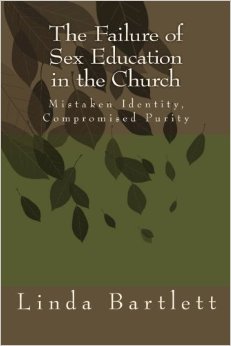







 Ezerwoman's Blog
Has the Sexualization of Children Led to the Sexualization of Marriage?
June 17, 2014 by ezerwoman
The following post was written by Rebecca Mayes
and posted on He Remembers the Barren~
One of the aspects of barrenness that is so awkward is the fact that the “success” of your marital relations (more modernly called your “sex life”) with your spouse is often scrutinized by those around you, either privately in their own minds, or quite publicly to your face. The joining of two fleshes into one in the bonds of holy matrimony used to be treated with such modesty and respect. No one would dare ask you whether you’re “doing it” right or if you’ve tried such-and-such a method. But the sexual revolution changed all that, and in numerous Christian publications we read that the act is a beautiful, natural part of marriage and there’s nothing to be embarrassed about. We should celebrate our gift of sexuality and teach the children in our Church all they need to know to be prepared for utilizing this gift. But is this what the Bible says? When we blush at the questions about what’s wrong with our reproductive organs, is that for a good reason, or are we just prudes?
Bartlett begins by giving the necessary history of how the Church, during the mid-20th century, put too much trust in “experts” instead of the inspired Word of God and willingly traded in our biblical understanding of manhood, womanhood, procreation, parenting, and purity for a more “scientific” approach to teaching children about the intimacies of marriage. Falsified, inaccurate, and even perverted studies on the “sexuality” of the human male and female conducted by Alfred Kinsey were presented to universities, medical associations, and church bodies as facts which could not be ignored by enlightened academics. Christianized versions of the sexual revolution’s message were then (and still are) passed down to schools and parents to share with children.
And just what are some of these myths?
The Church was naive in its promotion of sex education in the parochial schools, Bartlett points out, but not malicious. We were deceived into believing that we are “sexual from birth,” and this brainwashing had the complete opposite effect on our Church members as what was intended. It cleared the way for the acceptance of fornication, homosexuality, birth control, and even abortion as a normal part of life for those who are simply expressing their sexuality – being who they thought they were created to be.
But that’s not how we were created, Bartlett reminds us. The solution to the mess we are in now is our Baptism. This is where we received our true identities as children of the Heavenly Father, not sexual beings created to express our sexuality, but holy beings, created to live holy (not sexual) lives. “It is important,” Bartlett says, “for the Body of Christ to see each member as fully human as opposed to sexual and, therefore, an instrument for God’s purpose and glory whether a child or adult, single or married, in this circumstance or that,” (pg. 108).
Because Bartlett presents such shocking evidence of our deception, she presents her case in the form of a patient dialogue between herself and her readers, including over 100 questions and then answering almost every objection one could think of to the notion that there is anything wrong with the way the Church has been educating her children. Her love and concern for her Church family flow through each section as she gently reminds us all that, “Even well-intentioned sex education in the Church leans the wrong way if built on the wrong foundation,” (pg. 129).
If you have children, if you teach children, if you are related to children, or if you once were a child, this book is for you.
Posted in Biblical manhood & womanhood, Commentaries of others, Culture Shifts, Faith & Practice, Identity, Life issues, Parenting & Education, Relationships, Sexy or holy?, Vocation | Tagged abortion, church, procreation, sexuality, social science | 1 Comment »