Feeds:
Posts
Comments

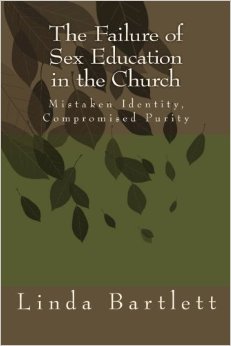
Mussmann Anna croppedAnna Mussmann and I have never met.  So it was with great surprise that I received the following review of my book from her blog Sister, Daughter, Mother, Wife.

Linda Bartlett has worked in the pro-life movement for years. Among other positions, she has served as the national president of Lutherans For Life and as chairman of the LCMS Sanctity of Life Task Force. As a pro-life leader; a mentor of young women; an instrumental participant in the launch of Word of Hope, a post-abortion ministry; and a parent, she has come to believe that the foundational philosophical approach behind modern sex education is in utter conflict with Scripture. This month, I read her book, The Failure of Sex Education in the Church: Mistaken Identity, Compromised Purity: Questions and Answers for Christian Dialogue.

Initially, I found myself somewhat resistant to her message. Two issues distracted me. One was my own background. After growing up in a homeschooling community that included a large number of fundamentalist families who tried to “ensure” their children’s purity by rejecting the world entirely, I have seen overly-controlling parents and overly-sheltered (adult) children. There was no outward immodesty, no dating, and no “sex education” in these households. I remember one woman whose son wanted to become a doctor. She would not agree to his going to medical school because there is “so much nudity” there, and she hoped that he could find a nude-free, apprenticeship route to medical training with a Christian physician. These families sought protection from sin through ignorance, and their legalistic attempts did not usually work out as they hoped. Because of all this, I was hesitant when Mrs. Bartlett argued that children ought not to receive “sex education.” I even shied away from her use of the word “purity.” After all, we and our children are all sinners. How can we be “pure?” However, as I completed the book, I came to realize that what Mrs. Bartlett advocates is different from the errors I saw growing up. Mrs. Bartlett’s arguments are insightful, thoughtful, counter-cultural, and deeply important to parents and to the church as a whole. Her writing is well-worth your consideration.

She argues that the modern understanding of sexuality (itself a loaded modern term) is the result of “sexual social engineering” based upon the discredited and deeply flawed research (some of it involving shocking child abuse) of sexologist Alfred Charles Kinsey. Due to Kinsey and his followers, the world has accepted the idea that human beings are “sexual from birth” and that sexuality (as opposed to sex, in the sense of being male or female) is key to each person’s identity. Believing that these arguments (and all that they imply) were proven science, the church changed its approach to sex, sexuality, and human identity and sought to provide a Christian version of the same flawed sex education that became universal in the public sector. This, Mrs. Bartlett says, was a well-meant but tragic mistake.

She points out that, while God created humans as male and female, Jesus also said that there is no marriage or giving in marriage in heaven. We know that we will not lose our humanity or our identity in heaven. Therefore, our “sexuality” is not essential to our humanity and identity. When we focus only on our sexual identity instead of our identity as a man or a woman, we lose out on the broader picture of who we are. She says, “We are fully human—male or female—whether we are a child or an adult, whether we are married or single,” and that, “To accept that children are human beings and therefore sexual beings is to accept wrong teaching that leads to wrong practice. It bestows a mistaken identity that compromises faith and purity.”

When Christian parents and Christian teachers believe that their children are sexual beings, they teach the wrong things at the wrong time. Instead of focusing on teaching children what it means to live out the vocation of man or a woman in the broad sense (and providing appropriate sexual information in one-on-one conversations at appropriate times), sex is overemphasized. Children are placed in mixed-gender classrooms away from their parents and told how to have sex, how to prevent physical side-effects of sex, that sex is wonderful, and that they will no doubt think about it a great deal and want to have it, but that they must wait for marriage. Twelve years of sex education, added to an oversexed culture, is unhealthy. She argues that this approach is more likely to stir up lust and inappropriate desire than to help young people relate to each other in a Christian manner. It is like surrounding them with wonderful-looking candy and saying that they must not eat it!

She also argues that children and young people’s natural delicacy and modesty about such topics is a good, healthy, and protective thing. “Christians should know that due to sin’s corruption, having sexual information is not sufficient to make good sexual decisions.” A system designed to desensitize them (even if well-meaning and based on the assumption that they are already hardened to sensuality and sexuality because of the culture they live in) does no one any favors at all, and is in fact harmful—it can “actually weaken the child’s resistance to sexual temptation.”

Furthermore, if Christians accept the idea that their primary identity is that of a sexual being, it become far more “excusable” for them to engage in sex outside of marriage and even to have abortions. How can they be expected to live chaste lives if that is contrary to their nature? How could anyone believe that they can really wait years and years to engage in an essential aspect of their humanity? After all, “If we are ‘sexual from birth,’ then one may believe that his current lusts and desires were created that way by God, rather than being horribly corrupted by sin. If people believe their current desires are God-given, it would follow that no one has the right to tell them how to define or express their ‘sexuality’.” Because of this, she objects to the term “God’s gift of sexuality” because it leads to misguided emphasis. If instead we talk and teach about “God’s design for sexuality,” the emphasis is far more Biblical.

Opponents of Mrs. Bartlett’s view would probably claim that her approach will lead children to think that sexuality is shameful. However, she quotes C.S. Lewis’s comment that, “There is nothing to be ashamed of in enjoying your food: there would be everything to be ashamed of if half the world made food the main interest of their lives and spent their time looking at pictures of food and dribbling and smacking their lips.” She wants to teach a positive, active approach to life, and says,

“Abstinence says, ‘I must wait for sex until marriage.’ Purity says, “I don’t have to wait to be the woman (or man) God created me to be.’ Abstinence says, ‘Because we are sexual beings, I must be cautious with the opposite sex.’ Purity says, ‘Because we are persons more than sexual beings, I can respect, talk to, learn from, work beside, and be patient with the opposite sex.’ …. Purity always journeys toward hope with the encouragement of the Holy Spirit. In fact, because of Jesus Christ, we can be restored to a life of purity even after we’ve failed to abstain.”

Mrs. Bartlett provides a great deal to think about. It took me a while to realize that her approach was not the legalistic one that I have witnessed among some critics of the modern world, in part because her text is composed of (often overlapping) questions and answers, so it felt more like reading material from an online forum than a traditional book, and it took me some time to grasp the overall context of her ideas. She fully recognizes the sinful nature of humanity and the need to provide children with appropriate information at appropriate times. Yet she challenges the church to completely rethink the way we approach sex education and human identity. I find it fascinating that even though most Christians would agree that our culture is over-sexualized, many people respond with alarm to the idea that children should be taught less about sex. We are much more attuned to the danger of insufficient than of over-abundant information on this topic. Mrs. Bartlett’s book offers an explanation for why that is, and suggests an alternative model that could be used to train our children.

 Anna Mussmann is the editor of the
blog Sister, Daughter, Mother, Wife;
a teacher and enthusiast of classical education;
a wife and mother of an infant son.
Her blog What’s Wrong with the Phrase,
“God’s Gift of Sexuality?”
(12-9-14)
is reprinted with permission.

Please visit Our Identity Matters.

Loving Our Neighbor

love your neighborWho is our neighbor? In God’s world, our neighbor is more than the person who lives in the house next door. Our neighbor is the stranger in need, the student in our class, our associate at work, our parent or grandparent, and our child. Our neighbor may not think and act the way we do. We may feel awkward with them because our beliefs are polar opposite. But, in God’s world, they are our neighbor.

What are we to do with our neighbor? Jesus says, “You shall love your neighbor as yourself” (Mark 12:31). This love is second only to the love we are to have for God.

I am thinking right now of four Christian friends. Each one is the parent of a son or a daughter who has admitted they are in a gay or lesbian relationship. These parents love their children but, with the desire to live under the character and authority of God and His Word in Christ, these parents cannot accept the behavior and lifestyle of their children.

My friends, and others like them, agonize, asking: What can we do? How do we embrace our child but not their behavior? How do we nurture a godly relationship with our child? In fact, how do we even engage in conversation with our child on some kind of common ground?

Glenn T. Stanton, author of the new book Loving My (LGBT) Neighbor, offers six truths that he defines as “mere Christianity.” These points, writes Stanton, “are the great equalizers of humanity, putting us all in the same boat for good and for bad, proclaiming that no one person is better or worse, loved more or less, nor more or less deserving of love than another.” These truths are:

  • Everybody is a human person. No exceptions.
  • Every human person is of inestimable worth and value, none more than another. No exceptions.
  • Everyone is deeply and passionately loved by God. No exceptions.
  • Unfortunately, everyone is burdened with a terminal illness: sin. No exceptions.
  • All, as children of Adam, are tragically separated from God, but this does not diminish God’s boundless love for us. But it does devastatingly hinder our relationship with Him. All of us, no exceptions.
  • Therefore, everyone is in desperate need of repentance, healing and a new life that comes only in surrender and submission to Christ. No exceptions.

Because we live in such a sexualized culture, there is need, I think, to explain what it means to be a “human person.” In this culture, sexuality is “central to being human.” But the Christian parent is called to see their neighbor; indeed, their child, differently. Parents of a son or daughter who struggles with any kind of sexual desire (for the opposite or same sex) will best love that child in light of how God sees them.

To be human means to be male or female created in God’s image. Although fallen from that perfect image (and burdened with the terminal illness called sin), God still wants His people to reflect His holiness. Nowhere in Scripture does God say: be sexual for I the Lord your God am sexual. What He says is this: “As obedient children, do not be conformed to the passions of your former ignorance, but as He who called you is holy, you also be holy in all your conduct, since it is written, ‘You shall be holy, for I am holy’” (1Peter 1:14-16). Sexuality is not the central part of being human. Sexual describes feelings, desires, thoughts, and physical intimacy. Because of sexual procreation, life goes on. We have birthdays and anniversaries. But sexuality is not the sum total of who we are as male or female persons.

Here is the evidence. Who we are in this temporal life is who we will be for eternity. If we were fundamentally “sexual,” then this would hold true not just before the resurrection but also after the resurrection. (Otherwise after the resurrection, we would be less than human.) But what does Jesus say? When asked whose wife the widow of seven deceased husbands would be in heaven, Jesus answered, “You are wrong, because you know neither the Scriptures nor the power of God. For in the resurrection they neither marry nor are given in marriage, but are like angels in heaven” (Matthew 22:29-30). Therefore, being sexual, that is, capable of sexual activity, is not part of what it means to be human after the resurrection. And if it is not part of our divinely-created human identity in the resurrection where everything will be made perfect, then it is not the central part of our divinely-created identity now. In heaven, there will be no act of marriage, no “one flesh” union. So, do we lose our identity in heaven? No! Our true identity will remain intact. We will be as He created us—fully human, but perfect in every way, sons and daughters at the Father’s table. We will still be His treasures in Christ but, at last, able to truly reflect His magnificence.

Our human yet holy identity is the common ground for even the most awkward discussions between one neighbor and another, between parent and child. Failing to see our neighbor or child as God does will ultimately affect the way we fear, love and trust God. It may cause us to love conditionally rather than unconditionally or close doors rather than open them.

It’s true that I am not facing the same challenge as my four friends. If they said to me, “You speak so easily of all this, what can you possible know,” I would have to confess that I know only what Jesus tells us all: “Love your neighbor as yourself.” How we see our neighbor—indeed, our child—matters. It changes the way we approach them, welcome them, speak to them, serve them, and endure with them.

(“Six truths” from “The Odd Couple” by
Glenn T. Stanton in CITIZEN, March 2015.)

Suggested resources:
The Failure of Sex Education in the Church:
Mistaken Identity, Compromised Purity by Linda Bartlett (Amazon.com)
and Out of a Far Country by Christopher Yuan and Angela Yuan

???????????????????????????????Sex education is built on a foundation that diametrically opposes God’s design for parents to instruct their children in purity.

Sex education is not biblical; rather, it grows from the ideologies and humanist faith of sexologists like Alfred Kinsey and Wardell Pomeroy, birth control and eugenics advocate Margaret Sanger, social reformer and SIECUS (Sexuality Information and Education Council of the U.S.) co-founder Mary Calderone, and advocate of child sexual rehearsal play, Dr. John Money.

Sex and sexuality education, sometimes called family life education, is described by Miriam Grossman, M.D., as “a social movement, a vehicle for changing the world. It happens one child at a time, and it goes on right under your nose.”

Sex education has led our boys and girls closer to the edge of the cliff. Parents and grandparents are not to lead children as close to the edge without falling off, but to keep them far away from the cliff. In a sexually-saturated society, what can a parent or grandparent do? First, we need to prepare ourselves:

1. Develop your parental “mission statement.” What do you want your son or daughter to know about their identity in God’s eyes? What do you want your child to know about sex or things of a sexual nature? Why will you strive to teach and mentor your child while also guarding the innocence of childhood?

2. Spend time with your child so that you can discern his or her questions. When your five-year-old asks, “Where did I come from?” don’t be too quick to assume, “Oh! It’s time for the full-fledged sex talk!” He might just want to know what city he came from because his friend Billy came from Denver. As the parent, you can ask questions of your child that will go a long way in determining what he or she really wants to know and is ready to hear and process, i.e. “Why are you asking me this?” or “What do you think?”

3. Follow the order of purity. When the Christian mother Laeta wondered how she could prepare her daughter for a life of purity in Christ, the Church father Jerome offered this order of instruction using God’s Word: First, teach the rules of life from Proverbs, the patience and virtue of Job, the Epistles, and the prophets. Only then, and at a more mature age, is there wisdom in directing a young woman to read about marriage and the spiritual bride in Song of Songs. (Appreciation to Rev. Dr. Christopher W. Mitchell, Concordia Commentary The Song of Songs, 278.)

4. You may have never thought about it, but fatherhood, motherhood, and grandparenthood are vocations. They are vocations that show love for God by serving others. Parents serve their children by teaching them to fear and love God, mentoring biblical manhood and womanhood, and preparing them to be good neighbors and citizens. (To consider parenthood from a biblical perspective, you might read God at Work by Gene Edward Veith, Jr.)

5. Many resources that instruct in purity come from Christians who do not believe in original sin. With the psalmist, I believe: “In sin did my mother conceive me” (Psalm. 51:5). Every Christian parent must bear in mind that even if we try to keep the walls up and the gates closed, evil still dwells within children. The purpose of instruction in purity should be to guard against temptations and attacks from the outside while we do our best with the help of the Holy Spirit to fight and clean things up on the inside, too. Our goal is not to keep children pure, but to purify them with the grace of the Holy Spirit and guard them from daily attack. We are to help them: “Put on the whole armor of God, that [they] may be able to stand against the schemes of the devil . . . and spiritual forces of evil (Ephesians. 6:10-18).

6. In every culture of madness, the unchanging Word of God gives fathers and mothers what they need to resist evil and build a future of hope. Don’t let anyone tell you that you’re not “progressive.” Tell them you’re progressing out of the insanity and chaos of this world into the sanity and order of God’s Word.

7. Become uncommon parents in a highly sexualized world. Look to the example of Joshua who proclaimed, “Choose this day whom you will serve, whether the gods your fathers served in this region beyond the river, or the gods of the Amorites in whose land you dwell. But as for me and my house, we will serve the Lord” (Joshua 24:15). Do not be faint of heart by what you see and hear. Sexualized cultures have always pressed on the Christian home. Create opportunities to talk with your child and contrast myths and half-truths with what is holy and pure.

8. Do not be afraid to question professionals and experts. If you remember, the Bereans “received the word with all eagerness, examining the Scriptures daily to see if these things were so” (Acts 17:11). The Berean Christians questioned the Apostle Paul, the one called by God to instruct them! Contrast God’s Word of purity with those who have a wall of diplomas but advocate sex education. A diploma doesn’t necessarily reflect wisdom. If your discerning conscience says, “No! Not for my child,” listen to it!

9. Personalize God’s call to live a life of holiness and purity. Familiarize yourself with His Word and how it contrasts “purity” with “sensuality.” Then ask: Do I dress in a way that tempts the opposite sex? What books, magazines, and movies do I bring into my home? What do I look at on the internet? Do I go against the “flow” of a sexualized culture? Your child needs an example to follow.

10. As a parent, take comfort and instruction from your own Baptism and that of your child. In the flood, Noah and his family were preserved. In Baptism, Christ the Savior brings parent and child into the holy ark of the Christian Church where He marks us as His own, cleanses us from sin and, for our sake, appeals to God for good conscience (1 Peter 3:18-22). Remind yourself of the promise of Baptismal identity and life by reading the Order of Baptism and the words of hymns. (Suggestion: Lutheran Service Book [Concordia Publishing House, St. Louis, MO.], page 268 and pages 594-605.)

11. As a family, pray that the Lord be in your home and drive from it all the snares of the enemy. Develop friendships with other parents whose greater desire is to help children trust their identity as heirs of God in Christ rather than identity shaped by a restless and shallow culture.

12. Don’t be ashamed by what you believe and teach; rather, be convinced that the Holy Spirit sustains you and your child. Together with your child, live as people who know that Jesus is coming again (1 John 2:28-3:3).

(Note: These preparation suggestions for parents were excerpted from The Failure of Sex Education in the Church: Mistaken Identity, Compromised Purity by Linda Bartlett [Amazon.com.] The book offers questions and answers to help Christian parents and pastors navigate a sexually-saturated society. It includes age-appropriate suggestions and resources for teaching purity and biblical manhood and womanhood.)

50 shades of greyold fashioned movieIt has been said that good is opposed to evil in such a way that a good thing always eliminates evil as far as it can.

This Valentine’s weekend, we have the opportunity to choose a good thing and, in doing so, help eliminate evil as far as we can. I can promise you that our sons, daughters, and grandchildren will be better for it.

Fifty Shades of Grey, based on the book trilogy, will be showing this weekend in theaters across the country. But, in my hometown (and perhaps in yours), so will the movie Old Fashioned. The contrast between the two is black and white. The one slides into evil. The other strives for what is good.

The contrast, I think, is best illustrated by the leading man in each story. Men fascinate me, perhaps because I believe that God has created them to be the defenders of life. For as long as I can remember, I’ve carefully listened to men and watched what they do. Do they lead women and children to the edge of the abyss or keep them far from it? In Fifty Shades, Christian Grey uses manipulation, jealousy, intimidation and violence to control Ana. In Old Fashioned, Clay Walsh gives up his reckless carousing of college days to practice the patient and self-disciplined love of God and, in so doing, honor Amber Hewson.

Ideologies and behaviors are in contrast all the time. This weekend, ticket sales may tell us a lot about the ideology we claim and the behavior we choose to mentor. Choices have consequences. In this case, Hollywood is glamorizing violence and abuse, then tacking on an unrealistic fairy-tale ending. There is evidence to prove that real life is different.

A study published last year in the Journal of Women’s Health shows the relationships between health risks and reading popular fiction depicting violence against women. Researchers from Michigan State University studied more than 650 women aged 18-24. Compared to participants who didn’t read Fifty Shades of Grey, those who did were 25 percent more likely to have a partner who yelled or swore at them; 34 percent more likely to have a partner who demonstrated stalking tendencies; and more than 75 percent more likely to have used diet aids or fasted for more than 24 hours. Those who read all of the books in the Fifty Shades trilogy were 65 percent more likely than nonreaders to binge drink—or drink five or more drinks on a single occasion on six or more days per month—and 63 percent more likely to have five or more intercourse partners during their lifetime. (Excerpted from “Reading Fifty Shades linked to unhealthy behaviors,” by Carolyn Moynihan, http://www.mercatornet.com, 3 February 2015)

Society pays a price when we teach men to inflict pain and sexualize violence. It pays a price when women are taught that abusive sex is “normal.” Remove the glamour and deception from Christian and Ana’s relationship. What is left but hopelessness?

The price is too high, especially for children and grandchildren. It is a price that does not have to be paid. I wonder. With its aggressive marketing campaign and unashamed attempt to romanticize sexual violence, has Hollywood unintentionally challenged parents to do the right thing? To help their child resist evil and seek what is good? Miriam Grossman, M.D., thinks so.

“Don’t underestimate [Hollywood’s] hard sell on your kids,” writes Dr. Grossman. “Even if they don’t see the film, they are absorbing its toxic message, and need your wisdom and guidance.” She explains that even with the darkest of clouds, there can be a silver lining. “While the ideas promoted by Fifty Shades of Grey are vile,” she observes, “they present a precious opportunity: to explain truths your children must know, but won’t hear anywhere else. Every image of those handcuffs and each TV trailer hold that chance.”

Dr. Grossman is a child and adolescent psychiatrist. She considers it her professional responsibility to help parents deal with the implications of Fifty Shades. I encourage you to visit her website where you will find a series of blogs exposing what might become a blockbuster film. Dr. Grossman includes talking points for every mom and dad who wants to keep their child from harm. She notes that parents talk to their children about junk food, cigarettes, and bullies. Parents, she says, need to warn children about dangerous ideas, too.

Dr. Grossman guarantees “you will have a significant influence on your child. What you believe matters. Your expectations matter. This is so regardless of any poor choices you may have made through the years. Even if your teen shrugs off everything you say with a roll of her eyes, I promise you, she hears every word.”

There is nothing grey about physical or emotional abuse. It is never ok. “A relationship that includes violence is disturbed,” explains Dr. Grossman. “The people involved have emotional problems. A psychologically healthy woman avoids pain. She seeks a relationship that is safe, supportive, and trusting; she wants to feel cared for and appreciated. If there is any hint of danger, she runs.”

There are those who consider Fifty Shades a “romantic love story.” But, “when Ana agreed to be abused, she made a terrible, self-destructive decision,” says Dr. Grossman. “Only in fiction would such a ‘romance’ end happily. In the real world, Ana would pay for her poor choice of a partner.”

It doesn’t have to begin—or end—this way. There are, well, old fashioned thoughts and behaviors that have always led to a much safer and more hope-filled life.

This Valentine’s weekend, some people are daring to bring these old fashioned ideas to the polling place of a theater near you. You have the opportunity—as parents, high school and college students, dating couples, and newlyweds—to “vote” with your ticket in favor of patient, kind, and selfless love (1 Corinthians 13:4-6).

Will it matter? I think so. Good is opposed to evil in such a way that even choosing Old Fashioned can be the good thing that helps eliminate evil as far as it can.

family praying at tableAnne Fishel is a family therapist. She writes, “I often have the impulse to tell families to go home and have dinner together rather than spending an hour with me.”

Twenty years of research in North America, Europe and Australia, observes Fishel, support the practice of family mealtime. “It turns out that sitting down for a nightly meal is great for the brain, the body and the spirit.”

I am a staunch advocate of family mealtime. The dinner table nurtured trust between my parents, grandparents, and me. My mother and grandmother fed my body, but it was their invitation to engage in discussions about life that stimulated my mind and nourished my soul.

“Dinnertime conversation,” writes Fishel, “boosts vocabulary even more than being read aloud to.” There is also, Fishel notes, “a consistent association between family dinner frequency and teen academic performance.” Older children reap “intellectual benefits from family dinners . . . regular mealtime is an even more powerful predictor of high achievement scores than time spent in school, doing homework, playing sports or doing art.”

The family table, notes Fishel, tends to provide healthier food, but also a healthier atmosphere. However, she cautions, “all bets are off if the TV is on during dinner.”

Regular family dinners are linked, Fishel says, “with lowering a host of high risk teenage behaviors parents fear: smoking, binge drinking, marijuana use, violence, school problems, eating disorders and sexual activity.” A study of more than 5,000 Minnesota teens concluded that “regular family dinners were associated with lower rates of depression and suicidal thoughts.”

There is more. Fishel has reason to believe that kids who have been “victims of cyberbullying” bounce back more readily if they have the benefit of family meals. I have no doubt that being in communication with my mom and dad at our family’s dinner table helped steer me away from some high-risk teen behavior.

A New Zealand study, writes Fishel, reveals that “a higher frequency of family meals was strongly associated with positive moods in adolescents.” Evidence also indicates “that teens who dine regularly with their families also have a more positive view of the future, compared to their peers who don’t eat with parents.”

Children don’t grow up working beside their parents today. They don’t farm, construct a house, bake, or quilt together. So, as Fishel observes, the family dinner table remains the most reliable way for parents and children to connect.

“Kids who eat dinner with their parents,” says Fishel, “experience less stress and have a better relationship with them. This daily mealtime connection is like a seat belt for traveling the potholed road of childhood and adolescence and all its possible risky behaviors.”

Just gathering at a common dinner table isn’t enough. It’s what happens at that table. Silence between parents or using the time to scold children won’t, as Fishel notes, “confer positive benefits. Sharing a roast chicken won’t magically transform parent-child relationships.”

My own experience at the dinner table with my parents helped me learn when to speak and when to listen. I was encouraged to ask questions, share ideas, and practice kindness. This nourishing of body, mind, and soul was an experience I wanted to repeat with my children and grandchildren. What a privilege to hear what children are thinking, learn what is going on in their life, engage them in dialogue, mentor, and encourage.

It is small moments like these, concludes Fishel, that “can gain momentum to create stronger connections away from the table.”

Quotes from Anne Fishel are excerpted from her article
“Science says: eat with your kids” – Mercatornet.com 1-14-15
Anne Fishel is the author of Home For Dinner and
Associate Clinical Professor of Psychology, Harvard Medical School
(photo image: Pinterest.com)

Making Gay OkayIn his sane and sensible book, Making Gay Okay, author Robert R. Reilly reveals why and how Americans are being forced to consider homosexual acts as morally acceptable.  He explains the “power of rationalization,” the means by which one “mentally transforms wrong into right,” and the dynamics of tolerating sexual misbehavior.

LGBT activists here in the U.S. push hard for cultural acceptance of sodomy in schools, courts, churches, and the military.  We are labeled “intolerant” if we speak God’s Word that calls the act of homosexuality a sin.  We are labeled “homophobic” or even “hostile” if we voice concern for children, family, and the survival of a thriving society.

U.S. Embassies across the world—in Pakistan, Kenya, Laos, and Prague—have been instructed by the Obama Administration to legitimize sodomy and promote same-sex marriage.  U.S. foreign policy seeks to change the laws of other countries, but there is resistance from nations where homosexual acts are illegal.

Reilly explains, “When the acting ambassador in El Salvador, Mari Carmen Aponte, wrote an op-ed in a major Salvadoran newspaper, La Prensa Grafica, implying that the disapproval of homosexual behavior is animated by ‘brutal hostility’ and ‘aggression’ by ‘those who promote hatred,’ a group of pro-family associations fought back.  On July 6, 2011, they wrote:

Ms. Aponte, in clear violation of the rules of diplomacy and international rights laws, you intend to impose to [sic] Salvadorans, disregarding our profound Christian values rooted in natural law, a new vision of foreign and bizarre values, completely alien to our moral fiber, intending to disguise this as “human rights” . . . . The only thing we agree with from your article, is to repudiate violence against homosexuals, bisexuals, transsexuals, etc.; against these, just the same as against skinny, fat, tall or short . . . . This of course does not mean accepting the legal union between same sex individuals or to add new types of families like bisexual, tri-sexual, multi-sexual and the full range of sexual preferences.  Not accepting the legitimacy of ‘sexual diversity’ does not mean we are violating any human right.  There can be no talk of progress if this is how ‘modern’ is defined.  We prefer to feel proudly ‘old fashioned,’ keep our moral values, preserve our families and possess the clarity of what defines good and evil.”

As for me?  I stand with the pro-family groups of El Salvador.  I pray that I will fear, love, and trust God so that I might love my neighbor without accepting evil as good.  Does this mean that I will be called to discriminate?  Isn’t discrimination bad?  No.  As Reilly brilliantly writes, “The ability to discriminate is, of course, essential to the ability to choose correctly.”

It is not too late to choose correctly.  Bizarre values are not “human rights.”  Inspired by my neighbors in El Salvador, I will persevere for marriage and family.

Making Gay Okay by Robert R.  Reilly,
p. 203, 214


candle lightTwo thousand fourteen years ago, God came into this sin-tainted world so that Light would shine in the darkness.

But, today, the darkness seems so oppressive.  Will it overwhelm the Light?”

Sexual immorality abounds. Sensuality is an idol. Girls assume that it’s “normal” to be sexually intimate with boys. Planned Parenthood uses the book Fifty Shades of Gray to explain to 15-year-old girls why sadistic and masochistic sex is “okay” if the girl “gives permission.” Pedophilia is on the rise. Sodomy is tolerated as just another expression of “love.” Marriage is assaulted not just by advocates of same-sex “marriage,” but by adultery, cohabitation, no-fault divorce. Children grow up in homes with their mommy and her boyfriend. Grandchildren see their grandparents “shacking up.”

The darkness seems so oppressive… will it overwhelm the Light?  No!

In the beginning was the Word, and the Word was with God, and the Word was God.  He was in the beginning with God. All things were made through him, and without him was not anything made that was made. In him was life, and the life was the light of men.  The light shines in the darkness, and the darkness has not overcome it (John 1:1-5).

But aren’t we living in times more dark than any other? Isn’t darkness more oppressive and evil more ominous than ever before? No!

Alvin Schmidt, the author of How Christianity Changed the World, explains that from early on, Christians have found themselves in cultures that, indeed, “exchanged the truth of God for a lie, and worshiped and served created things rather than the Creator,” and because of this, “God gave them over to shameful lusts” (Romans 1:25-26). This is how St. Paul described the Greco-Roman society of his day.

Schmidt writes, “By the first and second centuries after Christ, undefiled sexual intercourse, along with marital faithfulness, had essentially disappeared. Not only were adultery and fornication common, but people engaged in all sorts of sexual methods, many of them obscene.”

He continues, “Roman marriages had greatly deteriorated; they had become a ‘loose and voluntary compact [and] religious and civil rites were no longer essential.’ Marriage was ‘detested as a disagreeable necessity.’ Since people had become obsessed with sex, marital unions were very short-lived.” The Latin Church father, Tertullian, “noted that male/female sex relations had become sadistic and masochistic . . . Heterosexual love had turned into a type of sport.” Prostitution, incest, and mutilation were not uncommon.

The world at that time seemed very, very dark. Overwhelmingly dark.

But, writes Schmidt, “into this immoral sexual environment came the Christians with a radically different sexual ethic and lifestyle . . . [W]hen God instituted marriage at the time of creation, He told Adam and Eve that the sex act made a husband and wife one flesh (Gen. 2:24). The one flesh concept required the married couple to be totally faithful to each other.” Schmidt points to a second-century document that describes how the early Christians differed from the pagan Romans by confining their sexual behavior to married life. The document reads: “They [Christians] marry as do all; they beget children . . . They have a common table, but not a common bed” (Epistle to Diognetus).

One would think that the darkness of the Roman culture was so oppressive that Christians would shrink away and take their Light with them.  But, no!

Schmidt writes that “Galen, a Greek physician of the second century, was impressed with the upright sexual behavior of Christians. He said they were ‘so far advanced in self-discipline and . . . intense desire to attain moral excellence that they are in no way inferior to true philosophers.’”

The Christian doctrine and practice of marriage was “so powerful,” writes Schmidt, that historian Edward Gibbon says, “The dignity of marriage was restored by the Christians.”

The dignity of marriage was restored! And there’s more! Schmidt writes, “The dignity and sanctity of marriage that Christianity brought to Roman culture were mostly due to the early Christian women. They appreciated the dignity and worth that Christ’s teachings accorded them” (prior to Jesus’ earthly ministry, women were too often held in low esteem). Women, “more so than men, understood the seriousness of their biological role as bearers of children in God’s created order. Thus, the wedding rite, the precursor to the fulfillment of that role, needed to be conducted with solemnity and reverence.”

Lest we think this is mere speculation on the part of Schmidt or any other historian, here’s what the pagan Libanius said about the dedication of Christian wives and mothers of that time: “What women these Christians have!”

It is no different today.  A woman who sees herself in the Light of Christ can also see her relationships, choices, and behaviors in that same Light.  As she begins to see the seriousness of her biological role as a bearer of children in God’s created order, she can also help her boyfriend, fiancé, or husband understand this, too.  As she contrasts passionate eros love with patient and virtuous agape love (1 Corinthians 13), she can positively influence not only the man in her life but her children and grandchildren.

It is true that the darkness of sin and evil is oppressive.  Marriage is under assault and weakened by every form of sexual idolatry.  But the Light shines in the darkness, and the darkness has not overcome it.  God is faithful to use men and women who trust the Light to make a difference one person, one family, one neighborhood at a time.  Sometimes, as happened in Rome, even seemingly hopeless and depraved cultures begin to look with favor on wives and mothers, husbands and fathers.

Darkness is oppressive, but the Light cannot be overcome.  And in that Light, the dignity of marriage and family can slowly be restored.

I believe it.

older couple's handsWe are witnessing the deconstruction of marriage. But, how did it happen and why? Can we place the blame on those who advocate same-sex “marriage”?  Are they the only ones  chipping away at the institution of marriage?

Long before society began to tolerate the “marriage” of two men or two women, it accepted cohabitation, adultery, and no-fault divorce. It accepted the lie that we are, first and foremost, sexual beings who have the “right” to love, be loved, and have our needs met. Society, however, would not be left in such darkness if we in the Church had trusted the Light and resisted the sexualization of marriage.

What does this mean? In 1961, Mary Calderone, the co-founder of SIECUS (Sex Information and Education Council of the U.S.) and former medical director of Planned Parenthood, lectured on the role of churches in sex education to 500 delegates from 38 Protestant denominations. Calderone worked her way into churches and homes because she feared that parents did a poor job of teaching their children about “sexuality.” She wanted parents to teach children the “yeses” of sex instead of so many “thou shalt nots.” She wanted boundaries and inhibitions removed. Calderone wanted children to experience the “wow” factor of sex. There were those in the Church who embraced this thinking. It was their hope that talking about sex with children beginning at an early age would help boys and girls grow up to be husbands and wives who would experience the “wow” factor of sex.

And so, for half a century and from kindergarten on, children hear: “God created sex to be beautiful within marriage.” “Sex in marriage is the best thing ever.” “Sex is worth waiting for.” “Sex within marriage is when we are the closest to God.” “Sex is so amazing, my dear child, that we are going to talk about it a lot.”

Because sin permeates all relationships, including marriage, is it possible that years of fantasizing on the ecstasy of sex might have an impact on a husband and wife? Might sexual expectations be so high that when marriage is put to the everyday challenges of real life, husbands and wives are disappointed? Might they be so disappointed that they are tempted to believe that sex with someone else might be better, maybe even with someone of the same gender who might better understand their partner’s needs?
Has marriage been sexualized?

Consider the husband and wife who desire to bring new life into the world, but are barren. Rebecca Mayes writes, “One of the aspects of barrenness that is so awkward is the fact that the ‘success’ of your marital relations (more modernly called your ‘sex life’) with your spouse is often scrutinized by those around you, either privately in their own minds, or quite publicly to your face. The joining of two fleshes into one in the bonds of holy matrimony used to be treated with such modesty and respect. No one would dare ask you whether you’re ‘doing it’ right or if you’ve tried such-and-such a method. But the sexual revolution has changed all that, and in numerous Christian publications we read that the act is a beautiful, natural part of marriage and there’s nothing to be embarrassed about. We should celebrate our ‘gift of sexuality’ and teach children in our Church all they need to know to be prepared for utilizing this ‘gift.’ But is this what the Bible says? When we blush at the questions about what’s wrong with our reproductive organs, is that for a good reason, or are we just prudes?” (He Remembers the Barren, 6-15-2014)

Sex matters, but marriage matters more. Some pastors take care during pre-marital instruction not to overemphasize sexuality because they believe that it could threaten the hierarchy of values in marriage and assume too predominant a place in terms of producing a well-grounded and joyful marriage. The “wow” factor of sex can be wonderful, but it is the friendship, trusted companionship, communication, and agape love of a husband and wife that carries them through good times and bad, sickness and health. With an identity that is primarily “sexual,” we are limited in the ways we can serve others. Not so with our holy identity; for indeed, when we see ourselves as “uncommon” and set apart for use not just by anyone but by God, our opportunities to serve are multiplied.

Instead of detailed sex talk, parents do better—with the support of the Church—to help boys understand the vocation of manhood and girls to understand the vocation of womanhood. Boys need to know how they, as the stewards and defenders of life, should regard women, most especially their someday wives. Girls need to know how they, as the co-stewards and nurturers of life, should regard men, most especially their someday husbands. Parents go a long way in preparing sons and daughters for marriage by mentoring respect, patience, selflessness, and forgiveness. Parents also do well in preparing young men and women for the realities of married life. Because of the Fall, marriage is hard work. It requires appreciation of our differences as male and female, the commitment to work together, trust, friendship, and more agape than eros love. Marriage can be a beautiful relationship, not just because of the sexual union, but sometimes even in spite of it.

It is God’s design that the marital union of man and woman become the nest for new life; the foundation for home and family. Sin has distorted God’s perfect design but, even in disappointment and difficulty, a faithful marriage is the bedrock of a finely-tuned and healthy society. Marriage is the amazing teamwork of male and female; indeed, the two eyes of the human race. Both eyes are needed for a proper perspective on all matters of life. Biblical marriage is the only pairing that allows a man formed from the dust of the ground to welcome the help of a woman made from his rib. The world is better for it.

Intimacy in marriage is not all about the sexual act. It is the most perfect trust, companionship and loving faithfulness this side of heaven. It is the unity of two spirits in this life—male and female, each encouraging the other to journey well to a sure and certain destination.

Photo Credit: Dreamstime.com
Linda Bartlett strives to help mentor
biblical womanhood through Titus 2 for Life .
She is the author of The Failure of Sex Education in the Church:
Mistaken Identity, Compromised Purity (Amazon.com)
Visit: Our Identity Matters

The Order of Purity

My book coverThere is hope.  There is always hope.

Many parents, grandparents, pastors and teachers mourn the sexualization of children.  They ask: Why?  How did this come to be?  In what ways have we failed Jesus’ little ones?  Were we deceived?  If so, by whom?  Did we put our trust in something other than God’s Word?

These questions and others are being discussed this fall in various locations across the Midwest.  Together with pastors who have read and affirm my book, The Failure of Sex Education in the Church: Mistaken Identity, Compromised Purity,  I am engaging Christians who grieve the loss of childhood innocence and want to do something about it.  Most hopeful is the vocal and discerningly wise response of a younger generation of parents and pastors.  Soon, I hope to make public some of those responses.

For now, however, let me encourage all moms and dads who want to guard the physical and spiritual health of sons and daughters; who want to guard a son’s right to childhood, right to boyhood, and right to godly manhood; who want to guard a daughter’s right to a childhood, right to girlhood, and right to maidenhood.  Be not ashamed to instruct your child in purity for it is the Word of God.  Sex education, in or out of the Church, builds on a secular humanist foundation; therefore, it will always lean the wrong way.  Instruction in purity is rooted in Christ Himself; therefore, it will serve well in this life and into the next.  Sex education too easily shapes a sexual identity.  Instruction in purity reminds the baptized of their holy identity.

Sex education helps children focus more on the “yeses” of sex and less on the “shalt nots.”   Sex education dangles the carrot of glorious marital sex before children beginning at a young age, but then instructs young people to delay marriage until graduating from college, securing a good job and paying off some debt.  Instruction in purity understands that we no longer live in the Garden of Eden.  For this reason, it neither arouses love before its time nor does it place obstacles in the way of youthful marriage and the faithful growing of family.

True to God’s Word, there is an order for instruction in purity.  When a Christian mother by the name of Laeta asked how she could raise her daughter to purity, the Church father Jerome answered: First teach the rules of life from Proverbs, the patience and virtue of Job, the epistles, and the prophets.  Only then, and at a more mature age, is there wisdom in directing a young woman to read about marriage and the spiritual bride in Song of Songs. *

There is hope.  There is always hope in God’s design and order for life.

*With appreciation to Christopher W. Mitchell,
Concordia Commentary The Song of Songs, p. 278

The Failure of Sex Education in the Church:
Mistaken Identity, Compromised Purity
by Linda Bartlett (Amazon.com)

The following was written by Rebecca Mayes and posted on He Remembers the Barren.  Thank you, Rebecca.

One of the aspects of barrenness that is so awkward is the fact that the “success” of your marital relations (more modernly called your “sex life”) with your spouse is often scrutinized by those around you, either privately in their own minds, or quite publicly to your face. The joining of two fleshes into one in the bonds of holy matrimony used to be treated with such modesty and respect. No one would dare ask you whether you’re “doing it” right or if you’ve tried such-and-such a method. But the sexual revolution changed all that, and in numerous Christian publications we read that the act is a beautiful, natural part of marriage and there’s nothing to be embarrassed about. We should celebrate our gift of sexuality and teach the children in our Church all they need to know to be prepared for utilizing this gift. But is this what the Bible says? When we blush at the questions about what’s wrong with our reproductive organs, is that for a good reason, or are we just prudes?

Linda's bookLinda Bartlett, former national president of Lutherans for Life, has just published The Failure of Sex Education in the Church: Mistaken Identity, Compromised Purity, which exposes the myths that our generation, as well as our parents’ and grandparents’ generations, have been taught to believe about what children should know to be prepared for marriage, the marital act, and procreation.

Bartlett begins by giving the necessary history of how the Church,  during the mid-20th century, put too much trust in “experts” instead of the inspired Word of God and willingly traded in our biblical understanding of manhood, womanhood, procreation, parenting, and purity for a more “scientific” approach to teaching children about the intimacies of marriage. Falsified, inaccurate, and even perverted studies on the “sexuality” of the human male and female conducted by Alfred Kinsey were presented to universities, medical associations, and church bodies as facts which could not be ignored by enlightened academics. Christianized versions of the sexual revolution’s message were then (and still are) passed down to schools and parents to share with children.

Are just what are some of these myths?

  • Children are sexual from birth.
  • Children should be taught about sex, and with the proper terminologies, beginning in early elementary school.
  • If children are not taught about sex early on, their naiveté could make them prey to sexual predators.
  • Parents aren’t trained to properly teach their children about sex. The schools are the best environments for this to take place.
  • Boys and girls should be taught about puberty and sexuality while in the same classroom, since there’s nothing to be embarrassed about.
  • Sex education will help prevent unplanned pregnancies, STD’s, and abortions.

The Church was naive in its promotion of sex education in the parochial schools, Bartlett points out, but not malicious. We were deceived into believing that we are “sexual from birth,” and this brainwashing had the complete opposite effect on our Church members as what was intended. It cleared the way for the acceptance of fornication, homosexuality, birth control, and even abortion as a normal part of life for those who are simply expressing their sexuality – being who they thought they were created to be.

But that’s not how we were created, Bartlett reminds us. The solution to the mess we are in now is our Baptism. This is where we received our true identities as children of the Heavenly Father, not sexual beings created to express our sexuality, but holy beings, created to live holy (not sexual) lives. “It is important,” Bartlett says, “for the Body of Christ to see each member as fully human as opposed to sexual and, therefore, an instrument for God’s purpose and glory whether a child or adult, single or married, in this circumstance or that,” (pg. 108).

Because Bartlett presents such shocking evidence of our deception, she presents her case in the form of a patient dialogue between herself and her readers, including over 100 questions and then answering almost every objection one could think of to the notion that there is anything wrong with the way the Church has been educating her children. Her love and concern for her Church family flow through each section as she gently reminds us all that, “Even well-intentioned sex education in the Church leans the wrong way if built on the wrong foundation,” (pg. 129).

If you have children, if you teach children, if you are related to children, or if you once were a child, this book is for you.

Rebecca Mayes
He Remembers the Barren