Feeds:
Posts
Comments

Posts Tagged ‘hope’

Thanks, Alicia, for reminding me of The Word that stands… no matter what.

“Lord Jesus Christ, with us abide, for round us falls the eventide. O let Your Word, that saving light, shine forth undimmed into the night.

In these last days of great distress grant us, dear Lord, true steadfastness that we keep pure till life is spent, Your holy Word and Sacrament.

To hope grown dim, to hearts turned cold, speak tongues of fire and make us bold to shine Your Word of saving grace into each dark and loveless place.

May glorious truths that we have heard, the bright sword of Your mighty Word, spurn Satan that Your Church be strong, bold, unified in act and song.

Restrain, O Lord, the human pride that seeks to thrust Your truth aside or with some man-made thoughts or things would dim the words Your Spirit sings.

Stay with us, Lord, and keep us true; preserve our faith our whole life through – Your Word alone our heart’s defense, The Church’s glorious confidence.”

Lutheran Service Book, 585

Read Full Post »

Am I really a “victim of circumstances?”  Is it helpful to blame others for what might be wrong in my life?  Is it helpful to excuse my failures and faults by viewing them as “inherited traits”?  Am I a slave to wrong behavior?

No.

I look to the Law for my warning.  The Law of God’s Word explains my sinful condition.  It warns me away from wrong choices and behavior.  Then, when I feel overwhelmed and discouraged by my wrong choices, I look to the Gospel.  I see that change is possible in Christ.  I discover that the Holy Spirit enables me to modify my own character, tendencies and habits so that I can pass on to my children and grandchildren something better.  I take hope in the fact that doing good things — the things that please God — is transmissible.

It is easy to excuse my poor behavior by claiming that I’ve inherited a “bad” trait.  But, this is to say: I am a slave.  I have no opportunity to acquire freedom.  This is just who I am.

This is what Satan and the world would have me believe.  But, I don’t buy it.

It is true that under the Law of God I am chained to hopelessness because of my rebellious and sinful condition.  But, under the Gospel, my chains are broken.  I am set free in Jesus Christ to live differently.  To resist evil and do good.   To learn from mistakes and not repeat them.  To perhaps fail again but then, in Christ, start new every morning.

Read Full Post »

Every younger generation benefits from the wisdom of sages. Too bad so many of today’s could-be-sages are distracted by the fountain of youth.

There’s something very sad and, honestly, quite unattractive about mothers who try to compete with their daughters.  With fathers who would rather be “best buds” than dads to their sons.

Granted, the men and women of my generation have been long schooled to obsess on our bodies and, whatever the cost, maintain the appearance of youth.  But, what does this do to our minds?  What is the price paid by children?  Grandchildren?  Children in our neighborhoods?

Every younger generation deserves the wisdom and experience that is most naturally mentored by an older generation.  But, in this present culture, we parents and grandparents seem to resist acting our age.  Isn’t this rather selfish?  If we’re absentee from the role of mentor, to whom are we abdicating?

The older generation hasn’t evolved, says the world.  So, girls!  Boys!  Follow your heart!  Listen to your instincts!  Rubbish!   How typical of the world to offer deceptive counsel.  But, people who call themselves “Christian” should know better.  We should value the wisdom that comes with age.  Experience.  Spiritual maturity.

As I was preparing the keynote address for a women’s conference, I was drawn to passages from 1 Timothy 5.  There, the Apostle Paul is speaking to young Timothy like a father.  He is inspired by the Holy Spirit to offer instructions for the church.  Something the church is called to do is honor the widows, especially those who are truly left alone.   What got my attention was the distinction made between an “older” and “younger” widow.  Verse 9 notes that a widow is eligible for church assistance if she is not less than 60 years old.  The one who has been a faithful wife of one husband, has a reputation for good works, has brought up children, has shown hospitality, has washed the feet of saints, and has cared for the afflicted is considered to be a wise woman who won’t bring shame to the congregation.

But, what about a younger widow; a woman less than 60 years of age?  The household of God is to encourage her to marry and manage her household; if possible, to have children.  Why the clear distinction of age here?  Because, as real life has a way of proving out, younger women are more captive to their passions.  They are more tempted to romantic desires, idleness, and gossip or saying things they should not.  They are more easily deceived by worldly trends and led away from Jesus Christ.

What do you think of that?  Does this make sense to you?

God’s Word consistently through Old and New Testament reminds the older generation to mentor the younger.  The Creator of life entrusts children to parents; not to their peers.  He wants parents and grandparents to tell children and grandchildren about the wonders of God’s work.  This includes all the lessons learned over the course of time and in the midst of challenges.  So, when a man or woman refuses to accept their age, resists learning from past mistakes, and clings to the foolishness of youth, woe to the young ones in their charge.

As for me?  Well, I admit I don’t like the gravity of age.  My head, after all, still thinks creatively.  Enthusiastically.  Optimistically.  Laughter is good for my soul – and others.

But, given to me are priceless years.  Years of experience.  Years of lessons often learned the hard way.  Years of seeing God at work in my life.  Why would I want to keep that all to myself?  Where is the shame in acting my age?

Read Full Post »

In response to a previous post, “Not a Scientist” asked: “Would you mind quoting where Jesus says that homosexuality is a sin?”

Where does Jesus speak against homosexuality?  Everywhere that God does!

First, one must believe that God is who He says He is.  “In the beginning, God created . . . ” (Genesis 1).  He created male and female to be equal, but not the same.  He didn’t created them at the same time, in the same way, or for the same purpose (Genesis 2:7, 18, 21-22).  He gave them to each other, male and female, to be one union or one flesh in marriage (Genesis 2:24).  Woman was created to be a “helper fit for him.”  Did you know that “fit for him” literally means “like his opposite”?  Consider how man and woman are, in many ways, opposite yet, in marriage, fit together perfectly.  God brings new life into the world through their procreative act of sex.  Marriage, childbirth, and growth of the human community were part of God’s plan for humankind from before The Fall.  Throughout the Old Testament, the Word of God speaks against homosexuality or sodomy.  It is not His design.

Where does Jesus speak against homosexuality?  Everywhere that God does.  “In the beginning was the Word, and the Word was with God, and the Word was God.  He was in the beginning with God.  All things were made through Him, and without Him was not any think made that was made.  In him was life, and the life was the light of men.  The light shines in the darkness, and the darkness has not overcome it . . . And the Word became flesh and dwelt among us, and we have seen His glory, glory as of the only Son from the Father, full of grace and truth” (John 1:1-5; 14).  Jesus is God.  He is the Creator.  He is the Word.  He is Law and Gospel.

Jesus did not come to abolish the Law (Old Testament) of God.  He came to fulfill it.  He did not disregard it.  He is it!  Inspired by The Word Jesus, St. Paul wrote many times about the sin of homosexuality.  To be sure, we humans think we have evolved in our thinking.  We seek our own way.  We set ourselves up as gods of our own lives.  The consequences are always the same.  “. . . They exchanged the truth about God for a lie and worshiped and served the creature rather than the Creator . . . For this reason God gave them up to dishonorable passions.  For their women exchanged natural relations for those that are contrary to nature; and the men likewise gave up natural relations with women and were consumed with passion for one another, men committing shameless acts with men and receiving in themselves the due penalty for their error.  And since they did not see fit to acknowledge God, God gave them up to a debased mind to do what ought not to be done” (Romans 1:25-28).

Jesus is the Word.  He is God.  He is the Creator.  The Creator knows intimately what He has created.  He is the Creator of anatomy and biology.  He knows what works and what does not.  God is incapable of imperfection.  He would not create a man “fit for” another man, and then laugh when they don’t fit.

My Biblical worldview — CREATION, THE FALL & REDEMPTION — explains to me the wonder of God’s perfect creation of male, female, marriage, and generational society, but it also explains what went wrong and why we struggle so with ourselves and others.  Sin happened.  Man and woman were deceived and failed to trust God’s Word.  That first sin affected us all.  We put ourselves in place of God.  We doubt that Jesus said any more than what is printed in red letters in the New Testament.  But, He did say it all!  He is the Word.  And, because He calls Himself the Word, he is either that… or a liar.

Every day, I am in awe.  Things go bad because of sin.  We struggle heterosexually and homosexually.  But, because of that struggle with our sinful flesh, The Word Jesus came in perfect flesh.  Because of The Word — Jesus — there is hope.  Because of Christ, I am redeemed!  Set free of the chains that bind me to sin.  I may continue to do battle with my feelings and desires, but Satan and my own sinful flesh do not have dominion over me.

Read Full Post »

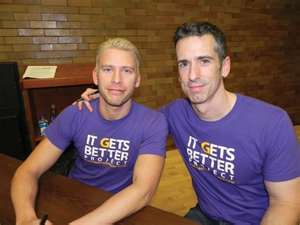
Dan Savage is a gay activist who speaks to students across the country.  Recently, he was invited to address the National High School Journalism Conference about the need to prevent bullying.  He launched a vicious attack on the Bible and Christian beliefs.  As he put it, “We can learn to ignore the bull **** in the Bible about gay people . . . .”  He also stated that the “Bible is 100% wrong on sexuality.”

Please watch the short video clip here.

Does the fact that Dan Savage is invited to speak to students concern any of you parents?  Grandparents?

Does it concern you Christians who hold the Bible to be the very Word of God?  The Word that invites us to choose life rather than death so that we might have blessings rather than curses?

If we say that we believe true marriage is only between one man and one woman, we’re now accused of bullying.  If we say that homosexuality is a sin, we are accused of being intolerant.  You and I need to be aware that changes in word definitions are being used as weapons against Christians in a spiritual battle.

How do we — who believe that Jesus Christ is the Word on marriage, family, sexual behavior, and all matters of life — respond?

In this spiritual battle, may we never compromise the Word of God.  May we rightly use the Law and Gospel of the Word — Jesus Christ — in all circumstances.  May our speech and action show respect for all people, no matter our differences.

May we demonstrate kindness to those caught in the chaos and confusion of sinful choices.  May we volunteer to give blood for patients with HIV and others suffering AIDS.  May we exhibit compassion, not by tolerating lifestyles that bring harm, but by asking questions that help people think about their behavior and why they defend it.  May we, as Chuck Colson so rightly said, “never impose anything, but instead propose — propose an invitation to a better way of living.”

May we pray for people like Dan Savage who may be bold in an effort to cover anger and hurt.  May we pray for courage and never be bullied into silence.

Several students walked out during the savage attack on Christianity.  May we see hope in their courageous conviction.  May we see such conviction worthy of our nurture and defense.

Precious souls are at stake.

Read Full Post »

Jesus Christ never asks for or demands the sacrifice of children.   Instead, Jesus wants us to teach children about Him so that they might love and trust Him.  He tells us to never put anyone — father, mother, or child — in harm’s way.

It is for this reason that people who defend mother and child gather for 40 Days of Prayer in front of abortion clinics across the country.  Many working inside the clinics are already struggling with their conscience.  They’ve grown weary of hopelessness and death.  They have felt the movement of a yet to be born child, seen the look of fear and sorrow on the mother’s face, and tried to find some peace in what they’re doing.  But, peace alludes them.  That’s because abortion is unnatural.  Ripping new life from the womb puts the physician at odds with his profession and the mother at odds with her child and her soul.   It is an act of desperation.

Christ, seeing us all caught in sin’s desperation, offered Himself as the only sacrifice necessary.  He suffered persecution and death so that all of us — born and unborn — might have eternal life.  Yet, mocking the Giver and Savior of life, Planned Parenthood (PP) has put out a pro-abortion prayer guide called “40 Days of Prayer Supporting Women Everywhere.”

PP has set its altar in place.  It is at the foot of Molech.  PP’s Prayer of “Thanks for Abortion Providers” and their “Sacred Care,” reads like this:  “Today we pray for all the staff at abortion clinics around the nation.  May they be daily confirmed in the sacred care that they offer women.”

PP’s 40 days of prayer began March 18 and continues through April 27.  Here are a few more of their prayers:

“We pray for elected officials, that they may always support a woman’s right to make her own medical decisions [i.e. abortion].”

“We pray for women who have been made afraid of their own power [of choice, i.e. abortion] by their religion.  May they learn to reject fear and live bravely.”

“We pray for a cloud of gentleness to surround every abortion facility.”

“We give thanks and celebrate that abortion is still safe and legal.”

But, abortion is not safe.  The grim procedure kills a human child already named by God and places the mother’s life at risk physically, emotionally, and spiritually.  The only cloud of gentleness is outside the abortion clinic where those willing to help women in times of difficulty lift their voices in prayer not to Molech, but to Jesus Christ.

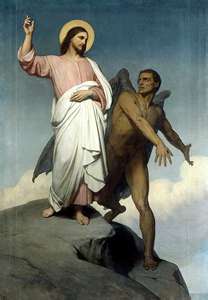
PP has partnered with a group called Faith Aloud to write these pro-abortion prayers.  Perhaps you should visit the web site of Faith Aloud.  Contrast their worldview with that of God.  If our choices and behavior are to be blessed because they are right in our own eyes, they why do we need Jesus Christ?  If taking the life of another human being — no matter how small or seemingly inconvenient — is not evil, then what is?  Why did Jesus, when tempted by evil, say, “Be gone, Satan!”  Of what evil does Jesus ask us to be delivered in the prayer He taught us to pray?  And why did Jesus give His life on the cross and rise again to victory over evil?  Calling abortion a “good” thing is giving in to evil.  It is bowing at the altar of idols.  Those idols are more than the stone god Molech.  They are our own fear, selfish desire, and uninhibited sexuality.

I know of a woman who called abortion “the sacrifice she had to make for herself.”  But, not once — not in all of His Word — does the Triune God ask for such a sacrifice.  Recently, the woman president of the Episcopal Divinity School attempted to get her audience to join her in a chant: “Abortion is a blessing and our work is not done.  Abortion is a blessing and our work is not done.”  But, not once — in all of His Word — does the Triune God ask us to choose death.  Instead, He says,

. . . I set before you life and death, blessing and curse.  Therefore, choose life, that you and your offspring may live, loving the Lord your God, obeying His voice and holding fast to Him, for He is your life and length of days . . .  (Deuteronomy 30:19-20)

Read Full Post »

Laura was raped by her alcoholic father.  She remembers the shock when the doctor told her she was pregnant.  “He told me that my only choice in a situation like this was to have an abortion.  He was very kind.  He held my hand and comforted me.”  After the abortion, Laura cried nearly every night.  “I could find no peace.”

Encouraging a woman who has become pregnant through incest or rape to have an abortion may seem the compassionate thing to do.  But, is it?

Some have observed that abortion is the solution for the people we don’t want.  Or, in the case of rape or incest, the people we can’t bear to love.  You would think that God could not bear to love tainted and sinful people like me.  Or anyone else in the whole human race.  “I am a Holy God who cannot abide the unholy.  I will abort you all!”  That’s what God could have said.  But, He didn’t.  He chose, instead, to sacrifice more of Himself.  The Holy came to live among the unholy.  To love the unloveable.

Only God in Christ Jesus can look full in the face of ugliness and despair to bring healing and hope.  “Come to Me, all who labor and are heavy laden, and I will give you rest.  I am gentle and lowly in heart, and you will find rest for your souls.  For My yoke is easy, and My burden is light” (Jesus in Matthew 11:28-29).

Dr. Sandra Mahkorn, author of Pregnancy and Sexual Assault: The Psychological Aspects of Abortion, alerted me to the fact that abortion is an additional trauma for the girl or woman who has first been victimized and is then encouraged to victimize her unborn child.  Consider the symptoms of rape.  The woman feels dirty, guilty, sexually violated, of low self-esteem, angry, fearful or hateful of men.  Now consider the symptoms of abortion.  The woman feels dirty, guilty, sexually violated, of low self-esteem, angry, fearful or hateful of men.  Instead of curing the problem, all the same symptoms are intensified.  Martin Luther once said, “Even the heathen say it is better to suffer wrong than to do wrong.”

In a 1979 study, Dr. Mahkorn identified 37 pregnant rape victims.  Of these, only five chose to have an abortion.  The other 32 victims gave several reasons for not aborting.  Some felt that abortion was another act of violence.  Some saw an intrinsic meaning or purpose for the life of the child.  Some even believed that if they could get through the pregnancy they would have conquered the rape.  For them the selfless act of giving birth helped them to reclaim their self-respect.

In studies of incest victims, the vast majority choose to carry the pregnancy to term.  Those in the minority who have an abortion appear to do so only under pressure from their parents to conceal the incestuous relationship.

For some incest victims, carrying their pregnancy to term is a way to break out of an incestuous relationship with their fathers, whom they may still love despite their confusion and resentment about the way they have been used as sexual objects.  Since they still love their fathers, having the child not only exposes the incestuous relationship, but also gives hope of beginning a truly loving relationship.

Reason holds that if God has a watchful eye on us and loves us, He will prevent all evil and let us suffer nothing.  Luther reminds us to look to the Word, not reason.  When a mother acts as though she is about to drop her child, the little one throws its arms about her neck and holds on all the tighter.  Similarly in times of trouble and desperation, God wants us to cling to Him and trust His Words and promises to us.

“I was pushed hard, so that I was falling, but the Lord helped me.  The Lord is my strength and my song; He has become my salvation” (Psalm 118:5-6).

The Lord is the song of salvation for all of us who have been wronged.  And for all of us who have wronged others.

His compassion is true.  It is new every morning.  Great is His faithfulness.

Read Full Post »

Tara had been raped.  She had been violated by a man who had no respect for her personhood.  For her physical or emotional well-being.  She felt dirty.  Degraded and filthy.  A sense of uncleanness rose up from the very core of her being.

Was she to blame?  No.  The man who assaulted and raped her was to blame.  He, and he alone, was responsible for his behavior.

Tara took care with her dress and behavior.  She didn’t allow herself to be in places she knew were unsafe.  Yet, one night, on her way home from the house of a friend, a man appeared from nowhere.  He had evil on his mind.  The deed was done.  And she was left to grieve the loss the loss of something she considered of great value.  The pureness of her identity was stolen away.

Or, was it?  Purity is not something that can be stolen.  We, ourselves, can determine to give up our purity or consciously turn from a life of purity, but no one can steal this virtue from us.  Purity, it has been said, is not so much of the body but of the soul.  In Tara’s eyes, much had been lost.  But, in the eyes of God, Tara – who had not compromised her virtue – was still pure.

On Good Friday, Tara attended church with her family but she did not go home with them.  Instead, she lingered in the quiet sanctuary.  There, she asked: “Why, God?  Why did this have to happen?  Will my future husband consider me spoiled?  Will there be a wedding for one so shamed?”  Tara wept.  Tears of sorrow quickly became tears of anger.  Then fear.  Had evil ruined her life?  Thoughts began to swirl in her head.  Strangely, Tara remembered a day in the kitchen with her grandmother.  It was the place where lessons in cooking often turned to lessons for life.  More clear than the image of her grandma’s face were the words she often spoke:  “Dear one, when you are in doubt, look to God’s Word.  It will not fail you.”

Tara sighed.  Looked around.  There was a Bible in the pew.  She flipped through the pages with fumbling fingers, embarrassed that she felt so awkward with the book her grandma knew so well.  Her eyes came to rest upon Psalm 25:20.  “Oh, guard my soul, and deliver me!  Let me not be put to shame, for I take refuge in You.  May integrity and uprightness preserve me, for I wait on You.”

Tara looked up to the Cross over the altar.  Again, she heard her grandmother’s voice.  “Tara, when you cannot find the words, God’s Spirit speaks them for you.”  Now, more confident, Tara turned the pages to Psalm 56.  “You have kept count of my tossings; put my tears in your bottle.  Are they not in your book?  Then my enemies will turn back in the day when I call.  This I know, that God is for me.  In God, whose word I praise, in the Lord, whose word I praise, in God I trust; I shall not be afraid.  What can man do to me” (8-11)?

Later, at home, Tara wrote in her journal: Today, I am thankful for my Grandma who, years ago, reminded me that I can trust God with my life.  I am angry with the man who hurt me.  I will never forget what he did.  But, I don’t have to let this evil thing define me.  The man did wrong.  I did not.  The man sinned against God.  I choose not to sin against God by turning away from Him.  Dear Jesus.  Hold me close.  Move me forward… out of darkness into Your light.”

A question remains.  It is for the grandmothers of young women like Tara.  Are we reminding our granddaughters that their identity is not shaped by what happens to them, but by the Lord Jesus who died for them?

Read Full Post »

Does it seem that the culture is captive to the lie?  Chuck Colson recently quoted T.M. Moore who writes, “The lie insists that God either does not exist or is not really relevant to human happiness . . . [that] every human being must decide for himself” where and how to find happiness. 

The lie is ancient.  It’s old human stuff with repetitive consequences of disappointment, despair and death.   It’s the root of “my body,  my choice.”   Broken relationships.  Hopelessness. 

But, looking around me, I see the lie being faced head on.  Denounced.  Stripped of its power.   

It is denounced by Terry and Connie whose son, Chris, suffers a malignant brain tumor.  Certainly God has so many things to accomplish using their son in his vocations of husband, father, and pastor.  Yet, knowing how many times my friends have seen God bring contentment out of chaos in their lives, I am confidant that their happiness is not dependent on having their will be done.   They are resisting the lie by choosing to see how the Lord of life is at work even in the weakness of their son. 

It is denounced by Dagny who once thought an abortion would return happiness to her life.  She was deceived, but only for a while.  The pain of her choice helped her confront the lie.  The Word of the Lord released her from its grip.  It is that Word that brings new mercies to her every morning.    When I first met Dagny, she was timid and surprised that God could use her for anything good.  Today, I see a woman of courage and conviction.  Reality is not her youthful dream, but evidence that God involves Himself in the day to day affairs of those who love Him.   Her happiness is not what she has created, but what God is doing in spite of her for others. 

It is denounced by Marta whose young heart longs for true love.  More than anything, she desires to be a wife and mom.  To make a home.  Two men have asked for her hand in marriage.  But, at the core of each love-offering was the lie.  Both of these men promised her happiness shabbily wrapped in conditional love.  Marta believes that God is relevant to her life.  Where self-help books and human opinions fail her, God’s Word does not.  It calms her fears and sheds light in dark corners.  It reminds her that she is more than the desires of her heart.  She is eternal soul.  And, says Marta, who knows my soul better than the God who made it?

It was denounced by a young Austrian bride named Traudi who left parents, siblings, and the life she knew to follow her husband to America.  I’d like to tell Traudi’s story, but it requires a blog of its own.  Will you be patient while I gather my thoughts?  I want to explain why remembering Traudi has always helped me face the lie head on. 

Contrast it with Truth. 

Silence the liar.

Read Full Post »

What’s going on?  The whole culture has changed.  We’re in a moral and ethical mess.  What has happened… and what can I do about it?

First, it’s important for the Christian to recognize that two worldviews are in conflict.  Man’s perspective on life opposes God’s.  The Biblical worldview is Creation, The Fall, and Redemption.  All questions of life can be answered by this worldview.  But, when man doubts the Creator and places himself as the ultimate authority, he is left with only evolving opinions about how life should be lived.

Second, history proves that whenever Christians stepped into the public square, the culture was dramatically affected.  In Rome, for example, unwanted children were placed outside the city gates and left to die, but Christians started orphanages or even welcomed abandoned children into their own homes through adoption.  It was common for sick people to be neglected, but Christians started hospitals and hospice care.  Women were too often considered property, but Christ-followers saw women as equal to and compatibly different from men.  This made Christianity worth thinking about.

Third, those who resist God want others to resist Him, too.  Passionate about their perspectives, they step into the public square — especially coveted areas of academia and the media — to influence others.  Passionate people are persuasive people with words and actions.  Labeling something “scientific” makes the idea “progressive” and worthy of consideration.  Labeling something “religious” implies personal, but antiquated beliefs unworthy of any modern thinker.  If you are “scientific,” you are intelligent and welcomed to dialogue.  If you are “religious,” you are clinging to “some faith superstition” and your views are fine for you but not for general consumption.  Since the 1950s, children taught “Bible stories” in Sunday school grew up to become students at the university where “science” ridiculed “faith stories.”  Zealous disciples of Darwin, Marx, Dewey, Kinsey, Sanger, and others replaced the disciples of Jesus in the cultural conversation.

Fourth, when Christians pull out of the public square to take refuge inside the walls of the church or keep their faith private, the culture suffers — in every area from marriage and family to education and ethics.  We miss huge opportunities to push back against evil and raise up a younger generation in Truth when we do not talk about what God has done throughout history (documented in His Word beginning in Genesis); when we let the “science” of evolution intimidate our faith in the Creator God; and when we assume our faith is a “private thing” not to be lived in the workplace, classroom, or neighborhood.  It’s true that there is strong opposition to Christianity in our time but, in the midst of the opposition, there are people everywhere crying out for answers to the critical issues of life.  If we believe Christ is the Hope of the world, don’t we also believe that His Word is applicable to the world?

Can one person  make a difference?  Yes.  How?  By being as bold, confidant, and passionate for God as those who oppose Him.  The Christian citizen living in a morally and ethically-bankrupt society makes the greatest difference when he/she fears (trusts) and loves God above all things.  Trusting God’s Word, we can use it to serve our  neighbor.  We serve our neighbors by:

  • Speaking God’s Word of Law in love to those not aware that they are making wrong choices.  We should always be prepared to contrast trendy opinions with God’s Word about our beginnings, the sanctity of human life, relationships, marriage and family, sexual behavior, health care, law, and ethics.
  • Speaking God’s Word of Gospel to those sorry for their sins and ready to live as changed people in Christ.

This culture is in need of ordinary people who make a difference right where we live.  Parents and grandparents faithful to God’s Word affect families and neighborhoods.  We don’t have to be an author, speaker, or teacher to impact the culture.  We can ask questions that help people think, confront issues, and entertain challenges. 

If we don’t have the answer to a particular question, we can promise to find out.  Heaven knows resources are as close as our fingertips.  Some of my favorites are the Colson Center for Worldview, Vision Forum, Stand to Reason, and Answers In Genesis.  Some of my favorite worldview authors include Nancy Pearcy, Chuck Colson, Frank Beckwith, Greg Koukl, C.S. Lewis, J. Budziszewski, Marvin Olasky, and Gene Edward Veith.

We can make the best of every opportunity.  If you can’t speak to a crowd, speak to one.  If you can’t speak at all, write a letter-to-the-editor or a personal note.  Keep your eyes open and ears attentive.  Many people are struggling in confusing situations.  They’re not looking for someone’s opinion, but for a life-changing word of hope.  I know that Word of hope, don’t you?

Small seeds planted by faithful people of God will grow a better culture.

Read Full Post »

« Newer Posts - Older Posts »