Feeds:
Posts
Comments

Archive for the ‘Parenting & Education’ Category

A cross has a special meaning for the Christian woman.  It is a reminder of a love so great that it was willing to endure ridicule, humiliation, pain, and even death.   The cross — hanging on her bedroom wall or on a chain around her neck — reminds the Christian woman of the amazingly  unselfish love of Jesus.  The “look” of Jesus’ love is one of humility.  The “behavior” of Jesus’ love turns away from self to others.

So if there is any encouragement in Christ, any comfort from love, any participation in the spirit, any affection and sympathy, complete my joy by being of the same mind, having the same love, being in full accord and of one mind.  Do nothing from rivalry or conceit, but in humility count others more significant than yourselves.  Let each of you look not only to his own interests, but also to the interests of others.  Have this mind among yourselves, which is yours in Christ Jesus, who, though He was in the form of God, did not count equality with God a thing to be grasped, but made Himself nothing, taking the form of a servant, being born in the likeness of men.  And being found in human form, He humbled Himself by becoming obedient to the point of death, even death on a cross  (Philippians 2:1-8).

Not long ago, I was with my husband and several male members of my family at a restaurant.  The woman who served our table was wearing a cross necklace which hung deep between her partially-exposed breasts.  When the men at my table looked (can I deny that they did?), what do you suppose they saw?  The cross — or something else?

The woman who served our table most probably had no intention of being a temptress.  She probably gave little if any thought to the partially-exposed look of today’s woman.  After all, from kindergarten through high school, girls are encouraged to be comfortable with their bodies.  Their “sexuality.”  This woman — like many of us — intended no harm.  But, perhaps she was uneducated.  Perhaps no one cared to explain to her how sin distorts a man’s visual appreciation of a woman’s body.  Or, perhaps she did not understand the look and behavior of the cross and her responsibility to lead away from temptation.  At that moment, the Christian men of my family were called to turn their eyes away from the woman and, instead, focus on the cross of Jesus.  This meant acting like gentlemen who are respectful of women.  (A Christian man finds wisdom in Job 31:1; Proverbs 4:14-15; Ephesians 6:10-11; and Luke 11:4).

The world’s look and behavior of love boldly screams: Look at me!  God’s look and behavior of love tenderly encourages: Look at the cross!  Jesus’ look turned outward toward others.  Jesus’ behavior placed the well-being of others ahead of His own.

For a number of years, Judy Hayen and I traveled the country with the purity lifestyle show called Dressing for Life: Secrets of the Great Cover-up.  We transported a collection of vintage clothing from Oklahoma City to Chicago to Detroit to help us illustrate what the first Fashion Designer — God — has to say about clothing.  On one of our journeys, Judy encouraged me to write a Bible study for girls and their moms to use at home, church, or a girls’ sleepover.  A pastor’s wife used portions of the study at volleyball camp.  One of the ten lessons is titled “The Look and Behavior of Love.”

Other lessons are:

  • Fig Leaves Aren’t Enough
  • Jesus Covers Our Shame and Embarrassment
  • Embarrassment on a Windy Day
  • Worldviews in Conflict
  • My Body, My Choice…or Is it?
  • Is Clothing a Language?
  • Beauty at Any Price?
  • Living in the Presence of God
  • The Perfect Dress
  • Dressing for Life… the Secret is Out!

At this time, the study is available as a reproducible PDF from Lutherans For Life or Concordia Publishing House (#LFLDFLWEB – $12).  However, with growing interest, ezerwoman may be encouraged to publish in a different format.  Hmmm.  What thinkest thou?

Do women need to know why it’s so great — not only to cover-up, but be covered?
Read Full Post »

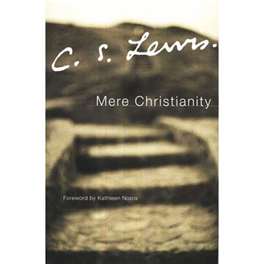
Some of you have great respect for C.S. Lewis.  The men in my family have been greatly impacted, most especially, by his book Mere Christianity.  As for me, I read portions a little at a time.   I chose to take the book with me on a recent flight and turned to Lewis’ chapter entitled “Sexual Morality.”  Here’s what Lewis had to say in 1943:

. . .[F]or the last twenty years [we] have been fed all day long on good solid lies about sex.  We have been told, till one is sick of hearing it, that sexual desire is in the same state as any of our other natural desires and that if only we abandon the silly old Victorian idea of hushing it up, everything in the garden will be lovely.  It is not true.  The moment you look at the facts, and away from the propaganda, you see that it is not.

“They tell you sex has become a mess because it was hushed up.  But for the last twenty years it has not been hushed up.  It has been chattered about all day long.  Yet it is still in a mess.  If hushing up had been the cause of the trouble, ventilation would have set it right.  But it has not.  I think it is the other way round.  I think the human race originally hushed it up because it had become such a mess.  Modern people are always saying, ‘Sex is nothing to be ashamed of.’  They may mean two things.  They may mean ‘There is nothing to be ashamed of in the fact that the human race reproduces itself in a certain way, nor in the fact that it gives pleasure.’  If they mean that, they are right.  Christianity says the same . . . Christianity is almost the only one of the great religions which thoroughly approves of the body — which believe that matter is good, that God Himself once took on a human body, that some kind of body is going to be given to us even in heaven and is going to be an essential part of our happiness, our beauty, and our energy.  Christianity has glorified marriage more than any other religion . . . But, of course, when people say, ‘Sex is nothing to be ashamed of,’ they may  mean ‘the state into which the sexual instinct has now got is nothing to be ashamed of.’

“If they mean that, they are wrong.  I think it is everything to be ashamed of.  There is nothing to be ashamed of in enjoying your food: there would be everything to be ashamed of if half the world made food the main interest of their lives and spent their time looking at pictures of food and dribbling and smacking their lips . . . There are people who want to keep our sex instinct inflamed in order to make money out of us.  Because, of course, a man with an obsession is a man who has very little sales-resistance.  God knows our situation; He will not judge us as if we had no difficulties to overcome.  What matters is the sincerity and perseverance of our will to overcome them.

“. . . Our warped natures, the devils who tempt us, and all the contemporary propaganda for lust, combine to make us feel that the desires we are resisting are so ‘natural,’ so ‘healthy,’ and so reasonable, that it is almost perverse and abnormal to resist them.  Poster after poster, film after film, novel after novel, associate the idea of sexual indulgence with the ideas of health, normality, youth, frankness, and good humor.  Now this association is a lie.  Like all powerful lies, it is based on a truth — the truth . . . that sex in itself (apart from the excesses and obsessions that have grown round it) is ‘normal’ and ‘healthy,’ and all the rest of it.  The lie consists in the suggestion that any sexual act to which you are tempted at the moment is also healthy and normal.  Now this, on any conceivable view, and quite apart from Christianity, must be nonsense.  Surrender to all our desires obviously leads to impotence, disease, jealousies, lies, concealment, and everything that is the reverse of health, good humor, and frankness.  For any happiness, even in this world, quite a lot of restraint is going to be necessary.

“. . . Many people are deterred from seriously attempting Christian chastity because they think (before trying) that it is impossible.  But when a thing has to be attempted, one must never think about possibility or impossibility.”

“. . . Virtue — even attempted virtue — brings light; indulgence brings fog.”

Read Full Post »

God says: “You shall have no other gods before Me.”  It is His first commandment (Exodus 20:3).  But, when we label ourselves “sexual beings,” we are tempted to put our “sexuality” — our flesh side — before God.

Doubt me?  Take an honest look at the culture.  Only one thing is “holy of holies” above all other things; only one thing is untouchable, my “right,” and to be revered no matter the cost.  That is “human sexuality.”  Beginning early in sex education, children are told: You are a “sexual being.”  Therefore: It is who I am.  It is me.  It is what I do.  It is even my excuse for what I should not do.

Telling ourselves and others (especially children) that we are “sexual beings” is bestowing the wrong identity.  Bestowing the wrong identity, we put ourselves in God’s place.  We call ourselves something that He did not.

God does not identify us as “sexual beings.”  God clearly identifies us a “human beings” or “humankind” or “man created in His own image” (Genesis 1:27).  Reading on, we learn that God created mankind to be “male and female.”  Is this where some Christians get the notion that God made us to be “sexual beings” or to possess “sexuality?”  Well, I don’t think Martin Luther or other church fathers would agree.  Luther writes, “Moses put the two sexes together and says that God created male and female in order to indicate that Eve, too, was made by God as a partaker of the divine image and of the divine similitude, likewise of the rule over everything.  Thus even today the woman is the partaker of the future life, just as Peter says that they are joint heirs of the same grace (1 Peter 3:7).  In the household the wife is a partner in the management and has a common interest in the children and the property, and yet there is a great difference between the sexes.”  (The Lutheran Study Bible, commentary on 1:28, p. 14).  How interesting that Luther did not take this opportunity to proclaim: Look, here, believers!  God has made humans to be sexual beings!  It is who we are!  Luther does, however, point to our real identity: Bearers of God’s divine image.

We do not bear the image of animals.  (Thus, we are not captive to animal instincts.)  We do bear the image of God.  God’s image is holy.  Even though we no longer bear the perfect image of God, He still calls us to holy living!  The kind of living that honors His name and reflects His glory rather than our own.  The kind of living that does not tempt others to sin but, instead, guards both our soul and the soul of our neighbor.

Ahhhh.  Now, we’ve come even closer to our true identity.  We are more than body or mind.  We are spirit, created by God who is Spirit.  We are immortal souls.  “Sexuality” has nothing to do with our souls.  Our souls will live forever.  (In heaven, Jesus tells us, there will be no marriage; in other words, no expression of “sexuality,” no “one flesh union” [Matthew 22:30].)

There is spiritual danger in choosing to identify ourselves as “sexual beings.”  True, we are male or female creations of God.  As male or female believers in the Lord Jesus Christ, we are God’s children.  Even when we fail to act as His children, He is still our Father.  The Father-Child relationship doesn’t change because of our sin.  But, when we sin against God by calling ourselves what He does not; when we focus on ourselves as “sexual beings” and not His children with immortal souls, then our wrong identity shapes our behavior and our behavior changes our attitude toward God.

A changed attitude toward God can dangerously tempt us to put ourselves in the place of God; to, in fact, become our own god.  A god who defines “self” and “sexuality” as being supreme.

The pagan defines himself and lives however he pleases.  But, the believer proclaims: It is God who made us and not we ourselves.  God says: I have called you by name; you are Mine.  In Jesus Christ, God calls us His children.  We are treasured souls bought with a price.  That is our identity.  Anticipating Jesus’ return, “sons” and “daughters” live their lives as male or female: two eyes of the human race.  Both are needed for a clear understanding of life.  It is folly to think of every interaction of male and female as being sexual in nature.  What an abhorrent mess that would be!  Being male and female is not so much sexual as it is the partnering of our complimentary differences to bring glory to God, proclaim Jesus Christ, and affect the culture for good.

Only in marriage does our “flesh side” – our “sexuality” – find its home.  Only in marriage is the “one flesh” union a divine gift to humanity.  It is a power from God.  Who, but the Creator God could join with man and woman to procreate, to bring new life — new body, mind and soul — into existence?  Husband and wife respond to God’s command to “be fruitful and multiply.”  Yes, in the act of sex, male and female are “sexual.”  They procreate sexually.  In Scripture, all things “sexual” pertain to the act of sex.  It is the “will of God, your sanctification: that you abstain from sexual immorality; that each one of you know how to control his (or her) own body in holiness and honor, not in the passion of lust like [those] who do not know God”  (1 Thessalonians 4:3-4).  The commentary on verse 4 found in the Lutheran Study Bible brings clarity.  “Our sexuality is God’s gift for use within the parameters of marriage.”  Do you understand what is being said here?  Our gift of sexuality, or the ability to have sex, is reserved for marriage between one man and one woman.  To be male or female, however, is a gift for daily use in glorifying God.  We are not to abstain from being male and female.  We are not to do battle with the attributes of maleness or femaleness, but with “sexual immorality, impurity, sensuality, idolatry . . . [T]hose who belong to Christ Jesus have crucified the flesh with its passions and desires” (Galatians 5:19-24).

It matters how we identify ourselves.  It determines our behavior.  It can become the argument for homosexuality.   It can help – or hinder – our neighbor.  It honors – or dishonors – the sanctity of human life.  When we identify ourselves as “sexual,” we may be tempted to give ourselves license; to, in fact, worship and serve ourselves rather than God (Romans 1:24-25).  But, re-created in Christ, male and female identify themselves in a different way.  A Christian’s body is the “temple of the Holy Spirit who enables the believer to turn away from a “sexy” life to a “holy” life.  When we identify ourselves as “holy” and “immortal souls,” we are encouraged to guard the treasure that Jesus bought at tremendous price.  “The Spirit Himself bears witness with our spirit that we are children of God, and if children, then heirs — heirs of God and fellow heirs with Christ” (Romans 8:16-17).

We “are debtors, not to the flesh, to live according to the flesh” (v 12).  In Christ, our fallen nature has no claim on us.  Our “flesh side” may tempt us, saying: “This is who I am,” or “I owe it to myself,” but we aren’t obligated to obey its impulses or satisfy its desires.  Why?  Because we “did not receive the spirit of slavery to fall back into fear” or idolatry.

We cry: “Abba Father!” (v.15)

Read Full Post »

Looking for a “stocking stuffer” for Christmas?  With concern for your children or grandchildren, you might want to consider IndoctriNation.

Paul and I believed we could safely get our sons through public school.  We managed, but only with the help of teachers who respected what we taught in the home.  Even so, we battled a system that diametrically opposed our Judeo-Christian faith and values.   IndoctriNation explains why.

IndoctriNation is a ride on the yellow school bus with Scottish filmmaker Colin Gunn and his family.  It’s a ‘cross country field trip you won’t want to miss!  You’ll hear from real principals, teachers and parents.  You’ll learn from Christian historians and thinkers of our day.  And, you’ll discover the answers to important questions:

  • Who established the public school system and why?
  • Whose ideologies are on the bus?
  • Are my children morally and physically safe in the schools?
  • Are public schools religiously neutral?
  • Should Christians try to be “salt and light” in the schools?
  • Can the public school be fixed?
  • What does it really mean to speak and live our faith?

Take a ride with Colin Gunn and his family!  Then, ask yourself: Is there good reason to get my family off the bus? 

IndoctriNation, ($12 DVD)
 Gunn Productions in association with
the Exodus Mandate

Read Full Post »

“I would never have an abortion myself, but I support the right of others to do so.”

“Abortion is wrong, depending upon the circumstances.”

“Sometimes we’re forced to choose the lesser of two evils.”

Why is abortion defended as a “woman’s right” even among people of faith?  How does a mother, father, or grandparent rationalize abortion?  What has to happen to make people who acknowledge the Creator of life set themself in His place and take a life?

The ministry of Titus 2 for Life began after years of asking these questions.  In order to make abortion “unthinkable,” we must honestly examine what happens prior to an abortion, including a “me first” mentality, promiscuity, loss of true identity, and failure to trust God.  But is there, as one Titus 2 participant asked, a missing piece to the puzzle of abortion?  Is there something so terrible that, in moments of fear and hopelessness, even Christian women and their families feel compelled to play the role of God?

An e-mail conversation following a Titus 2 Retreat began to reveal that missing piece.  A participant wrote: “Without breaking confidences, a group of us shared the painful circumstances of abortion as related to us by friends, family, congregation, and community members we have cared about and listened to over the years.  A common thread seemed to run through these accounts.  Young women who had been victims of childhood sexual abuse became promiscuous or experienced further sexual abuse from men during their teen years.  When they found themselves pregnant, they chose an abortion.”

Childhood sexual abuse (CSA) is, without a doubt, a missing piece in the abortion puzzle.

“I don’t even remember when it began.  My older step-brother would slip into my room at night and crawl into bed with me . . .”

“When I was twelve, my ‘uncle’ began touching me . . . later, when boys wanted to do the same, I honestly didn’t know how to say ‘no.’”

“Between the ages of 10 and 14, I was sexually abused by my step-dad.  My mom knew but was too afraid to say anything . . .”

“The principal of my Christian school said I was special and what he was doing to me was our secret . . .”

The stories break our hearts.  One study done in 1997 found that “compared to women who were not abused during childhood, women who reported a history of childhood sexual abuse were 1.5 more likely to have had an abortion.”  (Source: www.ncbi.nlm.nih.gov/pubmed/9315271)

This statistic (and more) was researched by a Titus 2 participant whose heart was touched by the stories she heard following a retreat.  She has been motivated to speak so that a culture can begin to prevent more harm, death, and hopelessness.

Titus 2 women gather to contrast the world with The Word.  Abortion is a worldly idea, but God calls it a sin.  What has to happen before the sin of abortion?  Other sin.

Sin happens when we rebel against or fail to trust God.  Sin happens when we let our sinful human flesh come under Satan’s authority.  Sin happens when God’s people are silent about sinful behavior.  Sinful humans caught up in sinful behavior affect the lives of others.

CSA is an example of sin’s generational effect on all of us. The consequences of one sin can affect generations to follow.  God says: I, the Lord your God, am a jealous god, punishing the children for the sin of the fathers to the third and fourth generation of those who hate Me . . . (Exodus 20:5 NIV).

In pausing to take a breath, I sense what some of you are thinking.  Why is God so unjust to compel innocent children to bear the sins of guilty parents?  Ahhh . . . and so it might seem to those who stop with verse five.  Please!  Don’t stop!  Read the rest of what God has to say.  He continues with a powerful, life-changing “but” that is followed by words of hope: I . . . am a jealous God, punishing . . . to the third and fourth generation of those who hate Me . . . but showing love to a thousand generations of those who love Me and keep My commandments (v. 6).

Do you hear what the Lord of life is saying?  He is “a jealous God” because He created male and female.  The first man and woman’s sin tainted all of their children and children’s children.  Sin produces consequences.  But, praise God!  There is Hope!  There is always Hope for those who love and trust God!  This Hope died for our sin ad rose to victory.  Hope is Jesus Christ who covers the repentant sinner with mercy every morning.

It is never a child’s fault when he or she is abused.  A child has not sinned when they are forced to do something against their will.  The adult who puts a child in harm’s way or strips away innocence is always held accountable.  So, what does the person who experienced childhood sexual abuse do?  He or she finds hope and healing in God’s promises: Those who look to Him are radiant; their faces are never covered with shame . . . The angel of the Lord encamps around those who fear Him, and He delivers them . . . The Lord is close to the brokenhearted and saves those who are crushed in spirit (Psalm 34:5, 7, 18 NIV).

What does the adult who sinned against God and one of His little ones do?  He or she finds hope and healing in God’s promises: When I kept silent, my bones wasted away through my groaning all day long.  For day and night Your hand was heavy upon me; my strength was sapped as in the heat of summer.  Then I acknowledged my sin to You and did not cover up my iniquity.  I said, ‘I will confess my transgressions to the Lord’ – and You forgave the guilt of my sin.  (King David in Psalm 32)

What do Titus 2 women (and men) do?  They speak up.  They expose the darkness of evil with the light of God’s Word.  For the grace of God that brings salvation has appeared to all men.  It teaches us to say ‘No’ to ungodliness and worldly passions, and to live self-controlled, upright and godly lives in this  present age, while we wait for the blessed hope – the glorious appearing ofour great God and Savior, Jesus Christ, who gave Himself for us to redeem us from all wickedness and to purify for Himself a people that are His very own, eager to do what is good (Titus 2:11-14).

Read Full Post »

Today, I was invited to speak for a few minutes on Issues, Etc. — Lutheran Talk Radio.  How does one “speak for a few minutes” on two life-sized topics: Abortion and Sex Education?  It was impossible!

I’ve posted multiple blogs in recent weeks on sex education, yet have only covered the surface.  There is so much history!  So much experience!  Such bold contrast between the world’s idea of sex education and God’s command to instruct in purity.  Identity — how the world defines us vs. how God defines us — is core in this discussion.  At the very least, I hope one person was made more curious.

Well, go ahead…  if you wish.  Click on the link and listen 🙂

Abortion and Forgiveness & Sex Education, with Linda Bartlett, 11/16/2011

Read Full Post »

God created woman.  Her vocation is: “helper” (Hebrew: “ezer”) (Genesis 2:18). 

An ezer helps for good… or bad.  It would seem these young men and women agree.

http://youtu.be/exc9J0uJgdM

Read Full Post »

Every idea has a consequence.

“Man is descended from a hairy-tailed quadruped, probably arboreal in his habits.”  (Charles Darwin)

“Children are sexual beings.”  (Alfred Kinsey)

“The entire culture war is being fought over the issue of sex.”  (Phillip Johnson)

“Sexual liberty has become the ultimate virtue in American life.”  (Charles Colson)

Should we be surprised to hear:

“Aborting my baby is the ultimate sacrifice I have to make for myself.”  (American woman)

Read Full Post »

Christ says that the devil is the prince of this world (John 14:30; 16:11); and he is a murderer from the beginning and a liar (John 8:44).  If, then, we would live upon earth, we must realize that we are guests and lodge in an inn with a knave as host and with a sign over the door that reads THE HOUSE OF MURDER or THE HOUSE OF LIES.  Satan is a murderer for killing the body, a liar for misleading the soul.  That is the devil’s trade and his work; that is the way he keeps house; that is how business is carried on in this inn.  Whoever belongs to his followers must lend him a helping hand.  But whoever is his guest must expect and risk experiencing rough treatment.  (Martin Luther)   Q: What does this say to you as a Biblical, pro-life Christian?  How do you respond?

The devil, too, can quote Scripture and deceive us with it.  But his use of Scripture is defective.  He does not quote it completely but only so much of it as serves his purpose.  The rest he silently omits.  (Luther)   Q: What does this mean for pro-life Christians and caring pregnancy centers that seek to work with churches, pastors, and youth groups?

The fable is told that when God made man out of a clod of earth and breathed into his nostrils the breath of life so that man became a living soul, the devil wanted to imitate God and also took a clod of earth in order to make a man of it; but it turned out to be a toad.  (Luther)   Q: What does this say to you?  (Now, sing a hymn of praise to Father, Son, and Holy Spirit — out loud!  Our evil foe cannot endure the Word in music!) 

At all hours the devil is seeking to kill us all.  After you have been baptized, he will not let you have any rest.  If he could kill you in your mother’s body, he would do it.  (Luther)  The devil does not despise God so much as he despises the humans that God so dearly loves.  For it is to us that God gives dominion over Satan.    Q: What does this tell us about the intensity of the pro-life/pro-abortion debate?  Do you think most Christians recognize legalized abortion as spiritual warfare?

All sadness is of the devil, for he is the lord of death.  But, God does not sadden, or terrify, or kill.  He is the God of the living.  This is why He also sent His only-begotten Son, not to terrify but to console.  Christ also died in order to be Lord of death and to give us life and destroy death.  “Rejoice, be confident, be glad.  I have overcome the world and death” (Jesus in John 16:33).   The devil gives heaven before sins have been committed and despair afterwards; Christ does the opposite and gives heaven after the sins.  (Luther)   Q: How does this Truth set caring pregnancy centers and post-abortion ministry apart from Planned Parenthood?

I have read that a man who could have no peace because of the devil made the sign of the cross on his chest and said, “The Word was made flesh,” or, what amounts to the same thing: I am a Christian.  Then, the devil was defeated and chased away, and the man had peace . . . One does not gain much ground against the devil with a lengthy disputation but with brief words and replies, such as: I am a Christian, of the same flesh and blood as is my Lord Christ, the Son of God.  Settle your account with Him.  (Then the devil does not stay long.)  (Luther)   Q: What does this say to you as a Christian living in this world?

When the devil comes during the night to plague me, I give him this answer: Devil, I must sleep now; for this is God’s command: Work during the day, sleep at night.  If the devil persists, and now accuses me of more sins, I reply: Satan, I have heard the record, but I have committed still more sins which don’t even stand in your record.  Put them down, too.  (Luther)  Also, say to the devil: Just by reminding me that I am a poor, miserable sinner, you are placing a sword and weapon into my hand with which I can decisively overcome you  . . . if you tell me I am a sinner, I can tell you that Christ died for sinners.  To Him I direct you.”  (Luther)   Q: How does this affect the way you parent, mentor, witness, teach, serve others, and stand “for life” in this world  — Satan’s “house of murder and lies”? 

With appreciation to What Luther Says,
Concordia Publishing House, 1959 

Read Full Post »

Yesterday was Reformation Day.  It is the Sunday that Lutherans worldwide reflect not so much on a man, but on the request made by that man of his church.

Martin Luther saw some abuses in the church.  Worldy ideas and opinions had crept into the church and affected both teaching and practice.  Luther was greatly concerned by what he saw.  As one called to speak truth and lead away from danger, Luther warned the people not to put too much trust in one particular practice.  Those in authority over Luther were angered by his boldness.   He was told to stop speaking.  To mind his manners and know his place.  But, Luther grieved for the people who were affected by the abuses of wrong teaching and practice.

Luther’s conscience found no peace in silence.  So, he brought his concerns to the attention of the church by inviting his fellow professors to a debate.  His thoughts were carefully composed into 95 Theses (or ideas), printed and, with a few blows of a hammer, nailed for all to see on the door of Wittenberg’s Castle Church.  There was nothing unusual in this action.  It was the customary way to announce a debate.  Luther was now public with his criticisms of Rome and concerns for the people.

Rome heard the blows of Luther’s hammer.  “We are the church!  Who is this man?” spoke the pride of authority.

“Behold!  This is a work of Satan to stir up division within the church!” spoke well-meaning but frightened leaders.

“This is an attack!  An apology must be written, or else!”  spoke angry voices in well-established positions.

But, what did Luther request?  And why did his request anger certain people in the church?  Anyone reading Luther’s written concerns today would recognize that he was a loyal son of the church.  He spoke and wrote with respect for the church, but also caring concern for those under the influence of the church.  Luther was not guilty of questioning the Word of God, but of questioning the church’s interpretation and application of that Word.  A practice, indeed, built on human and flawed assumptions.

Luther was heard and understood by many of his peers.  After all, he was not the first to speak up.  Others had recognized certain church practices to be more faithful to human opinion than the Word of God.  Pointing out errors in scholastic theology had already cost some believers their lives.  Luther, who by the mercy of Christ had experienced his own reformation, was motivated to ask important questions of the church.  His concerns were faithful to The Good Shepherd and sensitive to the sheep.  But, Luther’s public posting drew fire.  It caused some to move into a defensive posture.  Ears were ringing from the hammer blows on the church door.

Some ears are ringing today from the blow of another hammer on a church door.  For a long time, some parents have seen certain abuses in the church.   They have been “speaking up” with valid concerns about the teaching and practice of sex education.  Sex education is a concern for Christians in particular because it is founded on human and flawed assumptions.  Alfred Kinsey, often called the “father of modern sex education,” did not seek Wisdom (Jesus Christ); therefore, his perspectives on male, female, modesty, patience, purity, marriage, children, and society are directly opposed to the Creator and Redeemer of life.

So, when a concerned Christian parent does not see that the church’s teaching and practice of sex education is distinctively different from the world’s, she feels compelled to speak.  She writes a kind of request, asking that the church wake up.  Listen.  Think.  Dialogue on the issue.  When he posted the 95 Theses, Luther did not attack the pope. Neither does a discerning and concerned parent attack a particular person.  Instead, she relies on the fact that she has a duty to request that pastors and all church leaders be faithful to The Word and consider the source of every teaching and practice.

With the best of intentions, the church may want to equip parents to better teach their children about male and female, relationships and love, marriage and procreation.  Unfortunately, a weakness of sinful Christians is to believe we can sort through worldly models and make proper use of the “good stuff” in our teaching.  There is wisdom in a lesson from history.  The Israelites, returning from captivity to rebuild Jerusalem, were overwhelmed by the responsibility given to them.  They were tempted to accept the help of unbelieving neighbors in the land.  But, God warned them not to accept such help.  To do so would be to compromise faith and practice.

Luther posted 95 Theses in a public place because faithfulness to the Word — Jesus Christ — would not allow him to be silent.  His compassion for people would not let him be silent.  Once he saw abuses and the consequences that followed, he could not un-see.  It was long past time to dialogue.  To correct error.  Even though he was told not to do anything that might disturb the church, Luther would not — could not — recant.

A Christian parent posts a thought in a public place because faithfulness to the Word — Jesus Christ — will not allow her to be silent.  Her compassion for people, especially children, will not let her be silent.  Once she sees abuses and the consequences that follow, she cannot un-see.  It is long past time to dialogue.  To correct error.  Even though she is told that her concern is inappropriate and might disturb the church, this parent will not — cannot — recant.

Read Full Post »

« Newer Posts - Older Posts »