Feeds:
Posts
Comments

Archive for the ‘Parenting & Education’ Category

Jesus Teaches Christian Stock PhotosA man who did not begin his life as a Christian is today appreciated for his understanding and teaching of “mere Christianity.” C.S. Lewis brought together what he saw as the fundamental truths of Christianity. He rejected the boundaries that divide Christianity’s many denominations and found a common ground on which all of those who have Christian faith can stand together. C.S. Lewis makes a powerful case for the behavior and personality of a Christian.

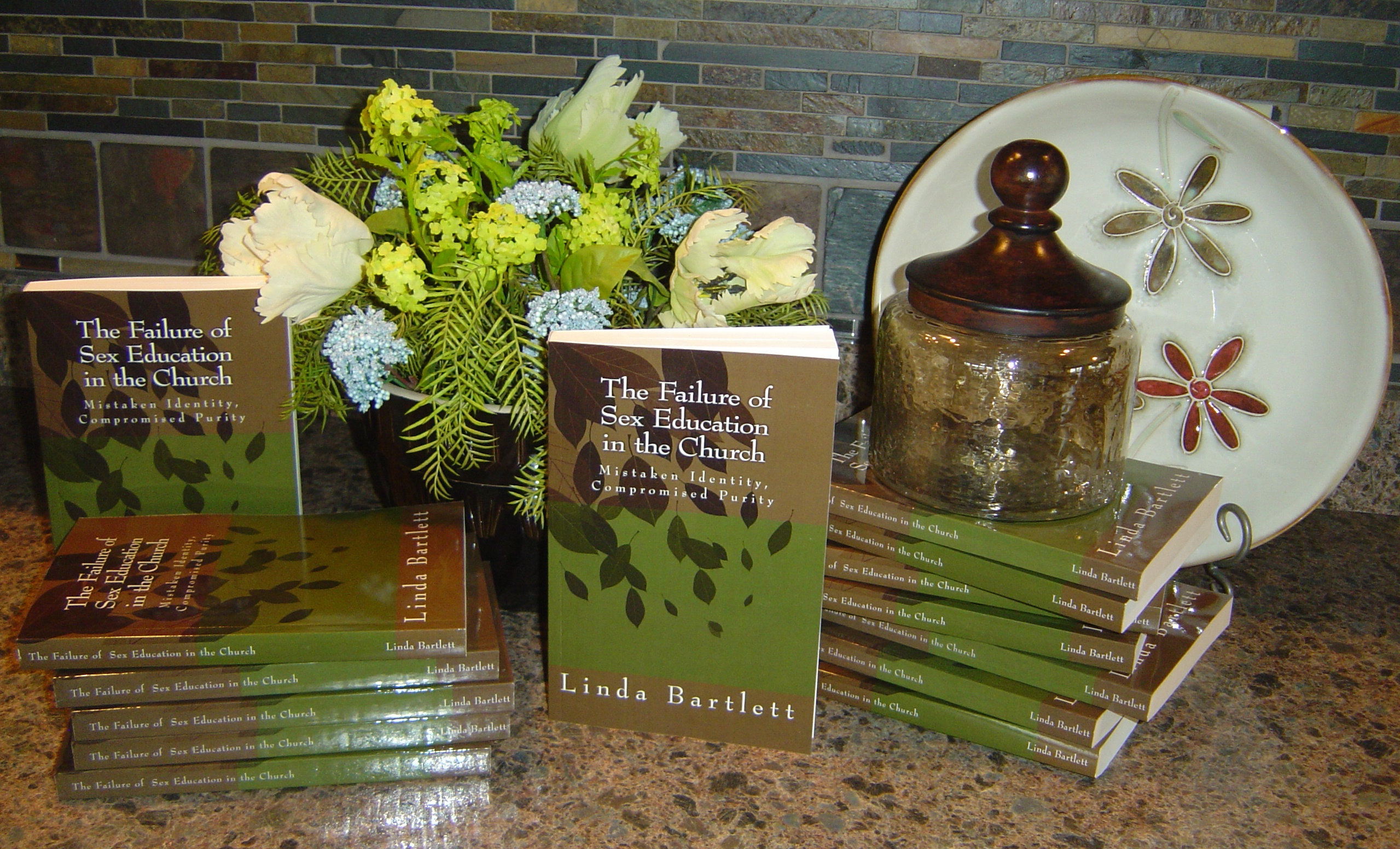
There is common ground that all believers in Jesus Christ can stand on concerning the Christian life of purity. For this reason, I quote C.S. Lewis in my book, The Failure of Sex Education in the Church: Mistaken Identity, Compromised Purity. But, there was space for only so much of Lewis in the book. Here is more. Lewis writes:

“Chastity is the most unpopular of the Christian virtues. There is no getting away from it: the old Christian rule is, ‘Either marriage, with complete faithfulness to your partner, or else total abstinence.’ Now this is so difficult and so contrary to our instincts, that obviously either Christianity is wrong or our sexual instinct, as it now is, has gone wrong. One of the other. Of course, being a Christian, I think it is the instinct which has gone wrong. But I have other reasons for thinking so.”

APPETITE FOR FOOD AND SEX
“The biological purpose of sex is children,” writes Lewis, “just as the biological purpose of eating is to repair the body. Now if we eat whenever we feel inclined and just as much as we want, it is quite true that most of us will eat too much: but not terrifically too much. One man may eat enough for two, but he does not eat enough for ten. The appetite goes a little beyond its biological purpose, but not enormously. But if a healthy young man indulged his sexual appetite whenever he felt inclined, and if each act produced a baby, then in ten years he might easily populate a small village. This appetite is in ludicrous and preposterous excess of its function.

“You find very few people who want to eat things that really are not food or to do other things with food instead of eating it. In other words, perversions of the food appetite are rare. But perversions of the sex instinct are numerous, hard to cure, and frightful. I am sorry to have to go into all these details, but I must. The reason why I must is that you and I, for the last twenty years [or, in our case, the last fifty years or more], have been fed all day long on good solid lies about sex. We have been told, till one is sick of hearing it, that sexual desire is in the same state as any of our other natural desires and that if only we abandon the silly old Victorian idea of hushing it up, everything in the garden will be lovely. It is not true. The moment you look at the facts, and away from the propaganda, you see that it is not.”

SEX CHATTER ALL DAY LONG
“They tell you sex has become a mess because it was hushed up,” writes Lewis. “But for the last twenty years [fifty years for us moderns] it has not been hushed up. It has been chattered about all day long. Yet it is still in a mess. If hushing up had been the cause of the trouble, ventilation would have set it right. But it has not. I think it is the other way round. I think the human race originally hushed it up because it had become such a mess. Modern people are always saying, ‘Sex is nothing to be ashamed of.’ They may mean two things. They may mean ‘There is nothing to be ashamed of in the fact that the human race reproduces itself in a certain way, nor in the fact that it gives pleasure.’ If they mean that, they are right. Christianity says the same.

“But, of course, when people say, ‘Sex is nothing to be ashamed of,’ they may mean ‘the state into which the sexual instinct has not got is nothing to be ashamed of.’ If they mean that, I think they are wrong. I think it is everything to be ashamed of. There is nothing to be ashamed of in enjoying your food: there would be everything to be ashamed of if half the world made food the main interest of their lives and spent their time looking at pictures of food and dribbling and smacking their lips. I do not say you and I are individually responsible for the present situation. Our ancestors have handed over to us organisms which are warped in this respect: and we grow up surrounded by propaganda in favor of unchastity. There are people who want to keep our sex instinct inflamed in order to make money out of us. Because, of course, a man with an obsession is a man who has very little sales-resistance. God knows our situation; He will not judge us as if we had no difficulties to overcome. What matters if the sincerity and perseverance of our will to overcome them.

“Before we can be cured we must want to be cured . . . A famous Christian long ago told us that when he was a young man he prayed constantly for chastity; but years later he realized that while his lips had been saying, ‘Oh Lord, make me chaste,’ his heart had been secretly adding, ‘But please don’t do it just yet.’”

THERE IS ALWAYS HOPE
Lewis recognizes that purity is difficult for us to desire, let alone achieve. But there is hope. There is always hope!

“In the first place our warped natures, the devils who tempt us, and all the contemporary propaganda for lust, combine to make us feel that the desires we are resisting are so ‘natural,’ so ‘healthy,’ and so reasonable, that it is almost perverse and abnormal to resist them. Poster after poster, film after film novel after novel, associate the idea of sexual indulgence with the ideas of health, normality, youth, frankness, and good humour. Now this association is a lie. Like all powerful lies, it is based on a truth—the truth . . . that sex in itself (apart from the excesses and obsessions that have grown round it) is ‘normal’ and ‘healthy,’ and all the rest of it. The lie consists in the suggestion that any sexual act to which you are tempted at the moment is also healthy and normal . . . [T]his is nonsense . . . For any happiness, even in this world, quite a lot of restraint is going to be necessary. . ..

“In the second place, many people are deterred from seriously attempting Christian chastity because they think (before trying) that it is impossible. But when a thing has to be attempted, one must never think about possibility or impossibility . . . [I]n war, in mountain climbing, in learning to skate, or swim, or ride a bicycle, even in fastening a stiff collar with cold fingers, people quite often do what seemed impossible before they did it . . . [P]erfect chastity—like perfect character—will not be attained by any merely human efforts. You must ask for God’s help . . . [and] after each failure, ask for forgiveness . . . and try again.”

There is hope. There is always hope. C.S. Lewis writes, “Very often what God first helps us towards is not the virtue itself but just this power of always trying again. For however important chastity . . . may be, this process trains us in habits of the soul which are more important still. It cures our illusions about ourselves and teaches us to depend on God. We learn, on the one hand, that we cannot trust ourselves even in our best moments, and, on the other hand, that we need not despair even in our worst, for our failures are forgiven.”

This is why, in The Failure of Sex Education in the Church: Mistaken Identity, Compromised Purity, I continually point to our true identity as sons and daughters of God through the redeeming work of Jesus Christ. God does not say: Be sexual for I am sexual. God says, “Be holy, for I the Lord your God am holy.” We become holy in the eyes of God when wearing Christ’s robe of righteousness. That robe changes our attitude and behavior. The only fatal thing, then, is to shed that robe and be content with anything less than Christ.

(Mere Christianity by C.S. Lewis; Chapter 5: Sexual Morality)
The Failure of Sex Education in the Church:
Mistaken Identity, Compromised Purity
by Linda Bartlett (Amazon)

Read Full Post »

grandparents & grandchildrenAs a grandmother, it is difficult—no, impossible—to stomach the arrogance of those who seek to make marriage what it isn’t.
Each of us is alive today because of fathers, mothers, grandfathers and grandmothers who believed in and practiced the “one flesh” union of what only God can define as marriage.

We live, breathe, speak, relate, and contribute to this big world because of the Masterly design and institution of marriage. If there are no complications, the flesh of one man joined with the flesh of one woman creates the flesh of a child–new life! For that, a son or daughter can be forever grateful.

How can a society thrive if two men or two women set up housekeeping and call it “marriage”? What vitality is there in this unnatural pairing? Sure, it may produce certain emotions (“I feel so loved!” “I am so happy!”), but it is the “one-flesh,” male/female pairing in real marriage that produces generational fruit even as it perseveres with patient, kind, and selfless love.

Those who practice same-sex pairing and call it good exist because of those of us who do not. They can continue to define marriage as “two people who love each other,” but marriage isn’t really about love. It is about commitment—one man and one woman to each other and (should God bless their “one flesh” union with new life), that father and mother to their son or daughter.

Even the Greeks, with their tolerance of “man-boy love,” knew that marriage was the bedrock for family and society. When young men grew up, they were expected to marry a woman and father sons and daughters. Aristotle and others understood a “natural law” and the importance of building up rather than tearing down.

For our society to thrive, we need men and women who (pardon me) do it the old-fashioned way: in their marital bed, by design of God, acknowledged by man, and with commitment to birthdays and anniversaries to come.


Read Full Post »

Millions of healthy women take a powerful medication every day from their mid-teens to menopause.  We call it “The Pill.”  Feminists defend it because it “evens the playing field” for men and women.  They defend it, but without explaining the effects this hormone has on a woman’s mind and body.

Contrary to cultural myth, the birth control pill impacts on every organ and function of the body, and yet most women don’t think of it as a drug.  Depression, anxiety, paranoia, rage, panic attacks… these are a few of the many effects of The Pill on half of the over 80% of women who pop these tablets during their lifetimes.

We talk about this at Titus 2 Retreats.  But what about you?  Do you know the facts about The Pill?  Does your daughter or granddaughter?

Holly Grigg-Spall authored Sweetening the Pill in 2013.  But the documentary film is in the making.  It won’t be popular.  There will be a powerful push against it.  Funding won’t come easy.  Please watch the trailer below… order the book… and pray for the filmmakers Ricki Lake and Abby Epstein.  Lake and Epstein produced the 2008 documentary The Business of Being Born.  “What we did for birth,” says Lake, “we want to do for birth control.”

Women deserve to be informed with the facts.  This isn’t a political issue.  This is a woman’s health issue.

https://www.kickstarter.com/projects/92756815/sweetening-the-pill-a-documentary/widget/video.html

Read Full Post »

supreme court gavelThis morning, when I woke up, nothing had changed. God is still in heaven and the Supreme Court of the United States is not.

Yesterday, June 26, 2015, a majority of nine men and women in black robes made an attempt to redefine marriage, but they cannot. God created marriage, therefore, only He can define marriage. That is just the way it is.

This morning, when I woke up, nothing had changed. I am still living in a fallen world moaning under the weight of sin. Here in this world, my neighbor might choose to call his dog a cat. But when he tells me I must do the same, I cannot join him in calling something what it is not.

Some of us may feel completely unnerved and shaken to the core. We ask: What now? How shall we live?

In 1973, the Supreme Court legalized abortion for all nine months of pregnancy and for any reason. Black-robed judges made an attempt to redefine the killing of an unborn child, but they cannot. Some church-attending folks decided to accept the court’s decision and tolerate a practice they did not “personally support” so that women could have “the right to choose.” But many of us never accepted the decision even though we embraced the women who mourned their aborted children.

That is how it is in this world. Until Jesus comes to take us from this earthly place to our heavenly home, we will see wrong things called “right,” evil marketed as “good,” and what is contrary to nature called “normal.” That is how it is in this world when the truth of God is exchanged for a lie (Ro. 1:24-27).

So, how shall the people of God live here on earth under the court of this nation?

  • With continued trust in God the Father, Son, and Holy Spirit. Some may say the Court’s ruling will draw down divine judgment; others may say the ruling is divine judgment but either way, we are called to a life faithful to God in every circumstance.
  • As people of God unafraid to be set apart or different as we speak what Jesus Himself said about marriage from the beginning (Matt. 19:4-6) and live in a way that may cause others to ask: Why do you do what you do?
  • With confidence that marriage is not government recognition of two people who love each other, but the complimentary union of one man and one woman. We can literally say that in this union part of man flesh joins with part of woman flesh to become the one flesh of a new life. This new life— son or daughter—is not the by-product of a sexually romantic relationship, but the connector of mom and dad in the institution created by God for that child’s benefit.
  • As men and women who strive to honor the covenant of our own marriages and seek after the best interests of generations of children.
  • As people who affirm the sanctity of all human life, including those who see themselves as gay, and who love our neighbor as ourselves, speak well of him, and no matter the disagreements, discuss everything in a kind and thoughtful way.
  • As praying people who ask God to turn hearts toward Him and nurture a desire to rebuild a culture of marriage and life.

Suggested reading:
The Failure of Sex Education in the Church:
Mistaken Identity, Compromised Purity
(Amazon.com) Our Identity Matters

Read Full Post »

swordEllie is a 30-something wife and mom. Last fall, she came to hear a book presentation, The Failure of Sex Education in the Church: Mistaken Identity, Compromised Purity, followed by a panel of pastors. She was attentive during the discussions about created order, biblical manhood and womanhood, and purity in singleness and marriage.

A week later, Ellie attended a Titus 2 retreat. She scribbled notes as we disproved the feminist myth that “equal” means “being the same,” proclaimed God’s Word that male and female are not interchangeable, and contrasted the worldly sexualized identity with our baptized identity as daughters of God in Christ.

Winter and spring passed. Ellie was aware that in schools across the country dangerous decisions were being made in the name of sexual identity. For example: The Fairfax County Public School Board in Virginia voted to add “gender identity” to its nondiscrimination policy in spite of massive protests from parents. Boys who identify as girls would be allowed to use the bathrooms and locker rooms of their choice—and vice versa. This school also announced changes in the family life curriculum for their 2016 school year. Lessons will be included on “sexual fluidity” and “spectrum,” the idea that there’s no such thing as 100 percent boys and 100 percent girls. In other words, girl parts and boy parts are really just the same.

When Bruce Jenner became Caitlyn Jenner, Ellie went public with her concerns. She posted an article describing Jenner as “not a hero” on her Facebook page. Many women responded. Some posted Scripture passages or brief statements of faith. It was a woman “pastor,” however, who increased the intensity of the discussion with two primary claims:

  • Jenner is courageous because he knew there would be judgmental people like you who need to remember that Jesus said “Judge not.” And, by the way, there are upwards of 40 different gender possibilities.
  • You have your truth, but it’s not the only truth in the world.

Ellie did not despair. She explained that she was not judging. As a sinner, she was not depending upon her own feelings but on The Word which is “breathed out by God and profitable for teaching, for reproof, for correction, and for training in righteousness” (2 Ti. 3:16 ESV).

The woman “pastor” persisted with her insistence of multiple truths and warned that Ellie should not pass judgment on a Scriptural interpretation different from her own. At this point, Ellie beseeched the shepherd of her congregation to engage. And he did. A few days after Holy Trinity Sunday, he posted “The Inspiration and Inerrancy of Holy Scripture.” It began,

“My Church has recently been called into question on Facebook for holding to the Scriptural truths regarding the creation of man as male and female. This does not surprise me nor do I think that it is an isolated occasion. When one holds to absolute truth in a relativistic age, one should expect nothing else than retaliation and attacks from those who raise the banner of ‘tolerance.’ When considering how best to address the questions raised by those who would attack my members and their confession of faith, I realized that the issue revolves around one thing: inspiration. That is, are the canonical books of the Old and New Testament breathed out by God in a pure form, or are they merely the thoughts of men wherein one might find truths intended by God? Also included in this discussion is whether we should take all of the New Testament as God’s Word, or only include those ‘red letters’ spoken by Christ.” (Complete document.)

“Red letter editions” of the Bible can be helpful but, at the same time, our doubting nature may tempt us to think: If the Scripture passage isn’t in red, then Jesus didn’t say it and, therefore, if Jesus didn’t say it, then it’s just the opinion of the men who wrote that chapter or verse. But, “In the beginning was the Word, and the Word was with God, and the Word was God . . . and the Word became flesh and dwelt among us, and we have seen his glory, glory as of the only Son from the Father, full of grace and truth” (Jn. 1:1-5; 14). Jesus is the Word. All of it. Old and New Testament, from Genesis 1 all the way through Revelation. To deny any part of the Word is to deny Christ.

Church-going people in this present age seem to have a particular struggle with the inspiration and inerrancy of Scripture when it comes to identity issues. When considering abortion, the Christian may ask, “Does Jesus identify a fetus as His own?” Yes! The Word, “the Lord, your Redeemer, who formed you from the womb” probes, “Will you command me concerning my children and the work of my hands?” (Is. 44:24; 45:9-11)

When considering gender, the Christian may ask, “Does Jesus really say there are only two genders?” Yes! The Word Jesus, second Person of the Triune God involved at creation, says, “Have you not read that he who created them from the beginning made them male and female?” (Gen. 1:27; Mt. 19:4-5)

When considering behavior in singleness or marriage, the Christian may ask, “Does Jesus really define who I am and, if so, what does this mean?” Yes! The Word, Jesus, defines baptized Christians as “temples of the living God,” “my people,” and “sons and daughters” (2 Cor. 6:14-18) called to be “obedient children” who are “holy” because God is holy (1 Pt. 1:14-16).

We may often feel overwhelmed by a world gone mad. Even some church leaders re-interpret Scripture in light of “new” information and their own inspiration. But, this is idolatry! Jesus says: “In vain they worship me, teaching as doctrines the commandments of men” (Mt. 15:9).

Human reason is not equal to divine truth. Where God has spoken, the right of personal judgment ceases. The Apostle Paul was inspired to put it this way: “For the weapons of our warfare are not carnal but mighty in God for pulling down strongholds, casting down arguments and every high thing that exalts itself against the knowledge of God, bringing every thought into captivity to the obedience of Christ” (2 Cor. 10:4-5 NKJV).

We will surely be troubled by those who distort God’s Word. But Jesus is the Word made flesh. Nothing else can be Truth, not even if preached by an angel (Gal. 1:8).

The Failure of Sex Education in the Church:
Mistaken Identity, Compromised Purity
may be ordered from Amazon.com.
Learn more at Our Identity Matters

Read Full Post »

DSC05973With appreciation to Karen Frohwein, Titus 2 Talk offers Chapter One of The Failure of Sex Education in the Church: Mistaken Identity, Compromised Purity.  Author Linda Bartlett reads it in three sections:

Read Full Post »

parents teachingOn Memorial Day, we remember the men and women who died serving their country. With patriotic music in the background, we talk about them. We praise them. We applaud them. And then we return to life as usual.

We talk about their brave deeds. We praise them for their courage. We applaud their service. And then we return to the kind of lives that can only be lived because those men and women invested everything they had.

In my family, men left home to face America’s enemies in Europe, the Pacific islands, the jungles of Vietnam, and the mountains of Afghanistan. If they did not sacrifice their physical life, they certainly sacrificed their youth, their innocence, and relationships with loved ones. Why did they do it? Because they vowed to defend life, liberty, and the pursuit of happiness.

On Memorial Day, we remember the heroes who looked in the face of evil and dared to triumph. Their lives were made difficult. There was pain. They suffered physically, psychologically, and spiritually. If they returned home, their lives were forever changed. They invested a great deal so that we might have a safer and more hopeful future.

And so we honor them with our words. But… do we really honor them with our actions? Do we honor them by raising the standards of our behavior and being better people?

A very high price has been paid by those who believed in the sanctity of life, marriage, family, honest labor, and freedom of speech and religion. But what is the price we are willing to pay? Are we willing to sacrifice for our children and generations of children?

Do we expect to receive prosperity, blessings, and personal freedom but invest very little ourselves?

Do we assume that we will always have freedom, or do we stand guard knowing that evil is always prepared to steal, kill, and destroy?

Do the choices that we make in our daily lives honor the ones who made those choices possible?

One of my uncles endured the hell of WWII in the Pacific islands. He lost the vibrancy of his boyhood. At age 97, he is still tortured by nightmares. He said to me, “When I look around and see the way so many Americans choose to live, I wonder if what I did for my country really matters.”

How do I respond? Does my life show that the price paid by my uncle really matters?

How do any of us respond? Do our attitudes and behavior show gratefulness?

Are we willing to speak against things that are wrong so that our children and grandchildren will not lose the freedom to do things that are right?

Memorial Day gives us opportunity to remember the sacrifices of others, but it is also an opportunity to ask ourselves: What is our role? What noble part do we play as fathers, mothers, grandparents, neighbors, workers, and citizens in a very blessed nation? In what way are we willing to respect life, defend liberty, and pursue the happiness that comes from helping others as much as we help ourselves?

Men and women who put on the uniform of their country are heroes, but I think they want us to be heroes, too. Heroes are soldiers in foxholes, but heroes are also moms and dads who maintain the fortification of their homes. Heroes are public servants who remain humble on the front lines of government. Heroes are teachers, doctors, lawyers, pastors, farmers, and tradesmen who stand at their posts without compromise of truth. Heroes are men and women who persevere with goodness and hope in the trenches of daily life.

It is not Hollywood or Wall Street or even the White House that shapes this country. It is you and me. In one way or another, we shape our families, neighborhoods, and communities by what we choose to do… or not do. I would like to believe that each of us values this “one nation under God” so much that we will choose to do the right things… the hard things… that strengthen America.

Men and women in uniform have believed that this country was worth dying for. I’d like to believe that you and I will not disappoint them.

Memorial Day 2015 at Union Cemetery, Iowa Falls, IA
Address by Linda Bartlett upon request of
the Hyman-Peavey Post 188 of the American Legion
Photo credit: gracefuledblogspot.com

Read Full Post »

christian children in palestine

When I look at the photos of children in the Middle East, I wonder:
What if we knew we had one year left of Christian freedom in this country?
What would we most want our children and grandchildren to know…

iraqi christian children

…and what would we be willing to do about it?


Read Full Post »

Mussmann Anna croppedAnna Mussmann and I have never met.  So it was with great surprise that I received the following review of my book from her blog Sister, Daughter, Mother, Wife.

Linda Bartlett has worked in the pro-life movement for years. Among other positions, she has served as the national president of Lutherans For Life and as chairman of the LCMS Sanctity of Life Task Force. As a pro-life leader; a mentor of young women; an instrumental participant in the launch of Word of Hope, a post-abortion ministry; and a parent, she has come to believe that the foundational philosophical approach behind modern sex education is in utter conflict with Scripture. This month, I read her book, The Failure of Sex Education in the Church: Mistaken Identity, Compromised Purity: Questions and Answers for Christian Dialogue.

Initially, I found myself somewhat resistant to her message. Two issues distracted me. One was my own background. After growing up in a homeschooling community that included a large number of fundamentalist families who tried to “ensure” their children’s purity by rejecting the world entirely, I have seen overly-controlling parents and overly-sheltered (adult) children. There was no outward immodesty, no dating, and no “sex education” in these households. I remember one woman whose son wanted to become a doctor. She would not agree to his going to medical school because there is “so much nudity” there, and she hoped that he could find a nude-free, apprenticeship route to medical training with a Christian physician. These families sought protection from sin through ignorance, and their legalistic attempts did not usually work out as they hoped. Because of all this, I was hesitant when Mrs. Bartlett argued that children ought not to receive “sex education.” I even shied away from her use of the word “purity.” After all, we and our children are all sinners. How can we be “pure?” However, as I completed the book, I came to realize that what Mrs. Bartlett advocates is different from the errors I saw growing up. Mrs. Bartlett’s arguments are insightful, thoughtful, counter-cultural, and deeply important to parents and to the church as a whole. Her writing is well-worth your consideration.

She argues that the modern understanding of sexuality (itself a loaded modern term) is the result of “sexual social engineering” based upon the discredited and deeply flawed research (some of it involving shocking child abuse) of sexologist Alfred Charles Kinsey. Due to Kinsey and his followers, the world has accepted the idea that human beings are “sexual from birth” and that sexuality (as opposed to sex, in the sense of being male or female) is key to each person’s identity. Believing that these arguments (and all that they imply) were proven science, the church changed its approach to sex, sexuality, and human identity and sought to provide a Christian version of the same flawed sex education that became universal in the public sector. This, Mrs. Bartlett says, was a well-meant but tragic mistake.

She points out that, while God created humans as male and female, Jesus also said that there is no marriage or giving in marriage in heaven. We know that we will not lose our humanity or our identity in heaven. Therefore, our “sexuality” is not essential to our humanity and identity. When we focus only on our sexual identity instead of our identity as a man or a woman, we lose out on the broader picture of who we are. She says, “We are fully human—male or female—whether we are a child or an adult, whether we are married or single,” and that, “To accept that children are human beings and therefore sexual beings is to accept wrong teaching that leads to wrong practice. It bestows a mistaken identity that compromises faith and purity.”

When Christian parents and Christian teachers believe that their children are sexual beings, they teach the wrong things at the wrong time. Instead of focusing on teaching children what it means to live out the vocation of man or a woman in the broad sense (and providing appropriate sexual information in one-on-one conversations at appropriate times), sex is overemphasized. Children are placed in mixed-gender classrooms away from their parents and told how to have sex, how to prevent physical side-effects of sex, that sex is wonderful, and that they will no doubt think about it a great deal and want to have it, but that they must wait for marriage. Twelve years of sex education, added to an oversexed culture, is unhealthy. She argues that this approach is more likely to stir up lust and inappropriate desire than to help young people relate to each other in a Christian manner. It is like surrounding them with wonderful-looking candy and saying that they must not eat it!

She also argues that children and young people’s natural delicacy and modesty about such topics is a good, healthy, and protective thing. “Christians should know that due to sin’s corruption, having sexual information is not sufficient to make good sexual decisions.” A system designed to desensitize them (even if well-meaning and based on the assumption that they are already hardened to sensuality and sexuality because of the culture they live in) does no one any favors at all, and is in fact harmful—it can “actually weaken the child’s resistance to sexual temptation.”

Furthermore, if Christians accept the idea that their primary identity is that of a sexual being, it become far more “excusable” for them to engage in sex outside of marriage and even to have abortions. How can they be expected to live chaste lives if that is contrary to their nature? How could anyone believe that they can really wait years and years to engage in an essential aspect of their humanity? After all, “If we are ‘sexual from birth,’ then one may believe that his current lusts and desires were created that way by God, rather than being horribly corrupted by sin. If people believe their current desires are God-given, it would follow that no one has the right to tell them how to define or express their ‘sexuality’.” Because of this, she objects to the term “God’s gift of sexuality” because it leads to misguided emphasis. If instead we talk and teach about “God’s design for sexuality,” the emphasis is far more Biblical.

Opponents of Mrs. Bartlett’s view would probably claim that her approach will lead children to think that sexuality is shameful. However, she quotes C.S. Lewis’s comment that, “There is nothing to be ashamed of in enjoying your food: there would be everything to be ashamed of if half the world made food the main interest of their lives and spent their time looking at pictures of food and dribbling and smacking their lips.” She wants to teach a positive, active approach to life, and says,

“Abstinence says, ‘I must wait for sex until marriage.’ Purity says, “I don’t have to wait to be the woman (or man) God created me to be.’ Abstinence says, ‘Because we are sexual beings, I must be cautious with the opposite sex.’ Purity says, ‘Because we are persons more than sexual beings, I can respect, talk to, learn from, work beside, and be patient with the opposite sex.’ …. Purity always journeys toward hope with the encouragement of the Holy Spirit. In fact, because of Jesus Christ, we can be restored to a life of purity even after we’ve failed to abstain.”

Mrs. Bartlett provides a great deal to think about. It took me a while to realize that her approach was not the legalistic one that I have witnessed among some critics of the modern world, in part because her text is composed of (often overlapping) questions and answers, so it felt more like reading material from an online forum than a traditional book, and it took me some time to grasp the overall context of her ideas. She fully recognizes the sinful nature of humanity and the need to provide children with appropriate information at appropriate times. Yet she challenges the church to completely rethink the way we approach sex education and human identity. I find it fascinating that even though most Christians would agree that our culture is over-sexualized, many people respond with alarm to the idea that children should be taught less about sex. We are much more attuned to the danger of insufficient than of over-abundant information on this topic. Mrs. Bartlett’s book offers an explanation for why that is, and suggests an alternative model that could be used to train our children.

 Anna Mussmann is the editor of the
blog Sister, Daughter, Mother, Wife;
a teacher and enthusiast of classical education;
a wife and mother of an infant son.
Her blog What’s Wrong with the Phrase,
“God’s Gift of Sexuality?”
(12-9-14)
is reprinted with permission.

Please visit Our Identity Matters.

Read Full Post »

love your neighborWho is our neighbor? In God’s world, our neighbor is more than the person who lives in the house next door. Our neighbor is the stranger in need, the student in our class, our associate at work, our parent or grandparent, and our child. Our neighbor may not think and act the way we do. We may feel awkward with them because our beliefs are polar opposite. But, in God’s world, they are our neighbor.

What are we to do with our neighbor? Jesus says, “You shall love your neighbor as yourself” (Mark 12:31). This love is second only to the love we are to have for God.

I am thinking right now of four Christian friends. Each one is the parent of a son or a daughter who has admitted they are in a gay or lesbian relationship. These parents love their children but, with the desire to live under the character and authority of God and His Word in Christ, these parents cannot accept the behavior and lifestyle of their children.

My friends, and others like them, agonize, asking: What can we do? How do we embrace our child but not their behavior? How do we nurture a godly relationship with our child? In fact, how do we even engage in conversation with our child on some kind of common ground?

Glenn T. Stanton, author of the new book Loving My (LGBT) Neighbor, offers six truths that he defines as “mere Christianity.” These points, writes Stanton, “are the great equalizers of humanity, putting us all in the same boat for good and for bad, proclaiming that no one person is better or worse, loved more or less, nor more or less deserving of love than another.” These truths are:

  • Everybody is a human person. No exceptions.
  • Every human person is of inestimable worth and value, none more than another. No exceptions.
  • Everyone is deeply and passionately loved by God. No exceptions.
  • Unfortunately, everyone is burdened with a terminal illness: sin. No exceptions.
  • All, as children of Adam, are tragically separated from God, but this does not diminish God’s boundless love for us. But it does devastatingly hinder our relationship with Him. All of us, no exceptions.
  • Therefore, everyone is in desperate need of repentance, healing and a new life that comes only in surrender and submission to Christ. No exceptions.

Because we live in such a sexualized culture, there is need, I think, to explain what it means to be a “human person.” In this culture, sexuality is “central to being human.” But the Christian parent is called to see their neighbor; indeed, their child, differently. Parents of a son or daughter who struggles with any kind of sexual desire (for the opposite or same sex) will best love that child in light of how God sees them.

To be human means to be male or female created in God’s image. Although fallen from that perfect image (and burdened with the terminal illness called sin), God still wants His people to reflect His holiness. Nowhere in Scripture does God say: be sexual for I the Lord your God am sexual. What He says is this: “As obedient children, do not be conformed to the passions of your former ignorance, but as He who called you is holy, you also be holy in all your conduct, since it is written, ‘You shall be holy, for I am holy’” (1Peter 1:14-16). Sexuality is not the central part of being human. Sexual describes feelings, desires, thoughts, and physical intimacy. Because of sexual procreation, life goes on. We have birthdays and anniversaries. But sexuality is not the sum total of who we are as male or female persons.

Here is the evidence. Who we are in this temporal life is who we will be for eternity. If we were fundamentally “sexual,” then this would hold true not just before the resurrection but also after the resurrection. (Otherwise after the resurrection, we would be less than human.) But what does Jesus say? When asked whose wife the widow of seven deceased husbands would be in heaven, Jesus answered, “You are wrong, because you know neither the Scriptures nor the power of God. For in the resurrection they neither marry nor are given in marriage, but are like angels in heaven” (Matthew 22:29-30). Therefore, being sexual, that is, capable of sexual activity, is not part of what it means to be human after the resurrection. And if it is not part of our divinely-created human identity in the resurrection where everything will be made perfect, then it is not the central part of our divinely-created identity now. In heaven, there will be no act of marriage, no “one flesh” union. So, do we lose our identity in heaven? No! Our true identity will remain intact. We will be as He created us—fully human, but perfect in every way, sons and daughters at the Father’s table. We will still be His treasures in Christ but, at last, able to truly reflect His magnificence.

Our human yet holy identity is the common ground for even the most awkward discussions between one neighbor and another, between parent and child. Failing to see our neighbor or child as God does will ultimately affect the way we fear, love and trust God. It may cause us to love conditionally rather than unconditionally or close doors rather than open them.

It’s true that I am not facing the same challenge as my four friends. If they said to me, “You speak so easily of all this, what can you possible know,” I would have to confess that I know only what Jesus tells us all: “Love your neighbor as yourself.” How we see our neighbor—indeed, our child—matters. It changes the way we approach them, welcome them, speak to them, serve them, and endure with them.

(“Six truths” from “The Odd Couple” by
Glenn T. Stanton in CITIZEN, March 2015.)

Suggested resources:
The Failure of Sex Education in the Church:
Mistaken Identity, Compromised Purity by Linda Bartlett (Amazon.com)
and Out of a Far Country by Christopher Yuan and Angela Yuan

Read Full Post »

« Newer Posts - Older Posts »