Feeds:
Posts
Comments

Posts Tagged ‘marriage’

candle lightTwo thousand fourteen years ago, God came into this sin-tainted world so that Light would shine in the darkness.

But, today, the darkness seems so oppressive.  Will it overwhelm the Light?”

Sexual immorality abounds. Sensuality is an idol. Girls assume that it’s “normal” to be sexually intimate with boys. Planned Parenthood uses the book Fifty Shades of Gray to explain to 15-year-old girls why sadistic and masochistic sex is “okay” if the girl “gives permission.” Pedophilia is on the rise. Sodomy is tolerated as just another expression of “love.” Marriage is assaulted not just by advocates of same-sex “marriage,” but by adultery, cohabitation, no-fault divorce. Children grow up in homes with their mommy and her boyfriend. Grandchildren see their grandparents “shacking up.”

The darkness seems so oppressive… will it overwhelm the Light?  No!

In the beginning was the Word, and the Word was with God, and the Word was God.  He was in the beginning with God. All things were made through him, and without him was not anything made that was made. In him was life, and the life was the light of men.  The light shines in the darkness, and the darkness has not overcome it (John 1:1-5).

But aren’t we living in times more dark than any other? Isn’t darkness more oppressive and evil more ominous than ever before? No!

Alvin Schmidt, the author of How Christianity Changed the World, explains that from early on, Christians have found themselves in cultures that, indeed, “exchanged the truth of God for a lie, and worshiped and served created things rather than the Creator,” and because of this, “God gave them over to shameful lusts” (Romans 1:25-26). This is how St. Paul described the Greco-Roman society of his day.

Schmidt writes, “By the first and second centuries after Christ, undefiled sexual intercourse, along with marital faithfulness, had essentially disappeared. Not only were adultery and fornication common, but people engaged in all sorts of sexual methods, many of them obscene.”

He continues, “Roman marriages had greatly deteriorated; they had become a ‘loose and voluntary compact [and] religious and civil rites were no longer essential.’ Marriage was ‘detested as a disagreeable necessity.’ Since people had become obsessed with sex, marital unions were very short-lived.” The Latin Church father, Tertullian, “noted that male/female sex relations had become sadistic and masochistic . . . Heterosexual love had turned into a type of sport.” Prostitution, incest, and mutilation were not uncommon.

The world at that time seemed very, very dark. Overwhelmingly dark.

But, writes Schmidt, “into this immoral sexual environment came the Christians with a radically different sexual ethic and lifestyle . . . [W]hen God instituted marriage at the time of creation, He told Adam and Eve that the sex act made a husband and wife one flesh (Gen. 2:24). The one flesh concept required the married couple to be totally faithful to each other.” Schmidt points to a second-century document that describes how the early Christians differed from the pagan Romans by confining their sexual behavior to married life. The document reads: “They [Christians] marry as do all; they beget children . . . They have a common table, but not a common bed” (Epistle to Diognetus).

One would think that the darkness of the Roman culture was so oppressive that Christians would shrink away and take their Light with them.  But, no!

Schmidt writes that “Galen, a Greek physician of the second century, was impressed with the upright sexual behavior of Christians. He said they were ‘so far advanced in self-discipline and . . . intense desire to attain moral excellence that they are in no way inferior to true philosophers.’”

The Christian doctrine and practice of marriage was “so powerful,” writes Schmidt, that historian Edward Gibbon says, “The dignity of marriage was restored by the Christians.”

The dignity of marriage was restored! And there’s more! Schmidt writes, “The dignity and sanctity of marriage that Christianity brought to Roman culture were mostly due to the early Christian women. They appreciated the dignity and worth that Christ’s teachings accorded them” (prior to Jesus’ earthly ministry, women were too often held in low esteem). Women, “more so than men, understood the seriousness of their biological role as bearers of children in God’s created order. Thus, the wedding rite, the precursor to the fulfillment of that role, needed to be conducted with solemnity and reverence.”

Lest we think this is mere speculation on the part of Schmidt or any other historian, here’s what the pagan Libanius said about the dedication of Christian wives and mothers of that time: “What women these Christians have!”

It is no different today.  A woman who sees herself in the Light of Christ can also see her relationships, choices, and behaviors in that same Light.  As she begins to see the seriousness of her biological role as a bearer of children in God’s created order, she can also help her boyfriend, fiancé, or husband understand this, too.  As she contrasts passionate eros love with patient and virtuous agape love (1 Corinthians 13), she can positively influence not only the man in her life but her children and grandchildren.

It is true that the darkness of sin and evil is oppressive.  Marriage is under assault and weakened by every form of sexual idolatry.  But the Light shines in the darkness, and the darkness has not overcome it.  God is faithful to use men and women who trust the Light to make a difference one person, one family, one neighborhood at a time.  Sometimes, as happened in Rome, even seemingly hopeless and depraved cultures begin to look with favor on wives and mothers, husbands and fathers.

Darkness is oppressive, but the Light cannot be overcome.  And in that Light, the dignity of marriage and family can slowly be restored.

I believe it.

Read Full Post »

older couple's handsWe are witnessing the deconstruction of marriage. But, how did it happen and why? Can we place the blame on those who advocate same-sex “marriage”?  Are they the only ones  chipping away at the institution of marriage?

Long before society began to tolerate the “marriage” of two men or two women, it accepted cohabitation, adultery, and no-fault divorce. It accepted the lie that we are, first and foremost, sexual beings who have the “right” to love, be loved, and have our needs met. Society, however, would not be left in such darkness if we in the Church had trusted the Light and resisted the sexualization of marriage.

What does this mean? In 1961, Mary Calderone, the co-founder of SIECUS (Sex Information and Education Council of the U.S.) and former medical director of Planned Parenthood, lectured on the role of churches in sex education to 500 delegates from 38 Protestant denominations. Calderone worked her way into churches and homes because she feared that parents did a poor job of teaching their children about “sexuality.” She wanted parents to teach children the “yeses” of sex instead of so many “thou shalt nots.” She wanted boundaries and inhibitions removed. Calderone wanted children to experience the “wow” factor of sex. There were those in the Church who embraced this thinking. It was their hope that talking about sex with children beginning at an early age would help boys and girls grow up to be husbands and wives who would experience the “wow” factor of sex.

And so, for half a century and from kindergarten on, children hear: “God created sex to be beautiful within marriage.” “Sex in marriage is the best thing ever.” “Sex is worth waiting for.” “Sex within marriage is when we are the closest to God.” “Sex is so amazing, my dear child, that we are going to talk about it a lot.”

Because sin permeates all relationships, including marriage, is it possible that years of fantasizing on the ecstasy of sex might have an impact on a husband and wife? Might sexual expectations be so high that when marriage is put to the everyday challenges of real life, husbands and wives are disappointed? Might they be so disappointed that they are tempted to believe that sex with someone else might be better, maybe even with someone of the same gender who might better understand their partner’s needs?
Has marriage been sexualized?

Consider the husband and wife who desire to bring new life into the world, but are barren. Rebecca Mayes writes, “One of the aspects of barrenness that is so awkward is the fact that the ‘success’ of your marital relations (more modernly called your ‘sex life’) with your spouse is often scrutinized by those around you, either privately in their own minds, or quite publicly to your face. The joining of two fleshes into one in the bonds of holy matrimony used to be treated with such modesty and respect. No one would dare ask you whether you’re ‘doing it’ right or if you’ve tried such-and-such a method. But the sexual revolution has changed all that, and in numerous Christian publications we read that the act is a beautiful, natural part of marriage and there’s nothing to be embarrassed about. We should celebrate our ‘gift of sexuality’ and teach children in our Church all they need to know to be prepared for utilizing this ‘gift.’ But is this what the Bible says? When we blush at the questions about what’s wrong with our reproductive organs, is that for a good reason, or are we just prudes?” (He Remembers the Barren, 6-15-2014)

Sex matters, but marriage matters more. Some pastors take care during pre-marital instruction not to overemphasize sexuality because they believe that it could threaten the hierarchy of values in marriage and assume too predominant a place in terms of producing a well-grounded and joyful marriage. The “wow” factor of sex can be wonderful, but it is the friendship, trusted companionship, communication, and agape love of a husband and wife that carries them through good times and bad, sickness and health. With an identity that is primarily “sexual,” we are limited in the ways we can serve others. Not so with our holy identity; for indeed, when we see ourselves as “uncommon” and set apart for use not just by anyone but by God, our opportunities to serve are multiplied.

Instead of detailed sex talk, parents do better—with the support of the Church—to help boys understand the vocation of manhood and girls to understand the vocation of womanhood. Boys need to know how they, as the stewards and defenders of life, should regard women, most especially their someday wives. Girls need to know how they, as the co-stewards and nurturers of life, should regard men, most especially their someday husbands. Parents go a long way in preparing sons and daughters for marriage by mentoring respect, patience, selflessness, and forgiveness. Parents also do well in preparing young men and women for the realities of married life. Because of the Fall, marriage is hard work. It requires appreciation of our differences as male and female, the commitment to work together, trust, friendship, and more agape than eros love. Marriage can be a beautiful relationship, not just because of the sexual union, but sometimes even in spite of it.

It is God’s design that the marital union of man and woman become the nest for new life; the foundation for home and family. Sin has distorted God’s perfect design but, even in disappointment and difficulty, a faithful marriage is the bedrock of a finely-tuned and healthy society. Marriage is the amazing teamwork of male and female; indeed, the two eyes of the human race. Both eyes are needed for a proper perspective on all matters of life. Biblical marriage is the only pairing that allows a man formed from the dust of the ground to welcome the help of a woman made from his rib. The world is better for it.

Intimacy in marriage is not all about the sexual act. It is the most perfect trust, companionship and loving faithfulness this side of heaven. It is the unity of two spirits in this life—male and female, each encouraging the other to journey well to a sure and certain destination.

Photo Credit: Dreamstime.com
Linda Bartlett strives to help mentor
biblical womanhood through Titus 2 for Life .
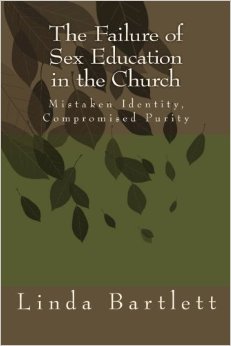
She is the author of The Failure of Sex Education in the Church:
Mistaken Identity, Compromised Purity (Amazon.com)
Visit: Our Identity Matters

Read Full Post »

My book coverThere is hope.  There is always hope.

Many parents, grandparents, pastors and teachers mourn the sexualization of children.  They ask: Why?  How did this come to be?  In what ways have we failed Jesus’ little ones?  Were we deceived?  If so, by whom?  Did we put our trust in something other than God’s Word?

These questions and others are being discussed this fall in various locations across the Midwest.  Together with pastors who have read and affirm my book, The Failure of Sex Education in the Church: Mistaken Identity, Compromised Purity,  I am engaging Christians who grieve the loss of childhood innocence and want to do something about it.  Most hopeful is the vocal and discerningly wise response of a younger generation of parents and pastors.  Soon, I hope to make public some of those responses.

For now, however, let me encourage all moms and dads who want to guard the physical and spiritual health of sons and daughters; who want to guard a son’s right to childhood, right to boyhood, and right to godly manhood; who want to guard a daughter’s right to a childhood, right to girlhood, and right to maidenhood.  Be not ashamed to instruct your child in purity for it is the Word of God.  Sex education, in or out of the Church, builds on a secular humanist foundation; therefore, it will always lean the wrong way.  Instruction in purity is rooted in Christ Himself; therefore, it will serve well in this life and into the next.  Sex education too easily shapes a sexual identity.  Instruction in purity reminds the baptized of their holy identity.

Sex education helps children focus more on the “yeses” of sex and less on the “shalt nots.”   Sex education dangles the carrot of glorious marital sex before children beginning at a young age, but then instructs young people to delay marriage until graduating from college, securing a good job and paying off some debt.  Instruction in purity understands that we no longer live in the Garden of Eden.  For this reason, it neither arouses love before its time nor does it place obstacles in the way of youthful marriage and the faithful growing of family.

True to God’s Word, there is an order for instruction in purity.  When a Christian mother by the name of Laeta asked how she could raise her daughter to purity, the Church father Jerome answered: First teach the rules of life from Proverbs, the patience and virtue of Job, the epistles, and the prophets.  Only then, and at a more mature age, is there wisdom in directing a young woman to read about marriage and the spiritual bride in Song of Songs. *

There is hope.  There is always hope in God’s design and order for life.

*With appreciation to Christopher W. Mitchell,
Concordia Commentary The Song of Songs, p. 278

The Failure of Sex Education in the Church:
Mistaken Identity, Compromised Purity
by Linda Bartlett (Amazon.com)

Read Full Post »

people on beachWhat is mature manhood and womanhood?  Here is perhaps one of the most important questions for Christian parents to help their adolescent children answer.  If we place emphasis on an identity as a “sexual being,” we miss the opportunity to discuss what masculine or feminine personhood really is.  Men are not men and women are not women because of their sexual urges or desires, nor does marriage make a person more fully male or female.  By labeling children or adults as “sexual beings,” we can actually distort the purpose and vocation of manhood and womanhood.

Genesis 1:27 tells us four things about the first man and women.  They were created by God to be human, not the same but male or female, in the image of God (not animals) and, because they were created in God’s image, they were created to be holy.  There is no mention of anything of a sexual nature (“one flesh”) until God brings man and woman together as husband and wife (Gn. 2:24).  Too may of us scurry from Genesis 1:27 and skip straight to that union.  But in doing so, we miss something very important about the essence of male and female.

We are more than sexual beings because God first spoke to Adam about being a man.  Man was put in the Garden to “work and keep it” (Gn. 2:15).  Man was to be a good steward over all of creation.  In faithfulness to God, he was to defend life and avoid death (Gn. 2:16-17).  “Then the Lord God said, ‘It is not good that the man should be alone; I will make him a helper fit for him” (Gn. 2:18).  The creation was incomplete without woman.  Man had no one like himself nor did he have a way to procreate.  God made (literally “built”) woman from man’s rib.  In marriage, the woman is her husband’s “helper” (Hebrew: ezer), assistant and ally.  The vocation of “helper” is not inferior.  Jesus called the Holy Spirit a “Helper” in John 14:16 which can be translated as “comforter,” “encourager,” or “advocate.”  In her “one flesh” union with Adam, Eve became the bearer of life who would nurture, comfort, and encourage husband and children.

Sin distorted God’s perfect design and rhythm of life.  Sin causes the relationships of men and women–married or not–to be difficult.  But even in chaos, God’s order of creation stands.  Whether  married or single, men are stewards of creation.  Whether married or single, men are called to defend life and lead away from death in faithfulness to God.  In or out of marriage, women are called to help men do good (not evil), be encouraged (not discouraged), built up (not torn down).  Mature manhood and womanhood are not dependent on being married; thus, neither are sensually or sexually driven.

Do you see that boys can be mentored to work, build, protect and engage life without sensual implications?  Do you see that girls can be mentored to help, encourage, counsel and build relationships without sensual suggestions?

From The Failure of Sex Education in the Church:
Mistaken Identity, Compromised Purity (pp. 100-101)
by Linda Bartlett (Amazon)

Read Full Post »

two women talkingReady for a second opportunity?   Here’s #2 from Ezer’s Handbook

#2 — MENTOR CONFIDENCE IN THE CREATED ORDER

Then the Lord God said, “It is not good that the man should be alone; I will make him a helper fit for him” (Genesis 2:18).

Find Hope in the Order of God’s Creation.  Woman was not created at the same time, in the same way, or for the same purpose as man (Genesis 2:7, 15-22).  But many women perceive the role of “helper” (2:18) as being inferior or second-best.  Encourage younger and older women in your circle of relationships to read John 14:16, 26; 15:26; 16:7-8.  Who is “the Helper” of whom Jesus speaks?  “Helper” in Greek is parakletos which means “comforter” or “advocate”.  “Helper” might also mean “encourager” or “ally”.  The question for women is: how will we choose to help or encourage? Submission is another troublesome word for us as women, but a biblical perspective helps bring understanding.  God uses the order of His very nature—Father, Son and Holy Spirit—to bring hope to a sinful people.  The Trinity is equal, but with different and definitive roles.  Jesus Christ is God, yet He submitted Himself to the Father for the sake of our salvation.  To bring order out of chaos, God uses the headship of husband and father in marriage and family for the benefit and well-being of children and society.  God uses the submission of the Son, Jesus Christ, to save His Bride, the Church, and serve with humility.  What begins to change when we understand “helper” and “submission” in light of God’s Word rather than our own opinion?

Trust the identity bestowed in Baptism.  A woman’s identity is not dependent on a man’s love, her appearance or what she does.  God does not define a woman as “sexual,” but as “holy”.  In Baptism, a woman becomes a daughter of God in Jesus Christ.  Yes, she is still a sinner, but now God sees her covered in Jesus’ robe of righteousness.  From a biblical perspective, the word “holy” means “set apart by God”.  “Holy” is the opposite of common.  Something common can be used by anyone, but a holy woman is used by God for good and holy purpose.  In light of her Baptism, how can a woman view herself?  How does true identity affect our choices and behavior?

Believe That Male and Female Are More Than Sexual. Too often, we skip from Genesis 1:27 to Genesis 2:24.  In doing so, we miss something very important about the complementary purpose and vocation of male and female.  Before God brought Adam and Eve together as “one flesh” in His institution of marriage, He called man to be a steward of all that He had made, to remember God’s Word, and to choose life.  God called woman to help man in the stewardship of all creation and help him remember God’s Word and choose life.  Do men and women have to be married in order to serve God in these ways?  Although it has become commonplace during the last 50 years for men and women to be identified as “sexual beings,” we are more than that to God.  While it is true that God designed male and female in the faithfulness of marriage to procreate, it is just as true that unmarried men and women are “holy” in Christ Jesus and can work together as caretakers of God’s world and be people of His Word and advocates of human life.  We are not defined by our sexuality—in this life or the next—but by our holiness.  What do Jesus’ words about marriage in Matthew 22:30 tell us about our “sexual” identity?  To help yourself and others better understand true identity as male and female, google The Failure of Sex Education in the Church: Mistaken Identity, Compromised Purity (publication release: May 2014 by Linda Bartlett).  We can help others understand that no matter our age, health or circumstance in life, every male and female has unquestionable identity and purpose as “holy ones”.

Stand Guard Against the Enemy of Life.  Satan despises God’s order of creation because he wants us to live in chaos.   His one question, “Did God really say . . .,” was all it took for Eve to doubt God’s Word for her life (Genesis 3:1).  In doubt, Eve loosened her grip on the Sword of Truth.  Did she believe that she was the privileged recipient of some new knowledge that God was keeping from her? Do you see how quickly she not only spoke for God but inserted words God never spoke (compare Genesis 3:2-3 with 2:16-17)?  Nothing has changed.  Satan continues to stir up doubt by asking women the same question.  “Did God really say . . .?”  Like Eve, do we respond by speaking what God does not about sexuality, marriage, abortion, headship and women’s ordination?  Do we try to establish our own standard of right and wrong?  Challenge yourself to help younger women fear, love and trust God above all things.  Help them to recognize what is counterfeit and of Satan by knowing Jesus Christ, the Word of Truth (John 1:1-5, 14).

What’s next?  #3: Mentor Biblical Womanhood

Ezer’s Handbook is a resource developed by
Linda Bartlett and presented at Titus 2 Retreats

Read Full Post »

parents standing w childrenGod entrusts children to parents.

Parents are called by God to guard the innocence of childhood.  This is a serious challenge in today’s society.  From early on, boys and girls are surrounded by the visual images and messages of a highly sexualized culture.  The Christian parent may feel overwhelmed by their role.  But parents today—as always—are equipped for the job.  The Word of God is sufficient.  The Bible provides all that is needed to help boys and girls respect themselves and others, understand why male and female are not the same but complementarily different, resist temptation, and protect human life from the moment of conception.  When sin and failure occur, the Bible points the way to forgiveness and hope in Jesus Christ.

One topic that perhaps most intimidates and even confuses parents is sex and sexuality.  Sex education sounds like a good idea, especially if it is taught in a Christian environment; however, the origin of sex education is not biblical.  It is founded on a humanistic and secular theory.

A zoologist and follower of Charles Darwin by the name of Alfred Kinsey concluded that children are “sexual from birth” and can enjoy and benefit from early sexual activity.  He believed that society should reflect his “science” by altering its moral codes.  Thirty years of study by researchers such as Judith A. Reisman, PhD., prove that Kinsey’s research was built on sexual experiments by known pedophiles on children ages five-months to 14 years.  The research was both fraudulous and criminal; nevertheless, it accomplished what it intended.  By the 1960s, Kinsey and his followers were recognized as the “experts” on matters of “sexuality.”  Kinsey associates and students opened the doors of SIECUS (Sexuality Information and Education Council of the U.S.) and partnered with Planned Parenthood to aggressively make their way into schools and churches.  Pro-homosexual and pedophilia groups were emboldened.  Over the next fifty years, moral codes based largely on the biblical worldview were dangerously compromised.  Never before had anyone considered a child to be “sexual” in the way that Kinsey meant, but today children are sexualized not only by the media but in sex education, health or “family living” classrooms.  The innocence of children is stripped away in classrooms where boys and girls together learn about their bodies, what their parents do in the bedroom and what it means to live a “sexual” life.

God Calls Us to Holy Living.

God does not call His children to be “sexual.”  He calls His children—of all ages— to be holy.  Therefore, the Bible does not educate in sex, but instructs in purity.

Purity is not prudish.  It is prudent.  Purity is not Victorian and antiquated.  It is God’s plan for children and adults whether married or single.

Purity focuses on our identity as redeemed sons and daughters of God in Christ Jesus.  God says, “Be holy for I am holy” (1 Peter 1:16).  We are “vessel[s] for honorable use, set apart as holy, useful to the master of the house, ready for every good work” (2 Timothy 3:21).  Daily remembering our Baptism, we see ourselves not as “sexual beings” captive to instinct and desires, but as heirs of the promise and clothed with the righteousness of Christ (Galatians 3:27-29).

Purity is about more than abstinence.  Abstinence says, “No, I can’t be sexually intimate right now.”  But purity says, “Yes, I can be the male or female God created me to be right now.”  Instruction in purity begins with an explanation of biblical manhood and womanhood.  It draws attention to the many ways that male and female, of any age and married or single, can work, worship and serve together without a hint of sensuality.

Purity is about God’s design and order for life.  It is also about mystery and modesty.  God’s Word says, “Do not awaken love or arouse love before its proper time” (Song of Songs 3:5b).  This is why purity must be nurtured in a special garden tucked safely behind a protective fence.  That fence is the boundary of home.  God entrusts the training of children to their parents.  Children trust parents.  The Church supports parents by equipping them with God’s Word of Law and Gospel, the catechism, and models for instruction.

Purity is nurtured in an environment where modesty is preserved.  This is not a classroom where boys and girls together learn about sex or sexuality.  It is nearly impossible to train in purity when intimate topics are discussed between boys and girls in a common and casual manner.  Why?  Because holy people and the behavior God expects from them are not common but, rather, uncommon.

Modesty emphasizes the importance of the sexual organs (which God placed out of view and behind hair, 1 Corinthians 12:23) reserved for the special and honorable use within marriage.  Rather than trying to remove embarrassment (a natural protection from God in a sinful world), adults should do everything they can to maintain modesty.  A father can best explain to his daughter that there is mystery in more clothing rather than less, and that a girl’s behavior can raise—or lower—a boy’s standard of thinking and behavior.  A father can encourage his son to guard a woman’s virtue and lead him away from the “temptress” (Proverbs 7).

Purity grows from the truth of Genesis.  The first man and woman were created in a complementary but different way, each with a unique and vital role.  Purity understands that a man is a good steward (Genesis 2:15) and defender of life (Genesis 16-17) who takes a stand against evil.  The man is to lead, not as lord and master, but as one who goes first to make sure the path is safe.  Purity understands that a woman, as a “helper” (Genesis 2:18) and a “rib” or “pillar” (Psalm 144:12b), is strong and supportive, yet vulnerable to abuse.  Purity understands that a woman, as the bearer of life, has the most at stake; therefore, it places her within protective, yet pleasant boundaries.

These boundaries are drawn by God to respect the physical and psychological differences between male and female.  Woe to those who attempt to erase these boundaries by pretending that boys and girls are “the same”.  Woe to the adults who remove the protective covering of modesty and desensitize children.  Woe to the adults who dangle the carrot of joyful marital union in front of children but then tell them to “wait” for marriage after graduating college and securing a job.

God Gives a Model to Parents.

God has given all parents and grandparents a model for the instruction of purity in Titus 2:3-8. Older men are to mentor younger men by being examples of sobriety, dignity, self-control, sound faith, agape love, and steadfastness.  In addition, older men are to model the sacrificial love of Jesus (Ephesians 5:25).  This love is shown today by men who defend the honor of women, rescue children from abortion, and guard the door of homes.  For a young man, it means treating all girls as he wants his sister, mother, grandmother, and someday-wife to be treated.

Older women are to mentor younger women by being examples of goodness, self-control, purity, homemaking, kindness, and respectfulness for God’s orderly design in marriage.  In addition, older women can contrast the “temptress” with the holy woman who calls attention not to self but God (1 Timothy 2:9-10; 1 Peter 3:3-4).

If there is no father present or involved, mothers can point both sons and daughters to their Heavenly Father who is very present and involved in the lives of His children.  Timothy was raised to purity of faith and behavior by his mother and grandmother (2 Timothy 1:5).

Parents can be confident in raising sons and daughters to a life of purity.  They need not be intimidated by the world—or by their own past.  Sins that have been confessed to God are forgiven and forgotten.  Parents can show children the way to the Cross every time a wrong choice is made.  Parents, with the help of the Holy Spirit, can help sons and daughters resist the temptations of a self-focused and sensual world.

It is an awesome thing to know that the God who calls us to holiness also saves us when we are not.    Even when all seems lost to sinful people, we can reclaim our purity in Jesus.

Jesus Christ came to live among us.  He experienced human emotions and feelings.  He knows our weakness.  But for our own sakes, He calls us to lives of purity.  Purity does not seek its own way.  It models biblical manhood and womanhood.  It raises standards for behavior and encourages self-control.  Purity guards body, mind and soul.  It lays a foundation for friendship, marriage and family.

Purity anticipates a future of hope.

(Available in brochure format #LFL903T from http://www.cph.org)

Read Full Post »

Eric Metaxas from Breakpoint (10/28) brings something to Ezerwoman’s attention.  Having been concerned about the separation of procreation from sex here in the American culture, I find the following worthy of our attention.  Eric Metaxas writes:

Long-time BreakPoint listeners know about Japan’s catastrophically-low birthrates: by 2060, Japan’s population is projected to fall by a third, the same percentage killed by the Black Death in 14th-century Europe.

Japan’s demographic decline has spawned some creepy adaptations, such as lifelike talking dolls for elderly Japanese without grandchildren, or the borrowing of other people’s grandchildren for a day.

Attempts to encourage child-bearing through economic incentives have failed, as they have in other countries with low birth-rates. Younger Japanese aren’t interested in reproducing themselves.

And now, according to a recent article in the UK’s Guardian, they’re increasingly uninterested in sex, as well.

A 2011 survey found that 61 percent of unmarried men and 49 percent of unmarried women between 18 and 34 were not involved in any kind of relationship. Another survey found that a third of those under thirty had never dated.

Daily_Commentary_10_28_13MMore ominously, a study by the Japan Family Planning Association revealed that 45 percent of all Japanese women between the ages of 16 and 24 “were not interested in or despised sexual contact.” More than a quarter of their male counterparts felt the same way.

As the Guardian puts it, “Japan’s under-40s won’t go forth and multiply out of duty, as postwar generations did.” Why? Part of the reason has to do with Japanese attitudes to women in the workforce. As one 32-year-old woman told the paper, “a woman’s chances of promotion in Japan stop dead as soon as she marries.” The assumption is that she’ll become pregnant and have to resign.

While that helps to explain why her generation isn’t having children or even getting married, it doesn’t explain the lack of interest in sex. And it certainly doesn’t explain why an increasing number of Japanese men aren’t interested in it either.

One 31-year-old man spoke for many of his peers when he said, “I find some of my female friends attractive but I’ve learned to live without sex. Emotional entanglements are too complicated . . . I can’t be bothered.”

“Can’t be bothered.” Or mendokusai in Japanese. (Didn’t think I could speak Japanese, did you? Well, I can’t.)

Most of the other possible factors the Guardian cites, including “the lack of a religious authority that ordains marriage and family,” are only partial explanations. Japan’s “precarious earthquake-prone ecology that engenders feelings of futility, and the high cost of living and raising children” don’t explain the increasing lack of interest in sex. But here’s something that does: it’s the lack of interest in having children. The assumption of the sexual revolution was that, having severed the link between sex and procreation, the result would be “better sex.”

Newsletter_Gen_180x180_BBut the Japanese experience suggests that the opposite may be closer to the truth. Having stripped sex of one of its God-ordained purpose, we turned it into just another pleasurable human activity, albeit one that often comes with complicated emotional entanglements.

Since the “urban pastimes” available to younger Japanese provide pleasure without the entanglements, sex can seem like a bad investment of time and energy. Mendokusai.

The Guardian calls Japan’s separation of love and sex “pragmatic.” But the evidence strongly suggests that there is nothing “pragmatic”—as in “dealing with things sensibly and realistically”—about that separation. We human beings simply aren’t wired that way.

In some important respects, the difference between Japan and us is one of degree, not kind. It remains to be seen if a generation of young Americans will one day replace “whatever” with “mendokusai.”

Read Full Post »

writing a letterDear Friend,

It was my hope to write much sooner.  I hope this finds you growing in the confidence of our Father’s mercy and love.

Our paths crossed for a time on this earthly journey.  Choices you were making brought suffering to your family and those you care most about.  Those choices forever changed their lives… and yours.  Perhaps the sexual sin that held you captive for too long is part of the reason why I’ve been working on a project.  A very difficult project.  A book that I’d rather not write.  The actual writing began almost two years ago, but the experiences and lessons learned over a period of nearly thirty years laid the foundation.  For now, the working title is The Failure of Christian Sex Education: Mistaken Identity, Compromised Purity.  I have no idea when the last sentence will be written or, if published, who will want to read it.  But the book begged to be written.

Over fifty years ago, those who promoted the new concept of sex education in both public and parochial schools said it was necessary to decrease unwed pregnancies and sexually transmitted diseases.  To parents and congregations they said, “Stop teaching so many ‘nos.’  Let us teach your children to say ‘yes’ to the wonders of sex because, after all, children are sexual, too.”  They promised: “Getting everyone comfortable with their sexuality will benefit marriage.”

All that I see proves that too many of us believe the lie that “children are sexual from birth.”  Kinsey built that lie on skewed research and criminal behavior.  He called it science.  Those of the humanist faith were waiting for such “science” to reform the whole of society, one child at a time.  But children are not “sexual” (as Kinsey meant it) from birth.  And we are certainly more than sexual beings, we are spiritual beings.  We will live forever — either with or apart from God.  The Church has forgotten to be distinctively different from the world and, in doing so, failed to encourage children and adults to see themselves as God does.  As baptized persons, we are sons and daughters of God in Christ.  That makes us holy.  Holy means being set aside for noble purpose.  We are not common, but uncommon.  As such, we are useable not just by anyone but by God.  What a difference it makes to see ourselves this way.  Sadly, the world convinces too many of us to identify ourselves as sexual beings and that — from early on — has set the stage for promiscuity, abortion, living together, homosexuality, re-definition of marriage, pedophilia, and a great deal of sin, suffering, and separation from God.  The humanists may claim some victory now, but we know Who has the final Word, don’t we?  Souls are in danger… and for that reason we need to do battle with the sinful world and our own corrupted nature even as we fall at the foot of the Cross — every day — and thank God for his mercies in Christ.

My deepest sense tells me that you know what I mean.  We modern sinners are no different from our first parents.  Eve doubted and thought she could become god of her life.  Adam failed to remember God’s Word and use it to bring order out of the chaos.  Ever since, the enemy of our lives comes to us in our weakest moments, tempting us to doubt God’s strong Word.  We think ourselves wise, but we are foolish.  We think ourselves “good” and, most certainly, we are not.  So, at the end of every day, it is a great privilege and comfort to entrust ourselves to our Savior, poor miserable beings that we are.  In the morning, all things are new and, because of His forgiveness, we can begin all over again.  You know this.  You believed this.  But wrong choices taught you how much sin hurts.  It changes lives.  Covered sin saps our strength.  It shapes us more and more into a common vessel useable by our enemy.

However, there is hope.  There is always hope!  Hope came to us in the Son of God Himself.  Harold L. Senkbeil wrote a revealing book entitled Dying to Live (The Power of Forgiveness).  It explains what the Incarnation — the Word made flesh — means for us.  Simple water, bread, wine and words work in sinful lives to make people over into new creatures.  We can’t go back to Eden.  We live in a dying world.  But God is with us!  Like Moses and Elijah, we cannot look directly at God, but God comes to us in mystery.  Senkbeil calls Jesus (who is God) the “backside” of God.  He is the part of God we can see.  He came in flesh — to teach, to sacrifice, to die — but also to conquer Satan and eternal death.  For me, this is a new way of thinking about Christ.

Consider what this means.  God comes to us in the mystery of water (Baptism), bread and wine (Communion), and His Holy Word.  Wow!  God really has come to you and me… to all who are dying to live 🙂  I think you would like what Harold Senkbeil has to say about the power of forgiveness.  May you know that power in Christ.  May I know that power in Christ.  And may we persevere — with our families and loved ones — on this journey through a strange and unfriendly land to our eternal home.  Can you imagine?  There, at the banquet table, we will be able to rest our eyes on the magnificence of God.  He will no longer have to hide His fullness from us.  We will know His glory in every way.

Your life took a dramatic and traumatic turn.  Sin never improves us but, rather, beats us up.  You have known guilt, regret and great loss of relationships.  Your family, friends and loved ones have also suffered.  But each new day is new opportunity.  The past is what it is.  We are affected by every choice that we make.  Life becomes much more difficult and painful when we fail to use the Word to bring order out of the chaos of life.  But no matter those choices and circumstances — no matter our sins, or lack of health or popularity — our identity never changes when we cling to our baptism.  We are sons and daughters of God in Christ.  Think of what this means!  We really do have hope.  New hope every morning!

May you cling to your baptism even as I will strive to cling to mine.  I am amazed that God continues to carry me.  Forgive me.  Work through me.  It is for this reason that I have grown in a deeper appreciation of the Divine Service.  God doesn’t need my praise, but this empty vessel sure needs to be filled with His Word and Sacrament.  I need to be divinely served by Him in a service distinctively different from the world… and then, in response, I can praise Him in my work, relationships and service to others all week long.  I pray that you know his Divine Service in your life so that, no matter what the days ahead may bring, you will be able to say: I am not common.  I am uncommon in the hands of a mighty God.  I am poor.  I am miserable.  I am unworthy… but I am chosen as a son of God in Christ.

May you know the overwhelming mercy that only God Himself in the humility of Christ can bring to you.  The Cross changes everything for us.  We are no longer captive to sin, but set free to leave old ways behind.  Dear friend, let us both pray for a diminished pride so that we don’t get in the way of the Spirit’s work in us, through us…

… in spite of us.

Read Full Post »

The following excellent post is from THE CHRISTIAN PUNDIT.  It’s worth the time and thought of any young woman who is contemplating marriage.

It Matters Whom You Marry

My husband and I were once with a youth group. There were three kids sitting across from us at a meal: two guys and a girl. The one guy was a computer geek with glasses. The other one was a college student with slightly cooler hair and no glasses. The girl was obviously with him. But while the computer geek was busy serving everyone at the meal, clearing plates and garbage, the college student got angry with the girl for a small accident and poured red juice over her leather jacket and white shirt. She picked the wrong guy, and the juice didn’t seem to change her mind. She is in for some grief if that relationship continues and especially if it leads to marriage.

So to all the young, unmarried Christian girls out there, listen up: who you marry matters. You might think that the way he treats you isn’t so bad. It’s not going to get better after the wedding. You might think that he’ll change. It’s possible, but most don’t. You might think that you’ll be able to minister to him and help him. Possibly, but if you can’t now, you won’t then, and you will be at risk yourself. A husband should lead and cherish you, not need your counsel for basic personality or behavior issues.

Unless someone married is very frank with you, you can’t understand how much a husband will impact your entire life. Next to salvation there is no other long term event that will change so many areas of your life so deeply. Here are just some of the ways that marriage will impact every aspect of living.

1. It will impact you spiritually. If the guy is not a believer, you can stop right there. You have no business yoking a redeemed soul with an unregenerate one, even if he seems open to change. Christ has bought you with a price and it is not an option to give away that blood bought heart to someone who doesn’t know and love your Lord. It will cripple your spiritual development, open up a host of temptations, stifle your prayer life, make regular church going difficult, and cause massive parenting conflict if you have children.

If the guy is a believer, is he a strong one? Will he lead you in prayer, Bible reading, family devotions, and public worship? Or will you be on your own? Is he going to make spiritual growth a priority or do other things come first? Is he going to ask you how it’s going with your soul so he can help you grow in holiness and love for Christ, or will he leave that to your pastor? Is he going to lead the children in this, or will you have to spearhead that? In church, is he going to help the kids sit well, pray, find the hymn, or will you be the one pointing out what is happening next and helping the family keep up? Many women have married spiritually immature men, thinking that it wasn’t a big issue, or that the man would change, and they were wrong. They bear the scars.

The health of your eternity is at stake. Think carefully.

2. It will impact you emotionally. Is the guy you’re thinking of going to encourage you, love you, be kind to you, and seek to understand you, or will he want to go out with the guys when you’re having a hard night? Will he listen when you are struggling with something or will he be preoccupied with a video game? Is he going to be annoyed when you cry or will he get you Kleenex and give you a hug? Is he going to going to understand that you are probably more tender than he is, more sensitive to issues and comments, or is he regularly going to run rough shod over your feelings? One woman was struggling to breastfeed her new baby, believing that that was the best thing for her, but it was very difficult. Instead of giving support and encouragement, the husband would make mooing sounds whenever he saw his wife working at it. We have to get rid of princess complexes, but we do have emotional needs. Any guy who is uncaring about your feelings and self esteem is selfish and should be left alone.

Be careful – a husband can cripple or foster emotional health.

3. It will impact you physically. Is the guy you’re with going to provide for your basic needs? Will he be able to shelter, clothe and feed you? At one point in our marriage, I was worried that there was no employment opportunity. My husband assured me that he would work at McDonalds, dig ditches, clean up roadkill – whatever it took to provide for the family, regardless of his gifts and training. That’s the kind of attitude you want. A man who doesn’t provide for his household is worse than an infidel (I Tim. 5:8). You might have to help ease the financial burden, but unless your husband is disabled or there is another unusual circumstance, you shouldn’t have to carry it yourself.

Will the man you are with care for your body or abuse it? If he gives you little smacks, kicks, etc. when you’re dating, get away. It’s almost guaranteed that he will abuse you after marriage, and stats show that’s especially true when you are pregnant. Is he going to care for and protect your body or will he hurt it? There are women in churches across America who thought it was no big deal to have little (sort of friendly) punches or slaps from their boyfriends, but who are covering up the bruises from their husbands.

Will the man you are with care for you sexually? Is he going to honour the marriage bed in physical and mental faithfulness to you or will he flirt, feed his porn addiction, or even leave you for another woman? You can’t always predict these issues, but if the seeds or practices are already there, watch out. I recently saw a newly married couple and the husband was flirting openly with another woman. Unless something drastic happens, that marriage is headed for disaster.

Is he going to be tender and gentle to you in bed? An unbelieving co-worker once told my sister that after her first sexual encounter, she had trouble walking for a few days because her boyfriend was so rough. In other words, he wasn’t selfless enough to care for the body of the woman he said he loved.

Watch out. Your body needs care and protection.

4. It will impact you mentally. Is the man that you’re thinking of going to be a source of worry or will he help you deal with your worries? Is he going to encourage your intellectual development, or will he neglect it? Is he going to value your opinions and listen to what you are thinking, or will he disregard your thoughts? Is he going to help you manage stress so that your mind is not burdened that way, or is he going to let you struggle through issues alone? Is he going to care for you and be thoughtful of you if you are experiencing mental strain, or will he ignore it? I know of a woman who could handle pregnancy and child birth very well physically but postpartum depression took a huge toll on her mind. The husband overlooked it, continuing to have more children, until his wife ended up in a mental institution.

You might think that the intellectual or mental side of a marriage is small. It’s bigger than you think. Consider it seriously.

5. It will impact you relationally. How’s your relationship with your mother? Your dad? Do you love them? Does your boyfriend? Fast forward ten years: you tell your husband that your mother is coming for the weekend. Is he excited? Disappointed? Angry? Making snide jokes with his friends? Of course, a husband should come first in your priority of relationships, as you both leave father and mother and cleave to one another. But parents are still a big part of the picture. Whatever negative feelings he has about your parents now will probably be amplified after marriage. Your marriage will either strengthen or damage – even destroy – your relationship with your parents. The people who know you best and love you most right now could be cut out of the picture by a husband who hates them.

It’s the same with sisters and friends. Will they be welcomed, at reasonable times, in your home? Will the guy who you’re with encourage healthy relationships with other women, or will he be jealous of normal, biblical friendships? Will he help you mentor younger women and be thankful when older women mentor you, or will he belittle that?

Don’t sacrifice many good relationships for the sake of one guy who can’t value the people who love you.

So how will your boyfriend do after the vows? Because this is just a sampling of the ways that a husband can bless or curse his wife. The effects are far reaching, long lasting, and either wonderful or difficult. True, there are no perfect men out there. But there are great ones. And it’s better to be single for life than to marry someone who will make your life a burden. Singleness can be great. Marriage to the wrong person is a nightmare. I’ve been in a church parking lot where the pastor had to call the police to protect a wife from a husband who was trying to stop her from worshiping and being with her family. It’s ugly. Don’t be so desperate to get married that your marriage is a grief. If you are in an unhappy marriage, there are ways to get help. But if you’re not married, don’t put yourself in that situation. Don’t marry someone whose leadership you can’t follow. Don’t marry someone who is not seeking to love you as Christ loved the church. Marry someone who knows and demonstrates the love of Christ.

Read Full Post »

boy scout pledgeA Boy Scout learns how to survive in the wilderness.  Trained correctly, he can sense danger and steer himself and others clear.  But when faulty ideologies reconfigure the training ground, a young man’s moral sense is compromised.

Adults who should know better can boast, “Look at what we’ve done!  We broke new trail for young men!”   But this trail most definitely leads off the edge of a cliff.

Why would anyone want to tamper with moral behavior and remove boundaries put in place for the human good?  Jesus said, “Whoever causes one of these little ones who believe in me to sin, it would be better for him if a great millstone were hung around his neck and he were thrown into the sea” (Mark 9:42).

There is little that influences society more than mentoring a boy to be a man.  Dennis Prager writes,

Wise cultures have learned that happiness is attained only when we conquer our nature . . . Historically, societies and parents have always known it’s a good thing to teach boys to control aspects of their male nature – their sexual desires and their predilection for violence.  Decent men were taught from youth to touch a woman sexually only with her permission and to channel physical aggression into sports or into helping fight evil by joining the police force or military.  Men who didn’t learn to control these aspects of male nature not only became bad men, but unhappy men.” (“Wanted by women: A few good old-fashioned men,” The Washington Times 6/30/08)

When a scout questions his male nature, how will his troop leader respond?   Will he help the young man practice self-control?  Will he remind the scout of his pledge to “do my duty to God . . .”?  And, if so, what god will he be pledging to?  Here he faces the most dangerous cliff of all.

Defined as a “sexual being,” a boy may be tempted to give himself freedoms that God does not; to trust his own reason and desires; to, in fact, worship and serve self rather than God (Romans 1:24-25).  In time, sexual identity can influence everything… even the way a boy sees God.  When society redefines morality, identity and even the character of a Boy Scout, then it redefines God.  It will not just be young men who are in danger.  It will be all the others who fall into idolatry with them.

I’d like to believe that many young men, in doing their “duty to God,” have been encouraged to see themselves as God does.  God does not call a boy “gay” or “straight.”  He calls him “holy.”  Even in the midst of conflicting desires, God equips a boy to rise above self to Him and through Him resist dangerous attitudes and behaviors.  God says, you “will be a vessel for honorable use, set apart as holy, useful to the master of the house, ready for every good work” (2 Tim. 2:21).  Identified this way, a young man can blaze a trail for himself and others away from danger.

What god does a boy pledge to — the Creator who made woman a “good fit” for man in the faithfulness of marriage, or the god who declares sexuality not a moral issue but a civil rights issue?  It matters.  It matters a lot because a god in our own image is no god at all.  Such a god cannot help any boy navigate the wilderness of life.

Foolishness is tampering with marriage.  Now it threatens another institution.  God did not establish the Boy Scouts, to be sure, but He did establish the boundaries of morality and character.  He does not give us license to do as we please.  He does not make square pegs to fit in round holes.  He does not delight in a boy’s frustration and misery.  But He does offer wisdom and strength to change… or practice self-restraint.  Only the God of all creation enters the chaos of this world to bring order and goodness to life.

New trail for scouting may have been broken, but it leads off the cliff.  Rather than sinning against God and all that is holy, the most courageous thing a boy might do is to turn away to a trail less traveled.  Separate from the pack.  Together with dad, grandpa, and men of faith, set safer course.

P.S.  Looking for a collection of outdoor adventures and character building supplies?  I highly recommend Vision Forum.

Read Full Post »

« Newer Posts - Older Posts »