Feeds:
Posts
Comments

Archive for June, 2011

This week I will be speaking twice.  In my home town.

I am nervous.  Unable to focus.  Doubtful.   It isn’t that I doubt the mentoring ministry I represent.   Nearly every day I see evidence that our culture has lost its way.  That we’ve forgotten (or never been told) how to live as men and women.   The Word of God compels me more today than it did when I was first nudged from my comfort zone to begin Titus 2 for Life.

But, I’m a person affected by environment.  I’ve been known to take a candle along with me on a trip just in case the hotel room is cold and unwelcoming.  I’m also affected by other people.  It matters to me that relationships are built, not destroyed.   I’m acutely aware of body language.  Once, while speaking about a controversial issue, I heard a scribbling noise.  To my side, a woman was pressing her pencil hard on a page in her study guide.  Head bent down, whole body engaged, she blackened the paper with great sweeping motions.   Was she angry… or hurting?   Whichever, she had my attention: How should I respond?

So, what happens when speaking in my own home town?  To the people with whom I live?  I’m extra sensitive to my closest neighbors and tender relationships.  Differing perspectives.  Maturity and immaturity.  A sense — or lack — of humor.  Personal history.  Agreement.  Disagreement.  Defenses down… or up.  Do I only imagine it, or does the room close in?  Confuse my thoughts?  Leave me a bumbling fool?   What words can I utter that will be right for everyone?  These people with real lives… my closest neighbors?

His Words.  Not mine.  His Truth.  Not my opinion.

Every word of God proves true; He is a shield to those who take refuge in Him.  Do not add to His words . . . (Proverbs 30:5).”

I covet your prayer: His Truth from my mouth.  For the sake of my neighbors.

Maybe I will take a candle.

Read Full Post »

In his article, “Are We Dumb and Getting Dumber?,” Regis Nicoll writes, “Distinguishing between science and faith is problematic, given that there is more than a little measure of faith in science; especially, materialistic science:

  • Faith that nature is a mechanism that can be explained by physical laws,
  • Faith that those laws are universal and unchanging,
  • Faith that our senses reliably perceive the world as it really is,
  • Faith that our minds accurately interpret those perceptions, and
  • Faith that the origin, diversity, and complexity of nature is the unguided product of chance and necessity.”  (Breakpoint – Published May 6, 2011)

Nicoll continues, “Similarly, discriminating conventional wisdom from actual wisdom is difficult-to-impossible, given their considerable overlap.  The conventional wisdom that ‘what goes up, must come down,’ is congruent with the actual wisdom of Newton’s laws.  In the same way, conventional beliefs about things like murder, cruelty and rape accord with the universal conviction of their actual immorality.”

Nicoll notes that, “Our real challenge is not discerning between such false dichotomies but discerning science from science fiction and truth from falsehood.  When a frog-turned-prince tale is dismissed as myth until the time frame is changed from a bibbidi-bobbidi-boo instant to 150 million years, it signals a discernment deficit.  When the time frame is extended to a few billion years to spin a neutrino-turned-prince tale, it signals a discernment crisis.”

Who are the “gatekeepers” of truth?  Nicoll recalls a NOVA special featuring an astrophysicist who stated, “We’re descended from neutrinos!”  Then, after a reverential pause, he added, “They’re our parents.”  (This… from an astrophysicist?  He’s joking, right?)  Nicoll writes, “The gatekeepers have spun many an imaginative yarn about how the universe came to be and how matter ‘went live.’  But despite the intellectual charm of creative neutrinos, cosmic inflation, multiverses, emergence, abiogenesis, and the like, their ever-inventive tales remain, and will always remain, just that: tales with no more claim to truth than those of a court astrologer.”

I came across Nicoll’s article in Breakpoint (5-6-11) while trying to respond to my agnostic friend.  He’s the one who threw into the “hopper of our discussion” the quote from William Inge (see Part I, previous post).   I explained to my friend that I am a builder of relationships.  I am a woman who, because of both facts and faith, accepts and finds joy in my defined role of “helper.”  My Biblical worldview defines my role in Genesis 2:18.  “The the Lord God said, ‘It is not good that the man should be alone; I will make him a helper fit for him.’ ”  (The Hebrew word for “helper” is ezer, which elsewhere in Scripture also means “assistant” or “ally.”  Thus, my blog name ezerwoman.  In no way do I find “helper” to be inferior; rather, I find order, sanity, and hope in a chaotic, insane, and hopeless world.)  As a builder of relationships and a “helper,” I could have been blessed with a brain that easily processes scientific data and enjoys doing so.  But, no.  Such a brain belongs to my husband and sons.  Nevertheless, I do possess reason and logic.  My reason and logic agrees with Nicoll when it comes to these “gatekeepers of truth.”

Nicoll writes, “The idea that ‘in the beginning were neutrinos’ that went bump in the cosmos to form intelligent beings is as fantastic (more so, really) as the Mayan account that ‘in the beginning were only Tepeu and Gucumatz . . .[who] sat together and thought, and whatever they thought came into being.’ ”

Are we witnessing an intentional change in education?  Isn’t the proper goal of education to teach students how to think, not what to think?

“Intelligent design and Darwinism,” writes Nicoll, “are controversial theories that enjoy wide currency in the marketplace of ideas.  Teaching one theory to the exclusion of others, and without presenting its weaknesses along with its strengths, is indoctrination, not education.”

Read Full Post »

“Science . . . contemplates a world of facts without values,” wrote William Inge, but “religion contemplates values apart from facts.”

What is “religion?”  Doesn’t everyone have a “religion,” a worldview upon which they stand?  True to their “religion” or worldview, don’t they practice it “religiously?”  My worldview determines how I see and respond to everything.  Faith in my worldview compels me to study and weigh facts.  It also compels me to set higher standards (values).  Together, these facts and values determine how I think, live, and treat myself and others.

My worldview tells me that science/facts and “religion” (faith)/values are not exclusive of one another.  The atheist and I both put our faith in something; then we, true to our faith, practice it.  The atheist doesn’t want to believe in an authority higher than himself.  I, however, have discovered that when I place myself on the throne of “authority,” I put myself and others at risk.

Facts are necessary.  Facts include more than science but also history and consequences of behavior.  My faith in God’s Word of Scripture, for example, is not without fact.  The Bible is fact.  It is recorded history.  It is eye-witness accounts.  Father telling son or Jew telling Gentile.  The Bible is backed up by facts.  Archeological evidence and scientific documentation abound.  My worldview impresses upon me the need for such facts over and above feelings and opinion.  I cannot trust my feelings.  They change with mood and circumstance.  My opinion is biased.  The law of gravity, on the other hand, is fact.  So are history and experience.  So, while I may feel like jumping off the roof of my house, it serves me well to remember that when my dad jumped off the roof of a barn, he broke his arches.  The law of gravity, together with history and experience, are beneficial to me.  Faith enters in for both the atheist and myself as a Christian, most especially when something happens that we didn’t see or can’t explain.  Both the atheist and I will act as people of faith: faith in something.  I didn’t see my dad jump off the barn.  I didn’t hear his cry.  Even though I can’t explain exactly what happened, I have faith in what my dad told me.  Faith in his words prevents me from a foolish (and painful)  jump.

Let’s assume, as Richard Dawkins insists, that there is no creator.  No creator of all that ever has or ever will exist; no creator of persons (bodies, minds, and souls); no creator of boundaries for the function, care and protection of those persons; no creator of conscience; no creator of all things right, honorable, merciful, and true.  In such a world, I become the “authority” of my life and Dawkins becomes the “authority” of his.  But, what values do we harmoniously work with for the benefit of community?  My values will be shaped by my “god” (me) and his will be shaped by his “god” (him).

Let’s be honest… and willing to expose our core faith.

Someone like Dawkins doesn’t want to acknowledge the Creator God who brings order out of chaos.  He resists the valid conclusion of both faith and science that Someone higher than himself exists.  Yet, in reality, he’s putting his faith in something.  Himself!  His core faith is himself!  He may claim to wrap himself in science and demean those of faith.  Nevertheless, he is practicing his faith.  And his values, like all values, flow out of his faith: whatever he believes in.

Science and facts divorced from faith and values?  No.  All are interrelated.  The more I study God’s Word and the more I am informed by facts — of biology, anatomy, archeology, and history, the more I recognize God at work.  Intelligent and orderly design.  “For what can be known about God is plain to them, because God has shown it to them.  For His invisible attributes, namely, His eternal power and divine nature, have been clearly perceived, ever since the creation of the world, in the things that have been made.  So they are without excuse” (Romans 1:19-20).

At the end of his life, Charles Darwin reflected on his work and confessed, “I was a  young man with unformed ideas.  I threw out queries, suggestions, wondering all the time over everything; and to my astonishment the ideas took like wildfire.  People made a religion of them.”

Louis Pasteur declared in one of his lectures, “Science brings man nearer to God.”

Read Full Post »
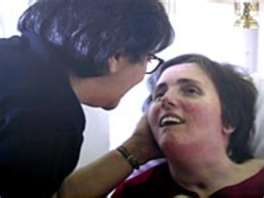
How great is this!  The Beach Boys are set to perform a “Life and Hope Concert” on June 12 at 7:00 p.m. at the Fraze Pavilion in Kettering, Ohio.

The concert, sponsored by the Terri Schiavo Life and Hope Network, recognizes all people who, like Terri, are challenged by cognitive disabilities.  What a night it should be!  The Lettermen will be joining The Beach Boys.  I encourage anyone who lives within driving distance of Dayton, Ohio, to get tickets for this event.  You can call 1-855-300-HOPE begin_of_the_skype_highlighting            1-855-300-HOPE      end_of_the_skype_highlighting or visit Life and Hope Concert.

I first heard Bobby Schindler several years ago at one of our Lutherans For Life conferences.  Bobby, the brother of Terri Schiavo, speaks nationwide on behalf of many who, like his sister, suffer brain injuries.  He admitted that he never would have imagined himself speaking up for life were it not for the premature and unnecessary death of his sister.  Today, Bobby speaks nationwide for life and directs the Schiavo Foundation.  Terri’s former husband chose to end her life rather than letting her family care for her.  Terri’s parents and siblings all sought the opportunity to work with her and care for her, but that opportunity was denied.  You can learn more by visiting Terri’s Fight  Or, you can watch The Schiavo Story on DVD.

The Life and Hope Concert will raise funds so that others won’t have to endure what Terri did.  Terri was subjected to a painful 13-day starvation and dehydration death by  her former husband who refused to provide her with proper medical care and rehabilitative treatment.  Not wanting other patients to endure the same ordeal, the Terri Schiavo Foundation was founded in order to help others with disabilities receive proper care.  The Schiavo Foundation supports the New Beginnings Community of Medford, N.Y.  New Beginnings provides state-of-the-art outpatient rehabilitative care for veterans, traumatic brain injury survivors, and other cognitively and physically disabled persons.  The building is dedicated to the memory of Terri Schaivo.  Terri’s brother, Bobby Schindler, says, “. . . [J]ust because someone experiences a cognitive disability and their physical appearance may change, their human dignity does not.”

(Josh and Alison… Dayton is a short drive for you.   How about taking Maxwell Thomas to his first concert!  Grandma thinks he would be delighted by the tunes of the Beach Boys.  Besides, Max loves life!  Maybe Grandpa will spring for tickets!)

Read Full Post »

« Newer Posts