Feeds:
Posts
Comments

Archive for the ‘Faith & Practice’ Category

Liberal thinkers like to call themselves “progressive.”  They have “evolved” to a higher and more enlightened view and practice of life.  Is this true?

Between the years of 1904 and 1909, archaeological excavations at Gezer (once known as the Canaanite region) revealed the ruins of a temple.  This temple, or “high place” was built to worship Ashtoreth, the “wife” of the idol named Baal.  Great numbers of jars were discovered under the debris of the temple.  These jars contained the remains of children who had been sacrificed to Baal and Ashtoreth.  The whole area (an enclosure 150 feet by 120 feet) proved to be a cemetery for babies.

“Foundation sacrifices” were performed by Israelites who had adapted the ways of the people around them.  When a house was to be built, a child would be sacrificed and his or her body “built” into the wall with the belief that “good luck” would come to the rest of the family.  Many tiny bodies were dug up in Gezer, Megiddo, Jericho, and other sites.

How could a mother lay her child in the arms of Baal, a stone-cold idol who stood above a flaming fire?  How could the father permit it?  Infant sacrifice was practiced by parents seeking a change of circumstances.  A better life.  Prosperity.

Are we more civilized today?  Are we truly more “progressive?”  We have sacrificed 53,310,822 preborn babies in the United States since 1973.  Biology and ultrasound technology remind us that the abortionist is not removing “globs of tissue” but sons and daughters.  These children are sacrificed, not at the temple of Ashtoreth or Baal, but at the temple of Self.

Approximately 95 percent of abortions in the U.S. are not for rape, incest, or the life of the mother, but for convenience.  Mothers and fathers in Canaan sacrificed their children to idols for personal gain or out of fear.  Today’s practice of abortion is really no different.  Mothers and fathers lay their babies in the arms of stone gods named “my choice.”  “My convenience.”  “My best interest.”  One life is sacrificed for another.  “If I have an abortion, I will regain control of my life.”  “If I have this abortion, my future won’t be at risk.”  “Having this abortion is the sacrifice I must make for myself.”

But, God demands no such sacrifice.  He has already paid the ultimate and only necessary sacrifice for a future of hope.  God does not require mothers and fathers to sacrifice their children so that others might live well or fear less.  God made the sacrifice for us.  The Cross of Jesus Christ is the reminder of amazing grace on pitifully desperate people.  The Cross tells us that no one else — not even a “fetus” (Latin: young one) — needs to be sacrificed.

No peace for the soul was found in the temple of Ashtoreth.  No hope for the future was found in the temple of Baal.  Peace and hope elude the mother or  father who bend at the temple of Self.  “The sorrows of those will increase who run after other gods” (Psalm 16:4 NIV).  Ashtoreth. Baal.   Self.  All seek to deceive, then forsake.

But, those who trust in the God who calls each child by name will not be deceived.  God’s Word opens eyes and changes hearts and minds.  When fear presses down and momentary evil seems justifiable, God’s Word convicts… then comforts.  God does not forsake those who cry out to Him. He may not answer in the way we want or expect, but He promises His faithfulness in all circumstances.  Apart from God, there is no good thing.

With God, goodness and mercy rise up.  Push back against evil.  Overcome.  When wrong choices of the past made in fear and desperation are confessed and taken to the Cross, they are forgiven. Forgotten.  Covered by Jesus’ robe of righteousness.

I sought the Lord, and He answered me; He delivered me from all my fears.  Those who look to Him are radiant, and their faces shall never be ashamed . . . The angel of the Lord encamps around those who fear Him, and delivers them (Psalm 34:4-5, 7 ESV).
Read Full Post »

It’s easy to become discouraged these days.  Those who don’t want to acknowledge the Creator God are bold.  Those who want to acknowledge Him long enough to blame Him for all the ills of the world are just as bold.  All worldviews except the Biblical worldview are tolerated on campuses.  A “progressive” media scoffs at the “downward-sloped forehead” people who live in virtually every state except along certain coastlines.  The culture, in general, is certainly more coarse.  Immodest.  Selfish.

New York state legislators and the governor rammed through so-called “gay marriage” earlier this year.  Iowa’s Supreme Court did the same last year.  Most Americans oppose this redefinition of marriage.  It has failed in 31 states where it was put to a vote.  But, through the efforts of a small group of activists, America appears to be closer to embracing a radical social experiment that will, without any doubt, undermine marriage, hurt children, and destroy religious liberty.

Of course, having said all this, I run the risk of being labeled “intolerant.”  “Judgmental.”  A “theocrat.” A “dominionist.”  Or a “Christianist.”  (I run this risk because I don’t believe that my faith is a private matter.)

In spite of all this, there is hope.  (Ezerwoman believes there is always hope.)  “Think about it,” writes Chuck Colson.  “Most surveys estimate the number of homosexuals in America is only around two to four percent.  If these few people, with the help of like-minded liberal elites, can bring America to this dangerous tipping point, why can’t faithful, orthodox Christians — who make up a far greater percentage of the population — bring some sanity to the critical moral and cultural issues of the day?”

Colson references an article in ScienceDaily.  “Scientists at Rensselaer Polytechnic Institute (RPI) have found that when just 10 percent of the population holds an unshakable belief, their belief will always be adopted by the majority of the society.”

Did you know this?  Why might this be?  Colson explains.  “Researchers at RPI note that this is possible because people do not like to hold unpopular opinions and are always seeking to reach a consensus.”

As a Lutheran, I’m compelled to ask, “What does this mean?”  It means there is hope!  Colson writes, “Those who stick to their intellectual and moral guns can eventually influence their undecided neighbors to adopt their views — and begin to spread them themselves!”

The very thing that Jesus did He asks us to do.  Jesus launched a movement that greatly impacted the world for good starting with twelve disciples.  Twelve ordinary, kinda-like-you-and-me people.  Those disciples became agents of change.  Modern Christians who use God’s Word and try to practice their faith wherever they are and in every circumstance are agents of change.

Well over 10 percent of the U.S. population, according to every survey conducted by any polling group, identifies itself as having unshakable Christian beliefs.  So why do we appear to be losing on so many cultural fronts?

Colson answers well.  “We need to be more active in sharing our beliefs about absolute truth in our pluralistic society.  Too many culture-war-weary Christians have retreated to the pews.  Too many so-called ‘Christian leaders’ are advising the rest of us to do the same.  Nonsense.  We must speak up.”

Second, says Colson, “we need to make our case confidently, winsomely, and positively.  The Christian worldview provides the only way to live rationally in the world.  It is the blueprint for human flourishing.  And it is visible whenever we defend the dignity of every man, woman, and child; when we feed the hungry and clothe the naked; and when our marriages and families and churches and schools are refuges for love and learning.”  (Breakpoint.org 8-19-11)

For most of my life, I’ve been surrounded by agents of change.  This was no accident.  God placed them in my life so that I could learn how to be one, too.

Read Full Post »

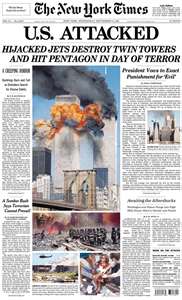
We all know where we were ten years ago on 9/11.  I was privileged to be in the presence of our younger son who was studying flight manuals for the airline that had just hired him.  Together, we saw plane number two crash through the second of the twin towers.   Josh didn’t know it, but his life would be significantly changed by 9/11.  The airline industry struggled in the aftermath of the terrorist attack.  In all reality, every American’s life was affected by the attack on our country.

I began praying.  I called my husband who was in Omaha at the time watching Air Force One circle overhead.  I called my dad.  Our eldest son.  My brother and sister-in-law.  Other family members and friends.  It was important for me to know where everyone was and that they were o.k.  The prayers continued.

Ten years ago, 2,753 people — most of them our fellow citizens — died in the name of Islam.  The plot against America was strategically planned and carried out by Muslims jihadists who, after a great many daily prayers calling on the name of Allah, intended to gain their way into paradise.

This Sunday, a memorial event will be celebrated at Ground Zero.  Many people have expressed strong opinion about praying together where the towers once stood.  Others have expressed strong opinion in opposition of any kind of joint prayer.  But, are all religions the same?  Do we all pray to the same god?  Are all gods equal to the one true God — the God of Abraham, Isaac, and Jacob?  The Triune God of Old and New Testament?  The God who calls Himself “The Word made flesh” (John 1)?

Twelve days after the 9/11 attacks, the mayor of New York City called for a “Prayer for America” memorial service.  Hindus, Buddhists, Muslims, Jews, and Christians were given opportunity to “pray.”  Tragically, reports Michael Youssef, “every representative of Christian denominations, but one, judiciously avoided mentioning the unmentionable — Jesus Christ — out of political correctness.  There was only one elderly Armenian Orthodox bishop who dared to utter the name of our Savior, the Son of the living God.”  (onenewsnow.com 9-3-11)

God warned Moses before entering the Promise Land that His people must not fall into syncretism by mixing their worship with that of the Canaanites.  The Canaanites worshiped every sort of god, yet no god at all.  God’s people disobeyed.  They attempted to mix Yahweh — “I Am” — with the gods — “I think I am” — of false religions.

As I ponder on 9/11 and its significance for me, I think of all the freedoms I enjoy because I was born in this country.  These freedoms are hallmark of this extraordinary republic.  I want to pray faithful to the First Commandment: “You shall have no other gods.”  I want to pray as a believer in the Triune God — one God who reveals Himself as Creator, Redeemer, and Encourager.  I want to pray as a Christian citizen motivated to push back evil even as I help build a culture on Truth.

I can.  I should.  I will.  But, my prayers will not be said at a prayer service where others are praying to Allah.  Buddha.  Mother god.  Where all voices are raised to what too many presume to be the “same god.”

My prayers and supplications to the Savior, Jesus Christ, will not be alone.  There will be countless — millions — of others.  No one can stop these prayers.  They will be lifted from churches.  Homes.  Small family circles.

God of grace and God of glory, on Your people pour Your power.  Grant us wisdom, grant us courage… for the facing of this hour (LSB 850) . . . in Jesus’ name.  Amen.

Read Full Post »

Sometimes, Christians are called people of the New Testament.  What does this say about the Old Testament?  What do we really know of Jesus without both Old and New Testaments?  In John 1, we are told that Jesus is The Word.  But, is that Word of Jesus only the red print of our New Testaments?

Think of all the New Testaments that have been published for a variety of reasons.  But, is the New Testament complete without the Old?  The New Testament is the Gospel of our Lord Jesus Christ.  But, for what reason do we need the Gospel?

Is the Old Testament just, well, old?  Didn’t Jesus come to do away with the old and bring in the new?

John 1 tells us: “In the beginning was the Word, and the Word was with God, and the Word was God.  He was in the beginning with God.  All things were made through Him, and without Him was not any thing made that was made.  In Him was life, and the life was the light of men.  The light shines in the darkness, and the darkness has not overcome it . . . And the Word became flesh and dwelt among us, and we have seen His glory, glory as of the only Son from the Father, full of grace and truth” (vv. 1-4, 14).

Hmmm.  This New Testament Word seems to identify Jesus as the Creator of all things.  But, where do we learn the details?  Upon what is “The Word was with God, and the Word was God” founded?  We are comforted by the salvation story of the New Testament, but upon what does it stand?  Is our hope in a feeling?

Every younger generation thinks itself more progressive and enlightened than the previous generation.  Technologically advanced, it’s easy to proclaim, “Out with the old!  In with the new!”  But, relegating the Old Testament of God’s Word to dusty shelves of folklore leaves Christianity without a foundation.  Ignoring historical relevance and archeological evidence leaves Sunday school children ill-equipped to defend their faith in the marketplace of ideas.

Genesis is the foundation of Christianity.  But, describe Genesis as a fairy tale for “neanderthals” and one can begin to undermine the authority of God’s Word: Jesus Christ.

The message of sin and the Cross was foolishness to the Greeks of St. Paul’s day.  That’s because the Greeks (Acts 17) had no knowledge or understanding of the first book of the Old Testament.  Without belief in Genesis, they were, shall we say, pre-Darwin people.  Evolutionists of a sort.  Captive to their own imaginings.  For this reason, the Apostle Paul had to define his terms and lay the foundation for the Gospel of Jesus Christ by starting at the beginning with the Genesis creation.  It was only then that some people could understand and believe on the Lord Jesus Christ.

In contrast, the Jews (Acts 2) were familiar with the Old Testament.  They understood and believed the history of Genesis.  They acknowledged the origin of sin.  Therefore, some of them could better understand the Gospel when the Apostle Paul presented it to them.

Before we can be new people — transformed people, we need to see the old for what it is.  God presents His-Story by starting at the beginning.  We should do the same.

Jesus becomes more than an “experiential moment” for people of the Old and New Testaments.  The One who calls Himself “The Way, the Truth, and the Life” is authority.   Jesus is The Word of creation.  He is the God who created male and female.  Defined marriage and family.  Ordered society.  Determined everything right.  Moral.  Good.  The first man and woman rebelled against The Word and fell from perfect creation.  We’ve been rebelling ever since.   But, for our sake, The Word did something unthinkable.  “The Word became flesh and dwelt among us.”   The Word — Jesus — became our Savior.

The glory of Christ — from Old Testament through New — is “full of grace and truth.”

Read Full Post »

Christians have taken up with a man named Alfred Kinsey.  Knowingly or not, we embraced his worldview and adapted it as our own.  We rejected whatever seemed perverted, but quickly wrapped Jesus around whatever appealed to our (sinful) human nature.

Has the church paired with the “Canaanite woman?”   Have little icons of Kinsey’s religion been placed in the house?  Are not we all under the influence?   Have not the heads of two or three generations been turned by a worldview contrary to Christianity?

Kinsey’s worldview promoted the idea of total sexual autonomy even for girls and boys.  His beliefs were shared by Margaret Sanger, the founder of Planned Parenthood.  Together, they determined to free every man, woman, boy, and girl from the restraints of Biblical bondage.  They have accomplished what they set out to do.  It was not difficult.  One phrase — one simple distortion of truth — was repeated over and over: “Children are sexual from birth.”  If indeed “sexual,” then “sexual needs” cry out to be met.  “Sexual rights” must not be denied.  “Sexual expression” must take its “personal course.”

Once deceived, it was not long before fear took root.  “If children are intrinsically sexual beings, they will probably ‘do it;’ therefore, we have to help them ‘do it’ safely.”  No parent wants to see their son or daughter suffer HIV/AIDS or the new “illness” called pregnancy.  PP stood ready to help with a plethora of services including the s0-called “planning of parenthood” or practice of “reproductive choice,” a.k.a. abortion.

Parents — those to whom children are entrusted — doubted Biblical instruction in purity and stepped into the quicksand of sex education.   One worldview was exchanged for another and association with PP was rationalized.  But, Jesus — The Word — does not wrap Himself around opposing worldviews.

Jesus — The Word (John 1) — does not say that children are “sexual from birth.”  He says that children are knit together by God in the wombs of their mothers as human beings of the male or female sex.   He says that dads and moms are to guard the innocence of boys and girls, equal but different, as they also mentor Biblical manhood and womanhood.  Good parents do not rev up their son’s engine nor encourage their daughter’s provocative dress.  Good parents, according to the Christian worldview, instructs sons and daughters in patience.  Purity.  Wisdom.

Stealing away — child by child — from the Biblical worldview is the institutional monolith created by the Kinseyites and Sangerites.  Can we be so foolish as to not learn from history?  Just as the Canaanites had their way with the Israelites, do these modern “ites” have their way with us?  Does the modern church think itself beyond temptation? Can Christian parents — in any way — defend the work of PP?

Some Americans are calling for a full-scale Congressional investigation of PP.  In recent years,  PP clinics have been caught placing girls and young women at further risk.  PP employees have assisted pimps and sex traffickers, misled girls and women about the dangers of abortion, refused to comply with parental-notification laws, and misused millions of taxpayer dollars.  Evidence reveals PP’s failure to report child sex abuse.  Instead, PP clinics have been caught advising under-age girls and those who exploit them on how to circumvent mandatory reporting laws on rape and abuse.

PP needs to be investigated.  But, at the same time, Christians should be calling for full-scale investigations of their church’s educational sources, teaching, and practices.

We should clear our houses of Canaanite icons.

As people of God’s Word — both Old and New Testament — we should repent of our failures to guard the innocence of the little ones He calls by name.

We should contrast the Biblical worldview with all others.

Then, remembering that we have forgiveness in Jesus Christ, we can leave wrong ways behind.  Resist temptation and doubt.  Push back against ungodly-ites.  Restore and rebuild.

Early Christians knew they should stand in protection of their children.  That is why they instructed sons and daughters in patience.  Purity.  Wisdom.  That is why they encouraged modesty of dress and behavior.  That is why they taught that God’s Word can be trusted.

Modern Christians are compelled to do the same.

Read Full Post »

When I was a little girl, my parents took my brother and me to Split Rock Lighthouse on the North Shore of Lake Superior.  We returned for numerous visits.  I was fascinated with the lighthouse.  What fun, I thought, to be the daughter of the lighthouse-keeper!

Re-visiting the Lighthouse as an adult, I recognized the lighthouse-keeper’s job was a lonely one.  Daily structured.  Difficult in the midst of storms.   The duty of the lighthouse-keeper, after all, was to keep the light shining no matter what.  Wicks needed to be trimmed.  Plenty of oil on hand.  All equipment needed to be in working order so that nothing prevented the light from shining when fog quickly rolled in or darkness overwhelmed the shoreline.

There was another duty.  From time to time, the lighthouse-keeper was called down from his lofty place high on the hill to the rocky shore below where hurting lives lay ship-wrecked and in trouble.

Such is our duty, too.  We are called to shine our lights high on the hill to help everyone see.  The light of God’s Word flowing through us warns others of danger and shows the way of hope and salvation.  But, when someone is hurting because he or she has come upon hard times, suffering and pain, God’s Word compels us to step down from the hill to offer comfort and care.   To help carry the burden.  God’s love flows through our servant hands.

My friend’s mom, Gladys, came down from her lighthouse countless times to serve the needs of others.  Now, it is is the turn of her children and grandchildren to serve.  To show their respect.  To practice caring.  To model what Gladys taught them.  I know.  I know.  Gladys would much rather go to the mansion God has prepared for her, but not yet.  Not until God’s work in and through her is done.  For now, she can trust that God is doing a work through her for others.  She can trust that He is speaking to her about important matters of eternal significance.  Then, as Jesus did in the Garden of Gethsemane, she can know that God’s will is being accomplished.

Things for Gladys seem upside down.   Storms have carried her wrecked and helpless body onto the rocky shore.  But, the light in Gladys is still shining.  The oil of God’s Word has so filled Gladys that, even as a very sick patient, her light inspires others to kindness.  Patience.  A servant’s love.

Read Full Post »

Elizabeth Skoglund and I have met only once.  But, our friendship grew by way of phone conversations over a period of years.  Elizabeth is the author of over twenty books.  One of them caught my eye in a bookstore when I was researching end-of-life issues.  That book, Life on the Line, proved to be powerfully helpful to me.  Elizabeth and I share the same worldview on life issues, but her experience as a counselor in private practice and as a gifted researcher and writer equipped me to be a better defender of the sanctity of human life.

Life on the Line was so helpful to me that I wanted others to be encouraged by her, too.  I invited Elizabeth to be a workshop presenter at one of our Lutherans For Life conferences.  Illness prevented her from coming, but some time later, I asked Elizabeth if she would author a short handbook on decision-making at the end of life to be published by Lutherans For Life.  She did.  The book is titled Before I Die.  I highly recommend both Life on the Line and Before I Die in this time of technological advances, shifting standards, and babel of confusing and often contradictory voices.

Elizabeth notes that volumes could be written on all the “what-ifs” of medical technology.  “But,” she writes, “we are on much safer ground if we follow certain general Biblical principles . . . whether or not we like them.  If we do not, we are in desperate danger of trying to become gods and making our own rules based on what we feel and what we want at any given time.”

Those Biblical principles, writes Elizabeth, “can be summarized in three phrases: the sanctity of human life; the sovereignty of God, including His timing in matters of life and death; and the goodness of God, who will not fail to do right.”

Elizabeth explains that questions like “What would Aunt Sally want?” are not designed to find out the will of God in bioethics.  They merely express what we want or feel.  The Christian believer does better to ask, “What is the will of God?”

There are gray areas in times of decision-making.  Use of the respirator, for example, is troubling for many of us.  The respirator is uncomfortable.  It’s use is controversial among doctors.  Elizabeth admits that being on a respirator is one of her own great personal fears.  She expresses sympathy for those who let it be known that under no conditions do they wish to be put on a respirator.

But, writes Elizabeth, if a respirator can be a bridge back to life, she believes we have an obligation to try to live.  On the other hand, if the respirator is used when death is inevitable, simply to slow down the dying process, then it is wrongfully keeping a person from being released to be with God.

I haven’t spoken with Elizabeth for some time.  A good visit is long overdue.  In these times, we need to challenge one another to think.  To encourage one another to trust our Creator God and Savior Jesus Christ.  To work where we’ve been placed in helping others respect the dignity of human life — that of the preborn and that of a loved one nearing their death.

Our last moments on earth are important ones.  For some, it is a time of decision.  For others, it is a time of transition from this life to the next.  It is a valuable time for the family who gathers at the bedside of one who is so close to going home.  Elizabeth quotes John White (Decision, May 1989):

“In life we are on a stage.  Angels and demons watch as we enact the drama of our earthly existence, and it is important that the scene close properly.  Christ has shown us how the lines should be uttered, as a cry of joyful triumph: “Father, into Thy hands I commit my spirit!”  (Luke 23:46 RSV).  We will only die once and will therefore have only one chance to die properly.  We must learn our lines well beforehand so that the curtains fall on a note of triumph.”

Read Full Post »

When disaster strikes, when health fails, when confusion seems to reign, when the earthly things I cling to fall away — I am left in awe and wonder by God’s Word to Job.

Job had everything taken from him.  Wife.  Children.  Home.  Possessions.  Job longed for days gone by.  For days when his life was good.  When he was blessed.  Having lost everything, Job was in misery.  Terrors overwhelmed him.  His days were marked by suffering.

Why?  For what purpose?  Was Job now abandoned?  Cast aside?  A righteous man cut off?

Then the Lord answered Job out of the storm, saying,

Who is this that darkens My counsel with words without knowledge?  Brace yourself like a man; I will question you, and you shall answer Me.  Where were you when I laid the earth’s foundation?  Tell me, if you understand.  Who marked off its dimensions?  Surely you know!  Who stretched a measuring line across it?  On what were its footings set, or who laid its cornerstone — while the morning stars sang together and all the angels shouted for joy?  Who shut up the sea behind doors when it burst forth from the womb, when I made the clouds its garment and wrapped it in thick darkness, when I fixed limits for it and set its doors and bars in place, when I said, ‘This far you may come and no farther; here is where your proud waves halt’?  Have you ever given orders to the morning, or shown the dawn its place?

Can you bind the beautiful Pleiades?  Can you loose the cords of Orion?  Can you bring forth the constellations in their seasons or lead out the Bear with its cubs?

Do you send the lightening bolts on their way?  Do they report to you, ‘Here we are’?

Do you know when the mountain goats give birth?  Do you watch when the doe bears her fawn?

Do you give the horse his strength or clothe his neck with a flowing mane?

Does the hawk take flight by your wisdom and spread his wings toward the south?  Does the eagle soar at your command and build his nest on high?

Will the one who contends with the Almighty correct him?”

And so, at the end of a tough day — when I am weary or disappointed, weak or doubting — I remember the Creator’s Words to Job.  They are His Words to me as well.

They are my comfort in the storms of life.

Read Full Post »

It’s possible that very soon my friend, Gladys, will be called home.  Poison in her system cannot be contained.  Her kidneys are shutting down.  Her lungs are weary.  She is in pain.  My friend is impatient to go home, yet — a faithful servant of God to the end — she does not ask anyone to send her before her time.

What Gladys does ask is that she be kept as pain-free as possible.  In an article I wrote years ago, I quoted Dr. Matthew Conolly.  He acknowledged that the greatest fear of most patients — and, thus, the reason that “mercy killing” or euthanasia grows ever popular — is pain.  Too many physicians believe their most important role is to heal or cure.  When they cannot, the patient may become a reminder of the doctor’s “failure.”  At such times, some physicians abandon the patient.  What they could do, as Dr. Conolly pointed out, is learn the art of caring for the patient even when the prognosis is not good.  What they could do is to learn the art of pain control.  Appropriate pain control does not hasten death, but brings dignity to both patient and family.

Today, my friend’s daughter — my dear friend, Rita — is talking to the hospital chaplain and hospice care workers.  Rita does not want to decide when her mother should die.  That is up to God.  But, she does want to do all she can to keep her mother comfortable.

I am reminded of a story I’ve shared when speaking about end-of-life issues.  A pastor’s wife, in her battle against cancer, was undergoing extensive treatment.  She was placed on a rubber cooling blanket to keep her temperature down.  It was very uncomfortable.  “I don’t know if I can stand this,” she told her husband.  “If you cannot,” he told her, “tell the nurses you want to discontinue this treatment.”  Then, anxious and exhausted, he left to get a few hours sleep.  When he returned, he was greeted by a nurse.  “Boy, does you wife have something to tell you.”  The pastor rushed in to his wife’s room where he found her smiling.  “What happened?” he asked.  “It was wonderful,” she said.  Sometime after you left, I could bear it no more.  I prayed that God lift me from this suffering.  And, you know what?  Angels appeared.  I felt warm; snug as a bug.  I slept.”

Does God know our pain?  Does He hear us when we ask for comfort?  For strength to endure?  For courage?  Think about Jesus as He was preparing to take on the sins of the world.  On the night He was betrayed, He took His disciples with Him to the garden.  He told them, “Do not fall into temptation, but pray.”  Then He went off by Himself.  He was in anguish.  His sweat was like drops of blood.  “Father,” He prayed, “if You are willing, take this cup from Me; yet not My will, but Yours be done.”  Do you know what happened?  An angel from heaven appeared to Him and strengthened Him.  (Luke 22:39-43)

When our physicians cannot heal, may we encourage them to comfort.  To seek better pain control.

And, when we feel that we are falling into temptation — ready to ask someone to end our life and send us on our way home — may we, instead, call upon the Great Physician.  The One who knows pain.  Who carried sorrow.  Who endured every whip and lash for our benefit.  If God heard the plea of His own dear Son, Jesus Christ, and sent an angel to strengthen Him, won’t He also hear us?  Won’t He give us exactly what we need, when we need it, until His work through us is done?

Read Full Post »

My friend, Rita, is sitting at the bedside of her mother.  It has been Rita’s great joy and blessing to have Gladys as her mom.  Now, as mother battles life-threatening infection, daughter wants to serve as she’s been served.  She is doing that by faithfully remaining at her mom’s side… reading to her, praying with her, and re-counting treasured memories.

It is at such times, however, that even the most faithful believers ask, “God, where are You?  Why do you allow our loved one to endure this?”  Gladys has lived a full and good life.  “She has been faithful, Lord.  Isn’t her work done?  Dear Jesus, why don’t You just take her home with you?”

Our family asked similar questions not long ago when my father-in-law battled bacterial brain infection.  We were given opportunity to hang on to and put into practice every pro-life conviction on which we stand.  For years, I had been speaking to others about the value of one life — the life in the womb and the life in a hospital bed.  So, I had to ask myself, what value was I going to put on the life of my husband’s father?  After all, he was 80 years old.  (Gladys is 91.)  His life was blessed.  Full.  Active.  He knew Jesus as His Savior and I knew my father-in-law, Max, would be taken to heaven when he died.  I knew I would forever appreciate the wisdom he had shared and the lessons he had taught.

I remember days and nights when Max, almost catatonic, could only thrash fitfully in bed.  I remember spoon-feeding him and begging him to swallow before a feeding tube was inserted.  Without really meaning to, Max pulled it out three times.  Three antibiotics were flowing into his bloodstream by IV.  No one knew for sure what the side-effects of those toxic chemicals might be.  So, when the brain surgeon said there was no more she could do, and the infectious disease team told us the odds of beating this infection were not good, and the social worker encouraged us to “take your dad home to hospice,” we could have said, “It has been a good fight.  We did all we could.”

But, God wasn’t through with Max — and He wasn’t through with me or my family either.  There were so many more lessons yet to be taught and learned.  From a bed not of his choosing, Max challenged his family to make words real in deed.  Not by accident he became my teacher, model, and witness.  My journal is filled with lessons taught by a man who was ready to meet Jesus; yet so desperately clung to the life he loved.  Here are a few of those lessons:

SERVICE: How can we make a difference when we are helpless?  Max had always been a hard worker.  His hands tilled the soil and planted the seed.  But God does not need our hands or anything else we have to offer.  His work is accomplished in spite of us.  God said to Max Bartlett, “My power is made perfect in your weakness.”  This power was witnessed by family, friends, and the medical community.

DETERMINATION: Although we were willing to let Max be with Jesus, we weren’t ready to give up.  Nor was a man named Ravi Vemuri, a physician who seemed to have developed a personal interest in Max and his ever-present family.  Dr. Vemuri, a practicing Hindu, loved life too, and he had one more antibiotic to try.  In addition, perhaps moved by our involvement, he granted our request to compliment his chemical approach with nutritional supplements.  The determination of doctor, family, and the patient Max was not lost on those who watched.

CONTROL: Desiring some kind of control, I wanted to work with a plan.  On the days when we nearly lost Max, I planned for death.  On the days when he rallied, I planned for life.  But, through Max Bartlett, God showed me that He has a plan not like my own.  He asked me only to trust.

INCONVENIENCE: If asked how I would handle sometimes 15-hour days in a hospital room and shared sleeping quarters with assorted family members, I’m not sure how I would have responded.  But God did not ask me how I felt about such things.  Through Max, He simply asked me to be faithful.

SELF: During my first long stay at the hospital, my thoughts turned to self.  Does anyone appreciate what I am doing or realize what I’m giving up?  In a private moment I will never forget, God used the patient, Max, to help the caregiver, Linda, adjust her attitude.

WORSHIP: One evening, alone with my father-in-law, I asked, “Sometimes, when you appear to be sleeping, you are really talking to God, aren’t you Max?”  Squeezing my hand even tighter, he simply said, “Yes, you know, don’t you?”  What soul work was being done.  A frightening brush with death brought a humble man of God named Max Bartlett into an even closer relationship with His Heavenly Father.

So, what is the price of one life?  Is it the price of helplessness or suffering?  Is it the price of sleepless nights and frightening days?  Is it the price of inconvenience?

The price of one life is what God puts on it.  He planned that life.  He knit that life together in the secret place of a mother’s womb.  He promised to be with that life whether dependent on bottle-feeding or tube feeding.  He loves that life.  The greatness of that love is evidenced by the Cross on which His own dear Son, Jesus Christ, was sacrificed for one life — yours, mine, a preborn child, Max, and Gladys.

God wants us to love one life, too.  He wants us to protect one life and speak up for one life.  Early in my pro-life ministry days, I predicted that the generation that ushered in abortion would be ushered out by euthanasia.  This culture has been shaped to value human life only if it is wanted.  Convenient.  Not a threat to our own.  But, the value God places on the life He creates and redeems is priceless.  God wants us to be an advocate for each life.  To leave ourselves open and willing to learn every lesson taught by the “least of these.”  To trust.

If God gives us one life to love, He will also give us what we need — for as long as we need it — to care for that life.

Read Full Post »

« Newer Posts - Older Posts »