Feeds:
Posts
Comments

Posts Tagged ‘worldview’

I’m thinking of a particular woman.  When she is feeling energetic, creative and loving, she desires to help people have a good time.  She wants to help everyone around her have fun.  She is high on life and wants to help others experience that exuberance, too.

But, when she is not feeling so energetic, creative or loving, she descends to a dark place.  She is unhappy.  Burdened with sadness.  Discontent.  Instead of helping others to have fun and enjoy the high of life, she helps them descend to a low place with her.

I don’t pretend to know all I need to know.  I am not a psychiatrist, counselor, or therapist of any kind.  But, I know this.  I know that God created woman to be a helper.  It is a woman’s nature to help.  A woman is constantly helping — to the good or the bad.  To build up or tear down.  With discipline and restraint, or without.  With discernment, or without.  With patience or impatience.  To meet the real needs of others or to meet her own perceived needs.

For the sake of others, we women do well to recognize and accept our identity.  We are unique creations of God lovingly shaped to be helpers for men and, therefore, our world.  We are helpers by nature.  We cannot help but help.  The question is, how will we choose to help?  To what end will we help?  Will we exhibit self-discipline and restraint, or will we do whatever we want whenever we want?  Will we withhold our help when others need it?  Will we overwhelm others with the help we feel like giving when they do not need it?

Will we let our feelings set the course for our actions?  Or will we pause to think about what we are doing and why?

Is it all about us as we insist on helping our way?   Or is it all about serving God by helping others His way?

It does make a difference.  It matters.

Read Full Post »

There is a “shocking level of moral illiteracy” among American kids.  A few years ago, writes Chuck Colson, the Josephson Institute of Ethics released the findings of its survey, “Report Card on the Ethics of American Youth.”

“Ninety-two percent of kids surveyed admitted to lying to their parents; seventy-eight percent admitted lying to a teacher.  Seventy percent said that they had cheated on a test, and half of them said that they had done so more than once.  Twenty-five percent said that they would like to get a job.”

The findings, notes Colson, were summarized by the Atlanta Constitution: “America’s next generation [believes that] it’s perfectly acceptable to lie and cheat.”  This is true despite the fact that three quarters of all U.S. states mandate some form of “values” or character education that encourages honesty, trustworthiness, and respect for others.  (How Now Shall We Live: A Devotional, 2004)

Does character education work?  If so, why are so many young people increasingly willing to lie and cheat?  Could it be that that most character education fails to explain why people behave morally? School programs may tell students that honesty is the best policy or that respecting others is a good thing to do, but they don’t provide reason for these beliefs.

Why not?  Because they are forbidden from doing so.  Discussion of moral behavior that grows from a faith foundation is not allowed in the public school.  The government has determined that Christianity has no place in education.  Neither does teaching young people that each individual is ultimately responsible for personal behavior.  The Biblical faith community which can explain the origin of humanity, why bad things happen, that good and evil exist, and why resisting evil and doing good builds a healthy society is shut out of public discussion.   This leaves girls and boys with only self-gratification as a reason for moral behavior.  It leaves them vulnerable to their fickle emotions and the pressure of peers.

When Christian faith, which partners so beautifully with science, is kept out of discussions on sex education, students who are told to wait for sex until marriage justifiably ask, “Why?  If it feels right for me, why would I wait?  I’m a sexual being, after all, so having sex is perfectly acceptable.”

Helping young people become morally literate, writes Colson, “requires that we change how we teach them about right and wrong.  This doesn’t mean turning classrooms into Sunday schools.  But if we want to give our kids reasons for acting morally that actually work, we must get over our phobia about the role of faith in public life.”

The lives of our children and grandchildren hang in the balance.

Read Full Post »

The Manhattan Declaration is a historic proclamation promoting the sanctity of human life, traditional marriage, and religious liberty.  Within a short time after it was released in November of 2009, 500,000 Christians from multiple denominations signed the document.  I am among those Christians.  Co-authors of this document include Charles Colson.  He writes,

“Christianity is more than a religion.  And it is more than a personal relationship with Jesus Christ.  Christianity is an all-encompassing worldview that shapes how we think and how we live in the world.  It could not be otherwise.”

Colson continues, quoting from God’s Word in John: In the beginning was the Word, and the Word became flesh and dwelt among us.  Word,” writes Colson, “is the English translation of the Greek Logos.  And as a translation, Word falls far short of the richness and totality of Logos.  For Greek speakers (like St. John) all the way back to Plato and beyond, Logos meant ultimate reality, all that was known or could be known, the glue that holds the universe together.

“Jesus Christ,” confesses Colson, “is more than a founder of a religion.  He is more than my personal savior (and I thank God every day that He is).  He is the Logos . . .  If Christ cries out ‘Mine’ about every aspect of life – medicine, music, literature, science, family, law, politics, and so on – then we, the Church when we look at every aspect of life, must cry out ‘HIS’!”

The faithful Christian has both the duty and privilege of bringing Christ’s truth to bear on every aspect of life.  And, says Colson and the authors of The Manhattan Declaration, right now “is a vitally important time to do so.”  Why?  Because we are witnessing a “titanic struggle between two antithetical worldviews: secular naturalism and Christianity.  The one side holds there is no God, that we humans are nothing but . . . glorified germs whose ancestors arose from the primordial soup.  The other holds that God created the universe, that His physical and moral laws are observable and knowable, and that He created man in His image – endowing man with a sacred dignity . . ..”

Colson notes that “we see the struggle all around us: in the classroom, in the courtroom, and on Capitol Hill.  If man is nothing special, then why not abortion?  Why not cloning?  Why not experiment with human embryos?  If there is no moral law, no ultimate truth, why not ‘same-sex marriage’?  Why not enshrine individual preference as the ultimate arbiter of human conduct?  Why not borrow money you cannot repay – and who really cares how that might impact others?”

The Manhattan Declaration is grounded in Scripture and the creeds all Christians confess.  It is a “wake-up call to the Church.”  It focuses on three issues: the sanctity of human life, marriage, and religious freedom.  Why not other pressing issues such as social justice or the environment?  Because, explains Colson, “these three issues are so foundational, so critical, that every other Christian concern – indeed, every human concern – flows out of them.”

Colson explains, “It is the belief in the sacredness of human life that led the early Church to fight the Roman practice of infanticide and abortion; it is this belief that put Christians in the forefront of fighting slavery; it is this belief that led Christians to lead in the promotion of civil rights.  And, today, it is this belief that has charged Christians to fight human trafficking all around the globe.  The sanctity of human life is the foundation of true social justice.”

The Manhattan Declaration proclaims, “Marriage — is the first institution of human society – indeed, it is the institution upon which all other human institutions have their foundation.”  Colson notes, “It is the bedrock institution that no society can survive without.”

The third foundational issue is religious freedom, or freedom of conscience.  It is under assault every day.  It might be the Methodist camp losing its tax-exempt status because it refused to allow a “same-sex marriage” ceremony or the Catholic adoption agency threatened from its ministry because it wouldn’t place orphaned children with same-sex couples.  It might be the steadfast refusal of Congress to protect the religious freedom of medical providers in the current debate of health care “reform” legislation.  “More is coming,” writes Colson.  “These are not political issues.  These are profoundly moral issues that affect the common good.”

How can we love God and serve our neighbor by sitting idly by?  As human dignity, marriage, and religious freedom are under increasing assault, will you visit The Manhattan Declaration to read, prayerfully sign, and then share with others?

Read Full Post »

To some, this question may sound bizarre.  What?  Here in America?  Lose our freedom of religion?  No way!  To others, the question may sound like a “conspiracy theory.”  Just calm down, they may say.  Don’t get bent out of shape just because of some minor differences of opinion on whether birth control and drugs that abort babies should be freely provided through medical insurance.

If you’ve been watching American trends, you will see two worldviews at odds.  A secular naturalist worldview (which includes socialism, humanism, and atheism) diametrically opposes the Biblical worldview.  Consider the following: 1) The sanctity of human life has always been defended among people influenced by Biblical thinking, but 30+ years of legalized abortion in the U.S. has changed the way we view human life – in or out of the womb; 2) Faithful marriage between one man and one woman has always been supported by any people influenced by Biblical thinking, but U.S. courts are now ruling in favor of so-called “same-sex marriage;” 3) Freedom of religion is the first freedom enshrined in the Bill of Rights written by Founding Fathers influenced by Biblical thinking, but today we are told that “sexual freedom trumps religious freedom” and that while we may have freedom to “worship” (a private practice), we shouldn’t publicly practice our faith during the course of our everyday lives.

Are we in danger of losing the right to practice what we believe to be true?  Think about it.  1) Religious organizations who believe abortion does not please God have been told their health insurance providers must cover contraceptive use (including drugs known to end the life of a baby before birth) and, therefore, go against their faith and conscience; 2) States like Iowa where the majority of citizens do not believe in “same-sex marriage”  must recognize the “right” of two women or two men to “marry” and, in states like California, the majority vote in favor of traditional marriage was overturned by a judge in favor of “gay marriage;” 3) Parents who believe that children are entrusted to them by God are being told to obey the “state” and let schools teach students that homosexuality and “gay marriage” are “normal” and, if anyone speaks otherwise, they may be guilty of “hate speech.”  Are all of these things – and more – indicative that our religious liberties are being removed?

Followers of Jesus Christ have always – and will always – be different from the world.  But, in order to “fit in” with the world, have Christians been silent?  Compromised faith?  Stopped putting their faith into practice?

Atheists, humanists, and secularists all have a faith, too.  It is faith in something other than the God “I Am;” in the Savior of the world, Jesus Christ.  They are passionate about their faith.  They practice their faith wherever they are: in the schools, media, workplace, courts of law, and places within government.  Are Christians less passionate about their faith?  Or, have we believed the lie that “your faith is a private matter between you and God”?  Jesus said, “Render unto Caesar the things that are Caesar’s, and to God the things that are God’s” (Matt. 22:21).  We are to obey government except when it tells us to disobey God.  Then, we must speak up and resist evil.  We must use God’s Word to defend life, marriage, and family — the very foundation for civil society.

When we are told to keep God’s Word “private” and not share it in the marketplace of ideas, then we have lost our freedom of religion.  How, then, can we be “salt and light” (Matt. 5:13-16)?

Recommended resources include Breakpoint, Family Research Council,
World magazine, and Concerned Women for America

Read Full Post »

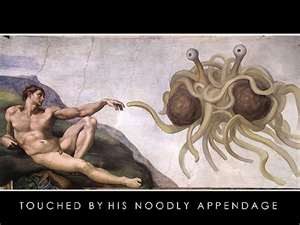
On March 24th, it is estimated that thousands will celebrate the faith of atheism at the Washington Mall in D.C.  The event, called “The Reason Rally,” will feature famed atheist, Richard Dawkins.  Among those attending will be Missouri State University’s atheist club known as the “Church of the Flying Spaghetti Monster.”  

Chuck Colson explains that atheist groups, often filled with young adults who grew up in Christian homes, are increasing on college campuses.  According to the Barna Research Group, three in five “Christian” kids abandon the church after the age of 15.  Eighty-four percent of 18-29 year-olds who call themselves “Christians” admit that they have no idea how the Bible applies to their occupation.  What do you say?  Has the church done a poor job of teaching our young people that reason and faith are not opposites?  Do you think atheism more reasonable than Christianity?  Many young people find themselves at the university completely unequipped to defend the rationality of the Christian faith against the secular worldview so prevalent on college campuses.

A group called Ratio Christi (Latin: “The Reason for Christ”) is doing something about this by starting  student apologetic clubs (apologetics: defense of the faith).  They want to reclaim the intellectual battle ground on campuses.  Questions such as, “Does God really exist?” and “Is Christianity consistent with science?” are discussed.  “Ratio Christi,” said a student at North Carolina State, “has given me a rational and logical defense of my faith.  When I dialogue with atheists, they are shocked that I have a defense. When I run into skeptics, they are overwhelmed by the amount of evidence supporting creation.  When I talk to Christians with questions about this, they find that their belief has a strong, historical foundation that cannot be shaken.” 

I echo Chuck Colson who said, “Folks, this is music to my ears.  A young, bright, college kid who gets it — and who is willing to defend the faith and make the case that Christianity is truly the only reasonable worldview there is.” 

NOTE:  I am indebted to Chuck Colson and his team for the way they keep me informed.  The information above was gleaned from Breakpoint (2/20/2012).  Visit Breakpoint to learn more about Ratio Christi and another group, Veritas.  Also, Colson provides a helpful chart that shows various worldviews.  Go to Breakpoint and, under “Further Reading and Information,” click on the “Worldview Grid” link.  Do not fear the flying spaghetti monster.  It is only the figment of doubting minds.  Ezerwoman

Read Full Post »

Tom lives in the neighborhood.  Most of us see him as a quiet, non-troublesome kind of guy.   He “minds his own business.”  But, those of us who live a little closer to Tom see him making some choices that, while seemingly private, are affecting his neighbors.   It isn’t my right to tell Tom what to do in his own home, or to tell him who he should invite into his home.  But, when how he chooses to live his life encroaches on my life in a less than helpful way, then should I voice concern?

Conversations of the past have revealed that Tom and I don’t share the same faith or character.  We have built our lives on very different foundations; therefore, we not only see the world differently, we respond to the things of this world differently.   I’ll be honest.  I’m concerned about my neighbor.  I’m concerned for Tom’s sake, but also for the sake of other neighbors whom he influences. 

I don’t believe I should question my neighbor’s faith and character.  I do believe, however, that I can ask questions about his perspective on life.  His worldview.  Every caring neighbor should ask another neighbor questions about their worldview.  If we don’t ask our neighbor why he does what he does, says what he says, or lives the way he lives, then what kind of neighbor are we?  What kind of neighborhood will we jointly build up…or tear down?

Rick Santorum was recently understood to have questioned President Obama’s faith.  When criticized for his remarks, Santorum explained that he was questioning the president’s “radical” environmentalist view that “elevates the Earth above man.”  Santorum explained that he wasn’t questioning that President Obama is a Christian, but that his worldview on natural resources and how they can’t be tapped because to do so will harm the Earth is a “phony ideal.”  Santorum has also questioned the president’s worldview on the issue of abortion; most recently, in the area of insurance coverage for prenatal tests that can identify problems in unborn children.  Santorum knows for a fact that doctors “more often than not” recommend abortion when problems are discovered.

I believe that any presidential candidate – or American citizen — should be able to ask questions about their neighbor’s worldview.  In kindly doing so, he or she is simply and fairly asking: Why do you believe what you believe?  What is the source of your belief?  How does your belief serve other people?  How does your belief help us all build a better society?  After asking such questions, it is fair to say:  Here’s what I believe and why.  Here is the source of my belief.  Here is how I try to live my belief.  Now, please feel free to question me about my worldview.  Why I say what I say and do what I do.

Too many of us seem unwilling to dialogue about worldviews and how those worldviews affect neighborhoods and society as a whole.  When a person is concerned enough to speak up about health care, marriage, sexual behaviors, abortion, euthanasia, or ethics of any kind, they are quickly labeled as “judgmental.”  Care and concern are not judgmental.  Contrasting one worldview with another is not “judgmental.”  Laying something counterfeit next to the real thing is not “judgmental.”  And, you know what?  Calling something harmful or dangerous is not “judgmental.”  If it is, then every “bridge out” or “stop ahead” or “wear your seatbelt” sign should be torn down.

I’m not sure that I’ll be given the opportunity to dialogue with Tom about important matters of life.  But, if I am, I promise to take care.  To not question his faith (or lack of it) or demean his character.  Instead, I will try to ask questions.  Questions that show my interest in him as a person.  But, also questions that help Tom think about being a good neighbor.

Read Full Post »

What’s going on?  The whole culture has changed.  We’re in a moral and ethical mess.  What has happened… and what can I do about it?

First, it’s important for the Christian to recognize that two worldviews are in conflict.  Man’s perspective on life opposes God’s.  The Biblical worldview is Creation, The Fall, and Redemption.  All questions of life can be answered by this worldview.  But, when man doubts the Creator and places himself as the ultimate authority, he is left with only evolving opinions about how life should be lived.

Second, history proves that whenever Christians stepped into the public square, the culture was dramatically affected.  In Rome, for example, unwanted children were placed outside the city gates and left to die, but Christians started orphanages or even welcomed abandoned children into their own homes through adoption.  It was common for sick people to be neglected, but Christians started hospitals and hospice care.  Women were too often considered property, but Christ-followers saw women as equal to and compatibly different from men.  This made Christianity worth thinking about.

Third, those who resist God want others to resist Him, too.  Passionate about their perspectives, they step into the public square — especially coveted areas of academia and the media — to influence others.  Passionate people are persuasive people with words and actions.  Labeling something “scientific” makes the idea “progressive” and worthy of consideration.  Labeling something “religious” implies personal, but antiquated beliefs unworthy of any modern thinker.  If you are “scientific,” you are intelligent and welcomed to dialogue.  If you are “religious,” you are clinging to “some faith superstition” and your views are fine for you but not for general consumption.  Since the 1950s, children taught “Bible stories” in Sunday school grew up to become students at the university where “science” ridiculed “faith stories.”  Zealous disciples of Darwin, Marx, Dewey, Kinsey, Sanger, and others replaced the disciples of Jesus in the cultural conversation.

Fourth, when Christians pull out of the public square to take refuge inside the walls of the church or keep their faith private, the culture suffers — in every area from marriage and family to education and ethics.  We miss huge opportunities to push back against evil and raise up a younger generation in Truth when we do not talk about what God has done throughout history (documented in His Word beginning in Genesis); when we let the “science” of evolution intimidate our faith in the Creator God; and when we assume our faith is a “private thing” not to be lived in the workplace, classroom, or neighborhood.  It’s true that there is strong opposition to Christianity in our time but, in the midst of the opposition, there are people everywhere crying out for answers to the critical issues of life.  If we believe Christ is the Hope of the world, don’t we also believe that His Word is applicable to the world?

Can one person  make a difference?  Yes.  How?  By being as bold, confidant, and passionate for God as those who oppose Him.  The Christian citizen living in a morally and ethically-bankrupt society makes the greatest difference when he/she fears (trusts) and loves God above all things.  Trusting God’s Word, we can use it to serve our  neighbor.  We serve our neighbors by:

  • Speaking God’s Word of Law in love to those not aware that they are making wrong choices.  We should always be prepared to contrast trendy opinions with God’s Word about our beginnings, the sanctity of human life, relationships, marriage and family, sexual behavior, health care, law, and ethics.
  • Speaking God’s Word of Gospel to those sorry for their sins and ready to live as changed people in Christ.

This culture is in need of ordinary people who make a difference right where we live.  Parents and grandparents faithful to God’s Word affect families and neighborhoods.  We don’t have to be an author, speaker, or teacher to impact the culture.  We can ask questions that help people think, confront issues, and entertain challenges. 

If we don’t have the answer to a particular question, we can promise to find out.  Heaven knows resources are as close as our fingertips.  Some of my favorites are the Colson Center for Worldview, Vision Forum, Stand to Reason, and Answers In Genesis.  Some of my favorite worldview authors include Nancy Pearcy, Chuck Colson, Frank Beckwith, Greg Koukl, C.S. Lewis, J. Budziszewski, Marvin Olasky, and Gene Edward Veith.

We can make the best of every opportunity.  If you can’t speak to a crowd, speak to one.  If you can’t speak at all, write a letter-to-the-editor or a personal note.  Keep your eyes open and ears attentive.  Many people are struggling in confusing situations.  They’re not looking for someone’s opinion, but for a life-changing word of hope.  I know that Word of hope, don’t you?

Small seeds planted by faithful people of God will grow a better culture.

Read Full Post »

Do you have a daughter captivated by the romance of Edward and Bella?  Then you might be interested in an early morning phone call I received a few days ago.  A mother had one question on her mind.  “What do you think about the Twilight series?”  I admitted that I haven’t read the books, but previews of the newly released film have my attention.  “What,” I asked, “concerns you so much that you would call even though we’ve never met?”

With calm reason and logic, she defined Twilight as an example of “deception.”  It’s an attempt to “normalize an aberration,” she noted.  “You’ve pointed out such things in your articles and Titus 2 ministry.”  Twilight, she said, is fantasy — to be sure, but it is also a dangerous mix of the holy and unholy.  I’m frustrated, she confessed because “when I express my concerns to the younger ones in my family, they roll their eyes.” 

Mentoring and warning sons and daughters often receives this kind of response.  Parents may back away from dialogue because they’re described as “unenlightened” or “out of touch.”  This mom, however, was looking for encouragement to press on.  She was well aware of the battle for the hearts and minds of young Christians.   

I’m thankful this mom cared enough to call.  It motivated me to do further research.  I found a discerningly helpful article entitled “The Twilight Series from a Christian Perspective: Part I & II” by Mark Farnham.  Mark is Assistant Professor of Theology and New Testament at Calvary Baptist Theological Seminary in Lansdale, PA.  He and his wife have two teen daughters and a ten-year-old son.  Mark has served as a pastor and director of youth ministries. 

If there is a young woman in your family whose romantic yearnings are teased by Twilight, please take the time to read Mark Farnham’s review.  “The fact that Edward and Bella do not engage in sexual activity seems to be enough to warrant a stamp of approval from  many Christians who defend the series,” writes Mark.  “Some even praise Edward (a vampire) for his considerable restraint in not doing the one thing that is most bodily urgent to him – drinking Bella’s blood.”  But, cautions Mark, “What a work of culture promotes as normal and desirable – or abnormal and undesirable – is the crux of the matter.”  Twilight “drips with sensuality,” writes Mark.  “This aspect of the series should be a major stumbling block for a Christian reader who is attuned to biblical portrayals of holiness and purity.”  (Visit SharperIron to read more.)

Parents, what is Twilight promoting?  What is it compromising?  Might it change a young person’s attitude toward God?  “For Bella,” writes Mark, “God is unnecessary.  Only Edward is necessary.  In her mind, God is only an acceptable thought if He (in whatever form He exists) accepts Edward.  The roles are switched — Edward is supreme and necessary; God is subordinate and contingent.” 

It is spiritually risky business when we fear, love, and trust our self-determined happiness before God.

Read Full Post »

Looking for a “stocking stuffer” for Christmas?  With concern for your children or grandchildren, you might want to consider IndoctriNation.

Paul and I believed we could safely get our sons through public school.  We managed, but only with the help of teachers who respected what we taught in the home.  Even so, we battled a system that diametrically opposed our Judeo-Christian faith and values.   IndoctriNation explains why.

IndoctriNation is a ride on the yellow school bus with Scottish filmmaker Colin Gunn and his family.  It’s a ‘cross country field trip you won’t want to miss!  You’ll hear from real principals, teachers and parents.  You’ll learn from Christian historians and thinkers of our day.  And, you’ll discover the answers to important questions:

  • Who established the public school system and why?
  • Whose ideologies are on the bus?
  • Are my children morally and physically safe in the schools?
  • Are public schools religiously neutral?
  • Should Christians try to be “salt and light” in the schools?
  • Can the public school be fixed?
  • What does it really mean to speak and live our faith?

Take a ride with Colin Gunn and his family!  Then, ask yourself: Is there good reason to get my family off the bus? 

IndoctriNation, ($12 DVD)
 Gunn Productions in association with
the Exodus Mandate

Read Full Post »

Today, I was invited to speak for a few minutes on Issues, Etc. — Lutheran Talk Radio.  How does one “speak for a few minutes” on two life-sized topics: Abortion and Sex Education?  It was impossible!

I’ve posted multiple blogs in recent weeks on sex education, yet have only covered the surface.  There is so much history!  So much experience!  Such bold contrast between the world’s idea of sex education and God’s command to instruct in purity.  Identity — how the world defines us vs. how God defines us — is core in this discussion.  At the very least, I hope one person was made more curious.

Well, go ahead…  if you wish.  Click on the link and listen 🙂

Abortion and Forgiveness & Sex Education, with Linda Bartlett, 11/16/2011

Read Full Post »

« Newer Posts - Older Posts »