 My friend and mentor, Joanie, knew she was engaged in daily spiritual battle. Her soul and the souls of those around her were targets for the enemy of our lives. It was for this reason that Joanie tightly grasped the Sword of Truth. “God’s Word is all I need.”
Once, while walking through a deep valley in her life, Joanie asked me to write out the words of Lamentations 3:21-23 (KJV): “This I recall to my mind, therefore I have hope. It is of the Lord’s mercies that we are not consumed, because His compassions fail not. They are new every morning: great is Thy faithfulness.” I wrote out a second copy for myself.
One of Joanie’s favorite authors was Oswald Chambers. His book, My Utmost for His Highest, is in our home library. At a time when I was feeling insignificant and unappreciated, my husband asked me to read a page he had marked in the book. There, Chambers quoted Philippians 2:17 (NIV): “But even if I am being poured out as a drink offering on the sacrifice and service coming from your faith, I am glad and rejoice with all of you.” Chambers’ commentary reads:
“Are you willing to sacrifice yourself for the work of another believer — to pour out your life sacrificially for the ministry and faith of others? Or do you say, ‘I am not willing to be poured out right now, and I don’t want God to tell me how to serve Him. I want to choose the place of my own sacrifice. And I want to have certain people watching me saying, ‘Well done.’ ”
Chambers had my attention. I was compelled to read on.
“It is one thing to follow God’s way of service if you are regarded as a hero, but quite another thing if the road marked out for you by God requires becoming a ‘doormat’ under other people’s feet. God’s purpose may be to teach you to say, ‘I know how to be abased . . .’ (Philippians 4:12). Are you ready to be sacrificed like that? Are you ready to be less than a mere drop in the bucket — to be so totally insignificant that no one remembers you even if they think of those you served? Are you willing to give and be poured out until you are used up and exhausted — not seeking to be ministered to, but to minister?”
I am thankful that my husband was drawn to this particular commentary from Chambers’ book. I reflect on it whenever I’m tempted by my human nature: Does anyone notice my hard work? Does anyone see how “poured out” I am? Will I be credited for my help? Then I think about Joanie. She was always pouring herself out for others. She was my hero, but the life marked out for her required becoming a doormat.
Joanie was willing to be insignificant — to give and minister to others — all the while calling attention to the Savior Jesus Christ. In turn, something amazing happened. Joanie was never poured out to empty. God’s Spirit filled her with enough for each day. His compassions never failed. They were new every morning.
Poured out? Unappreciated? Used up? God sent me Joanie whose life assured me: “Great is Thy faithfulness.” As I pour out to His glory, He is faithful to fill up.





 Ezerwoman's Blog
Bible Provides Narrative for Life
Posted in Citizenship, Commentaries of others, Culture Shifts, Faith & Practice, Life issues, Vocation, tagged Bible, choices, Colson Center for Christian Worldview, culture, dialogue, entertainment, family, God's Word, hope, Judeo-Christian, lifestyle, man, media, metanarrative, news industry, Prison Fellowship Ministries, reflection, religion, understanding, woman on June 30, 2011| Leave a Comment »
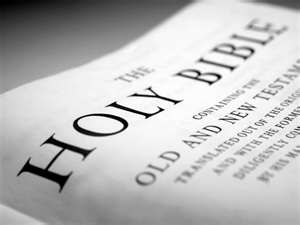
The Bible provided this metanarrative for Western civilization. Even nonbelievers were familiar with its stories and ways of structuring moral and social reality. But the media — the news industry — changed that. People in this industry generally disregard or blatantly defy the Judeo-Christian narrative. They believe it’s their job to shape our thinking. They are constantly raising questions that cause people to doubt Christianity or any cultural traditions grown out of Biblical thinking. Chuck Colson, founder of Prison Fellowship Ministries, writes, “The result is that many people accept the idea that we should be constantly reevaluating what we believe and understand about the world — including our religious beliefs — but news stories cannot replace a culture’s metanarrative, because, by its very nature, the news gives priority to the shocking and the new. It is a cycle of endless deconstruction.”
“The good news,” writes Colson, “is that Americans are recognizing that the ‘news’ is becoming a little more than vulgar entertainment, largely irrelevant to our lives.”
A good practice is to use the news for appropriate and limited purposes. Sommerville offers this suggestion: “We should balance our bloated appetite for news with a cultural diet rich in books, reflection, and discussion. And we should put the news through a mental metanarrative grid — asking ourselves if the ‘news’ being offered up reinforces our cultural story — and our views of Christianity — or tears it apart.” Colson agrees. “The news may make us dumb — but reading and discussing great books, especially the Bible, leads to the kinds of wisdom that brings real understanding.”
Appreciation to How Now Shall We Live Devotional
by Charles Colson, Tyndale House Publishers
Read Full Post »