 The question is: “Who steps first into the circle of love and respect: The husband or wife?”
It helps to remember who created that “circle.”
God did. And, true to His design, there is order. God created human beings in His image, but He did not make them to be the same. They are equal, but different. God did not create woman at the same time as man, in the same way, or for the same purpose. In fact, God revealed to man that he was incomplete. “It is not good that the man should be alone; I will make him a helper fit for him” (Genesis 2:18). “Fit for him” literally means: “Like his opposite.” (Think of this! Anatomically. Hormonally. Psychologically.)
Is it significant that woman was made for man? To complete him? Be his helper? Yes. The created order shows that man was to be the steward over all and she would help, assist, encourage, comfort, and be his advocate. (The word “helper,” by the way, is not dissimilar to the word used by Jesus to describe the Holy Spirit [John 14:16,26). In her privileged role, she is free to help without any initiative on his part. She doesn’t wait for him to ask before she offers encouragement, comfort, or good counsel.
God’s created order is a reflection of Himself. He is one God, yet three persons. Father, Son, and Holy Spirit are equal, but with different functions. There is headship in this orderly structure… and there is submission. The same is true with male and female. Even after sin spoiled God’s perfect design, the order of creation remained in place for our benefit. Sin broke man and woman’s relationship with each other and with God. But, in mercy, God used the submission of the Son, Jesus Christ, to save His Bride, the Church, and serve with humility. A woman might resent the created order. A man might abuse it. But, whenever it is honored, it continues to serve family and society well.
Doesn’t the created order beg the question from a leadership perspective? Shouldn’t the man be the first to step into the Ephesians circle? No, not necessarily. Even if he is stepping out front to fight wolves at the door, she is fully engaged as his ally and encourager. In God’s design, the man is responsible for bringing order out of chaos, but she helps that happen. Regardless of their different functions, both husband and wife can practice loving and respecting at all times.
There is no measuring stick. No fairness meter. In a godly home, neither husband nor wife keep track of what the other does or doesn’t do. Both have the same goal: To do all they do to God’s glory. And, when they fail, they apologize and forgive. Both take their sin baggage to the cross — and leave it there.
Visits to the Cross happen all the time even in the best of marriages. Let me approach this from a woman’s perspective. Helping is what I naturally do. But, flawed by sin, this becomes difficult. My husband might not think he needs help. Might not invite help. Might resent help. Might interpret my help to mean he needs “fixing.” So, how do I enter the “circle of love and respect” at such a time? Hopefully, I haven’t disengaged from the “circle.” Hopefully, I am faithful in offering encouragement. If I need to help, but he’s too prideful to accept it, I need to take care. Be sensitive. I may need to move slowly. Mary told Joseph that she had been visited by an angel with news of her pregnancy, but Joseph was of the mind to quietly divorce her. In their “circle of love and respect,” Mary understood that it wasn’t up to her to convince Joseph. She needed to wait on God. In His time, God helped Joseph get his arms around the situation. A woman is helping — in one way or the other — all the time. She may be helping to good… or bad. To build up… or tear down. To encourage… or discourage. To trust God’s plan… or shape her own.
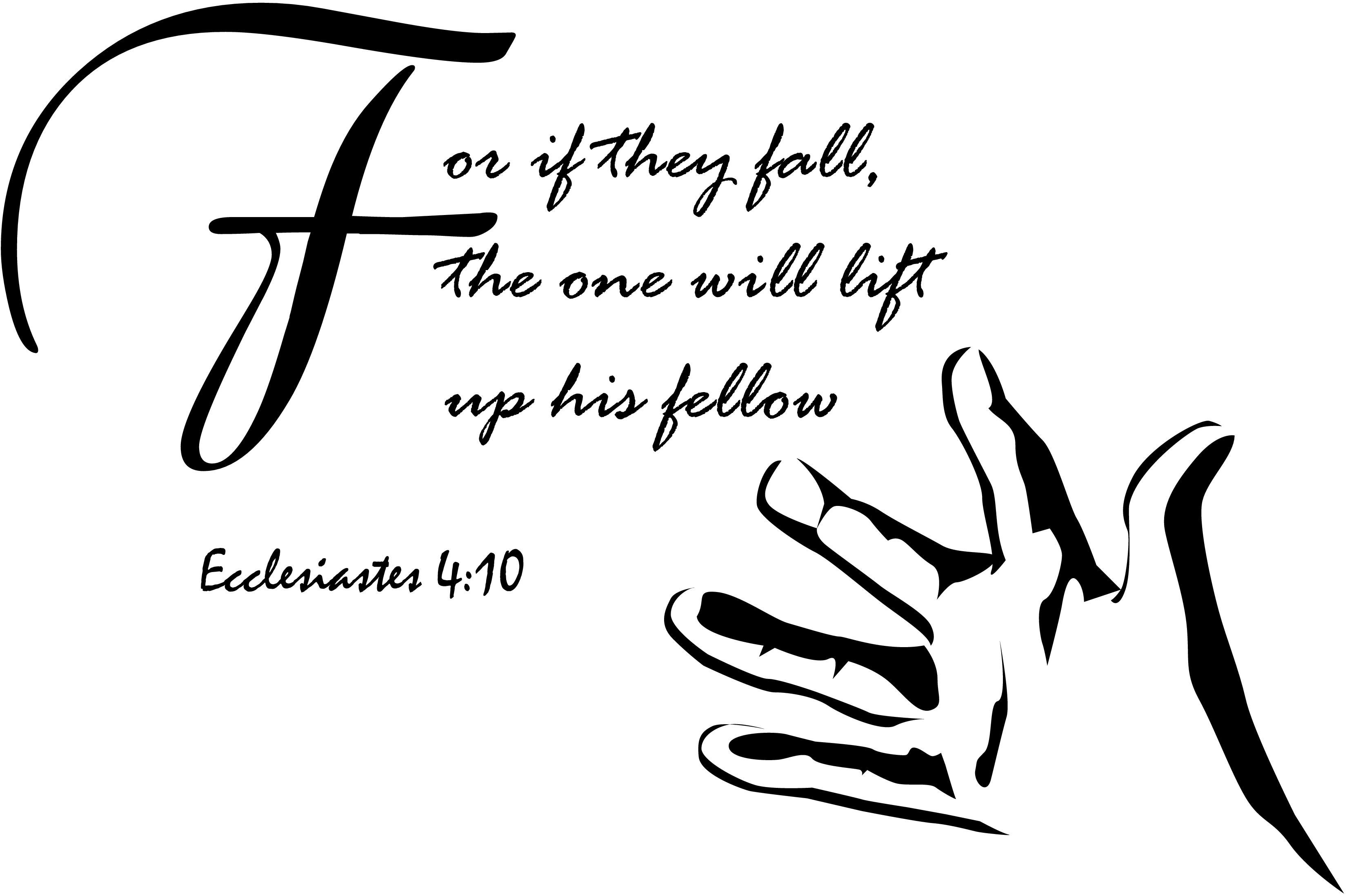
Ultimately, two are better than one. One may fall, the other lifts up. One may be overwhelmed, a team of two stands firm. One alone is cold, two together stay warm. One might fall out of the “circle” momentarily, the other welcomes him/her back in. Woven with God, both are able to engage in the “circle” freely and unconditionally.
The pure circle of love and respect is tainted on this earth. We too easily think of ourselves first. How we’re not being served… or how we’re doing all the serving. But, challenged to “shine like lights” and “hold fast to the word of life,” we do what we do for Christ — even if it means being “poured out as a drink offering upon the sacrificial offering of our faith” (Philippians 2:14-17). Faith produces a sacrificial attitude for husbands and wives that frees us up to think less about self and more about other.
With this attitude, one might even forget who started, paused, stopped, or re-started the circle to go ’round.
Read Full Post »
 Benjamin Rush signed the Declaration of Independence. He also served in the Presidential administrations of John Adams, Thomas Jefferson, and James Madison. Each came from a different political party. How could Benjamin Rush serve Presidents from three different parties, and what was his own party affiliation? He once proclaimed:




 Ezerwoman's Blog
Not Gender Neutral
Posted in Biblical manhood & womanhood, Commentaries of others, Culture Shifts, Faith & Practice, tagged CBMW, culture, Dr. Randy Stinson, ESV, gender-neutral, God's Word, inspiration, Lutheran Study Bible, men, Scripture, Southern Baptist, women on June 24, 2011| Leave a Comment »
So, I am thankful that the largest evangelical denomination in the nation — the Southern Baptist Convention — voted recently not to commend the 2011 New International Version (NIV) Bible because of its gender-neutral language. Why? Because it alters the intended theological message.
For a long time, I have been appreciative of the work of The Council on Biblical Manhood and Womanhood (CBMW). It has helped point me to a proper understanding of the uniqueness of male and female. My respect for both only grows. I hope I am passing on this respect through Titus 2 Retreats. Dr. Randy Stinson is the president of CBMW. He is also the dean of the School of Church Ministries at Southern Baptist Theological Seminary. He notes that Southern Baptists and other Christians “affirm what we call the ‘verbal, plenary inspiration’ of Scripture which means that we believe not just the broad thoughts of Scripture are inspired by God, but every word. And so every word, when it is translated from Greek, Hebrew, or Aramaic, matters.”
Yes! Amen! Let it be so!
I, too, embrace a word-for-word translation philosophy. And, to better help me understand the meaning of God’s carefully chosen words, I am also thankful for the Lutheran Study Bible (English Standard Version).
God really did say. And He used specific words to say it!
Read Full Post »